
New Whiplash Protection Standards Emerge: Four Small SUVs Achieve Top Marks in IIHS Re-evaluation
For decades, the Insurance Institute for Highway Safety (IIHS) has been a cornerstone in the pursuit of automotive safety, its rigorous testing protocols and coveted safety awards – notably the Top Safety Pick and Top Safety Pick+ designations – significantly influencing vehicle design and consumer purchasing decisions. In a significant development for vehicular safety, IIHS has resurrected and revamped its evaluation of whiplash protection in rear-end collisions. This crucial update addresses a long-standing concern in automotive safety: the persistent risk of whiplash injuries despite advancements in vehicle structures.
Understanding the Evolution of Whiplash Testing
The decision to reinstate and re-engineer the whiplash test stems from a peculiar outcome observed in previous assessments. By 2022, the IIHS had effectively suspended its dedicated whiplash protection evaluation. The reason? An overwhelming majority of vehicles tested were achieving the highest possible ratings. This success, however, masked a subtle but critical flaw. Despite these ostensibly excellent scores, real-world insurance claim data continued to show significant variations in whiplash injury rates across different vehicle models. The IIHS acknowledged this discrepancy, stating, “Variations in insurance claim rates for different models showed that some designs provided better protection than others — even if the original test could not identify them.” This realization underscored the need for a more nuanced and data-driven approach to assessing whiplash protection.
The previous methodology, while effective at identifying gross deficiencies, had become less adept at differentiating between vehicles that offered truly superior protection and those that merely met a baseline standard. This led to a situation where a “top” rating didn’t always translate to the lowest risk of injury in a real-world scenario. Recognizing this, IIHS scientists embarked on a comprehensive review of their testing parameters, leveraging updated data and incorporating more sophisticated measurement techniques. The goal was not just to identify vehicles that avoided whiplash, but those that actively minimized the forces and movements that lead to such injuries.
The Rigorous New Whiplash Assessment: A Deeper Dive into Safety
In its inaugural run under the new, more stringent criteria, the IIHS subjected a cohort of 18 small SUVs to this revitalized whiplash protection test. The vast majority of these vehicles were from the 2025 model year, with a notable exception being the 2024 Honda CR-V. Given that many vehicles carry over their safety designs from one year to the next, the ratings are largely applicable to their 2026 counterparts as well. The IIHS employs a four-tiered rating system, with “Good” representing the highest level of protection, followed by “Acceptable,” “Marginal,” and finally “Poor” for those vehicles exhibiting the most significant deficiencies.
According to the IIHS, vehicles earning a “Good” rating delivered exceptional protection across virtually all measured parameters at both tested impact speeds. Those achieving an “Acceptable” rating showed minor shortcomings in several areas, while “Marginal” performers indicated more pronounced flaws. The three vehicles that unfortunately received “Poor” ratings failed to adequately address all three key assessment criteria and demonstrated exceptionally poor performance in at least one critical aspect. Their primary failing was an insufficient ability to limit the unnatural movement of the head relative to the spinal column.
The results of this initial rigorous evaluation are as follows, highlighting a significant differentiator in whiplash protection among popular small SUV models:
Good:
2025 Audi Q3
2025-26 Hyundai Ioniq 5
2025-26 Subaru Forester
2025 Toyota RAV4
Acceptable:
2025-26 Buick Encore GX
2025-26 Chevrolet Equinox
2024-25 Honda CR-V
2025-26 Jeep Compass
2025-26 Kia Sportage
2025 Mercedes-Benz GLB
2025-26 Mitsubishi Outlander
2025-26 Volkswagen Taos
2025-26 Volvo XC40
Marginal:
2025 BMW X1
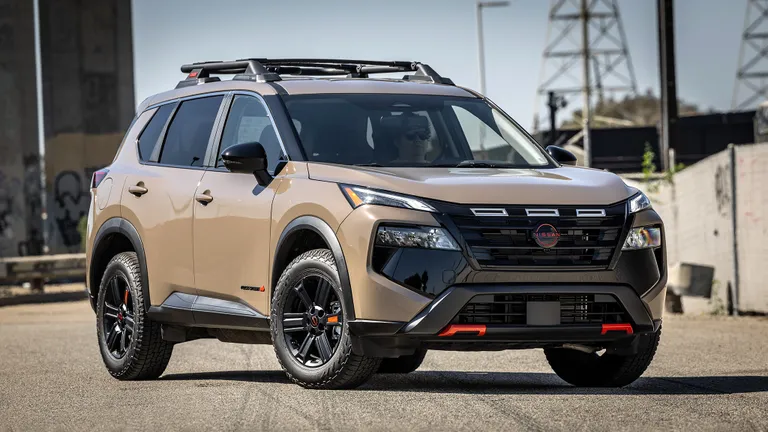
2025-26 Nissan Rogue
Poor:
2025-26 Ford Bronco Sport
2025-26 Hyundai Tucson
2025-26 Mazda CX-50
The Science Behind the Refined Metrics: Precision in Protection
The IIHS’s commitment to advancing automotive safety extends beyond simply subjecting vehicles to simulated impacts. The evolution of the whiplash test exemplifies this dedication to scientific rigor. The foundational element of the previous whiplash evaluation involved mounting a vehicle’s seat onto a sled. This sled was then accelerated to simulate a rear-end collision, replicating the force generated by a vehicle of equal weight impacting from behind at 20 miles per hour. Instrumentation aboard a specially designed dummy, equipped with an articulated spine, was used to capture critical data.
The new test retains this core methodology but significantly enhances it by incorporating a wider array of measurements and metrics. This expansion is the result of extensive research and testing involving seats from 36 different vehicle models across three distinct impact speeds. IIHS scientists meticulously analyzed this vast dataset, seeking correlations between specific seat and restraint system design characteristics and actual injury rates documented by the Highway Loss Data Institute.
This deep dive into the data revealed several key indicators that proved highly predictive of whiplash injury risk. Consequently, the updated evaluation now encompasses simulated impacts at both 20 mph and 30 mph, providing a more comprehensive understanding of protection across a broader spectrum of rear-end collision scenarios.
Key Metrics Driving the New Standard
The original whiplash test primarily focused on two critical measurements: the time it took for the dummy’s head to make contact with the head restraint, and the acceleration experienced by the T1 vertebra – the uppermost vertebra at the base of the neck. The enhanced test introduces several vital new metrics, offering a far more holistic assessment of occupant protection:
Pelvic Displacement Relative to the Head: In a typical rear-end impact, an occupant’s body should compress into the seatback. This compression should maintain a relatively consistent spatial relationship between the pelvis and the head. The new test rigorously measures how well the seat facilitates this essential movement, ensuring the occupant sinks into the seat rather than being propelled forward and then snapping back.
Head Tilting and Bending Force: The forces exerted on the neck during a rear-end collision are complex. The new test quantifies the degree to which the occupant’s head tilts or bends relative to the spine. Optimal protection requires the seat and head restraint system to minimize these forces, allowing the neck to retain its natural curvature and avoid excessive strain.
Head Restraint Effectiveness and Positioning: A critical component of whiplash prevention is the head restraint. The IIHS emphasizes that its effectiveness is directly tied to its positioning. The ideal scenario involves the head restraint contacting the occupant’s head near its center of gravity.

Contact Above Center of Gravity: If the head restraint contacts the head above the center of gravity, it can force the chin down towards the chest, leading to an undesirable forward flexion of the neck.
Contact Below Center of Gravity: Conversely, contact below the center of gravity can cause the head to tilt backward and upward, resulting in hyperextension.
This refined understanding of head restraint function highlights the importance of proper adjustment, especially in vehicles with adjustable headrests. Even a seemingly minor adjustment can significantly impact the system’s ability to prevent whiplash.
What Constitutes “Good” Whiplash Protection?
Achieving a “Good” rating in this advanced whiplash protection test signifies that a vehicle’s seating system and head restraint work in concert to provide outstanding protection. This includes:
Maintaining Head and Spine Alignment: The seat design and head restraint work effectively to keep the occupant’s head and spine in a relatively neutral alignment during the simulated impact, preventing excessive forward or backward bending.
Preserving Natural Neck Curvature: The system allows the neck to maintain its natural lordotic curve, minimizing stress and the risk of injury.
Optimal Head Restraint Positioning: The head restraint is positioned to make effective contact with the occupant’s head, ideally near the center of gravity, thereby mitigating harmful head movements.
Effective Crash Energy Management: The seat itself plays a crucial role in absorbing and dissipating some of the energy transferred to the occupant’s body during the collision, further reducing the forces experienced by the head and neck.
Implications for Consumers and Automakers
The reintroduction of this robust whiplash test by the IIHS has significant implications for both consumers and the automotive industry. For car buyers, particularly those in the market for small SUVs – a segment known for its popularity and versatility – these results offer invaluable insights. Understanding which models excel in whiplash protection provides a critical data point for making informed purchasing decisions, prioritizing safety beyond basic crashworthiness. Consumers can now look for these “Good” ratings as a testament to a vehicle’s advanced safety engineering in a common, yet often serious, type of collision.
For automakers, the updated evaluation serves as a clear directive. The “Poor” and “Marginal” ratings highlight areas where design improvements are urgently needed. The industry has a proven track record of responding rapidly to IIHS mandates and evolving safety standards, and this new whiplash test will undoubtedly spur innovation in seat design, head restraint technology, and overall occupant restraint systems. The pursuit of a “Good” rating in this critical test will become a new benchmark of excellence, influencing future product development and marketing strategies.
Future of Automotive Safety: A Proactive Stance
The IIHS’s proactive approach to safety, exemplified by this refined whiplash test, underscores a commitment to addressing evolving risks and pushing the boundaries of vehicular protection. As vehicles become more technologically advanced and consumer expectations for safety continue to rise, organizations like the IIHS play an indispensable role in ensuring that progress in automotive engineering translates directly into enhanced real-world safety for everyone on the road.
The data from this new whiplash protection test provides a critical layer of information for consumers making significant investments in their next vehicle. Prioritizing vehicles that perform exceptionally well in these rigorous assessments means investing in a higher degree of protection for yourself and your passengers against a common and potentially debilitating injury.
Ready to explore your safest options? As you research your next vehicle, pay close attention to the latest safety ratings from the IIHS. Understanding these detailed evaluations, especially for crucial areas like whiplash protection, empowers you to make a decision that prioritizes your well-being on the road. Visit IIHS.org or consult with a trusted automotive safety expert to delve deeper into these findings and discover the vehicles engineered for your peace of mind.