
Navigating the New Era of Automotive Subscriptions: What Automakers Offer and What It Costs
The automotive landscape is undergoing a profound transformation, moving beyond the traditional purchase of a vehicle to embrace a subscription-based model for a vast array of digital services. From the convenience of remote start and vehicle diagnostics to sophisticated semi-autonomous driving aids and personalized concierge services, automakers are increasingly betting on recurring revenue streams derived from their connected car ecosystems. This shift, while offering undeniable convenience and advanced functionality, also presents consumers with a complex web of choices, pricing structures, and subscription tiers. Understanding which automakers offer these app subscriptions and their associated costs is no longer a niche concern but a fundamental aspect of modern vehicle ownership.
As an industry observer with a decade of deep dives into automotive technology and consumer trends, I’ve witnessed firsthand the rapid evolution of connected car services. What began as basic telematics has blossomed into a sophisticated suite of digital offerings designed to enhance every facet of the driving and ownership experience. The key question for consumers today is not if these subscriptions exist, but what they entail, which brands are leading the charge, and crucially, how much they are willing to pay for these evolving functionalities. This comprehensive overview aims to demystify the world of automotive app subscriptions, providing clarity on current offerings and pricing.
The Shifting Sands of Automotive Digital Services: A Deep Dive
The core idea behind these automotive app subscriptions, often referred to as connected services, is to provide drivers with a continuous stream of value beyond the physical capabilities of their vehicle. Think of it as extending the car’s utility through your smartphone and the cloud. These services can range from essential safety and security features to entertainment and advanced driver-assistance systems (ADAS). The industry trend is clear: automakers are betting big on subscriptions for connected services.
One of the most prevalent models is the free trial period. Almost universally, automakers offer a grace period, allowing consumers to experience the benefits of these digital features before committing financially. These trials vary dramatically, from a few months to an impressive decade, as seen with select offerings from Stellantis and Porsche. Once these introductory periods conclude, owners are typically presented with annual or monthly fees, which can significantly impact the total cost of vehicle ownership.
The complexity arises when considering the sheer breadth of features included. Beyond the standard remote start or vehicle lock/unlock functionality, many subscription packages encompass high-cost, advanced technological solutions. This is where the true value proposition, and the potential for significant expenditure, lies. For those seeking the most cutting-edge automotive digital subscriptions, understanding these tiered offerings is paramount.
Brand-by-Brand Breakdown: Decoding the Connected Car Market
Let’s delve into the specific offerings from various manufacturers, analyzing their app-based subscription services and associated pricing. It’s important to note that pricing and feature availability can fluctuate based on vehicle model, year, and trim level, making direct comparisons challenging at times. However, this breakdown provides a solid foundation for understanding the current market.
Luxury Segment: Where Value Meets Exclusivity
In the luxury automotive segment, the approach to connected services can be varied, often balancing exclusivity with advanced features.
Aston Martin: Surprisingly, Aston Martin’s Connected Car System app offers its connected services for free. This includes critical security features like vehicle locating and door status monitoring, along with vehicle health data. For a brand synonymous with high-end luxury, this free offering emphasizes their commitment to owner security and peace of mind.
Audi: Audi employs a dual-app strategy with myAudi and Audi Connect. The myAudi app handles basic functions like remote unlocking and maintenance scheduling. Audi Connect, however, offers tiered subscription plans: Nav, Prime, Plus, and Care. These provide features such as remote locking/unlocking, stolen vehicle locator, and roadside assistance. A significant aspect here is “Functions on Demand,” where features present in the car’s hardware require a separate subscription to unlock – a notable example being a $260 fee for a light function package on the e-tron. This highlights the growing trend of pay-per-feature automotive subscriptions.
Bentley: Similar to Aston Martin, Bentley offers its connected services through the My Bentley app at no additional cost. This includes in-vehicle data, security features, navigation, news, weather, and integrated music services. An in-vehicle Wi-Fi hotspot is available as an extra, paid service.
BMW: BMW’s connected services are accessed through the My BMW App/BMW ConnectedDrive. Pricing varies, but most newer models (2025-26) come equipped with features like remote start, a drive recorder, traffic camera integration, automated parking, and advanced driver assistance systems. Free trials are common, ranging from one to three months depending on the feature. Post-trial, monthly fees can range from $5-$20, with annual, three-year, and even lifetime subscription options available, presenting a diverse pricing structure for BMW connected services cost.
Genesis: Hyundai’s luxury marque, Genesis, offers its Connected Services and My Genesis app with a notable three-year complimentary period for models from 2023 onwards. After this trial, the cost is $9.99 per month or $99 annually, covering vehicle status notifications, service valet, and remote vehicle features.
Infiniti: Infiniti InTouch provides subscription-based features with tiered packages: Standard, Premium, and Select. The Premium package is free for three years, and Select for five. Feature availability is model-dependent. Pricing after the trial periods concludes is yet to be fully announced as many compatible vehicles are still within their complimentary terms, indicating a dynamic market for Infiniti subscription pricing.
Jaguar Land Rover: These brands offer four InControl packages. “Remote” provides essential functions with a trial period matching the vehicle warranty, costing $120/year or $180/2 years thereafter. “Connected Navigation Pro” adds advanced navigation features for $120/year or $220/2 years post-warranty. “Online Pack” includes in-car streaming and an Alexa assistant for $160/year or $250/2 years after a one-year trial. The “Online Pack Plus Wi-Fi Hotspot” bundles these with Wi-Fi for $500/year or $800/2 years after a one-year trial. These complex tiered structures underscore the evolving connected car services cost.
Lexus, Toyota: Both Lexus Connected Services and the Toyota App offer a baseline of free services, including remote control, health reports, and enhanced navigation. However, paid packages like “Go Anywhere” ($15/month) for navigation and remote control, “Music Lover” ($15/month) for integrated streaming, and “Premium” ($25/month) combining both, add significant functionality.
Lincoln: Lincoln prioritizes a complimentary experience with its Lincoln App, offering features like a personal concierge, pickup/delivery service, and standard remote functions. The 2026 Aviator, Nautilus, and Navigator come with a four-year Connectivity Package and Wi-Fi hotspot service, reinforcing Lincoln’s commitment to a premium, subscription-free experience for core connected services.
Mercedes-Benz: The Mercedes Me app serves as the gateway to their connected services, with many basic functions being free. However, the MB.Connect Package offers an extensive suite of up to 32 features, including remote start, locking, vehicle finder, and live traffic, with pricing varying by model and equipment. This signifies a strong push towards Mercedes-Benz subscription features.
Mini: The Mini Connected App is free, but “Connected Plus” ($9.99/month or $99/year) unlocks enhanced navigation and entertainment. Further “Mini Connected Upgrades” offer features like an AI assistant, purchasable through the app or infotainment system.
Porsche: Porsche Connect offers an exceptionally generous 10-year trial period for its subscription services. Post-trial, the annual cost is $319, covering entertainment apps, games, and enhanced navigation. Additional packages for security ($280/year) and data ($20/month) are also available, positioning Porsche as a leader in long-term automotive subscriptions.
Rivian: Rivian Connect+ provides turn-by-turn navigation with live traffic and voice commands for $14.99/month or $149.99/year. Enhanced features like live security feeds, Wi-Fi, and app streaming for services like YouTube and Spotify are included in this subscription, making it a comprehensive EV connected services offering.
Mainstream Market: Balancing Affordability and Functionality
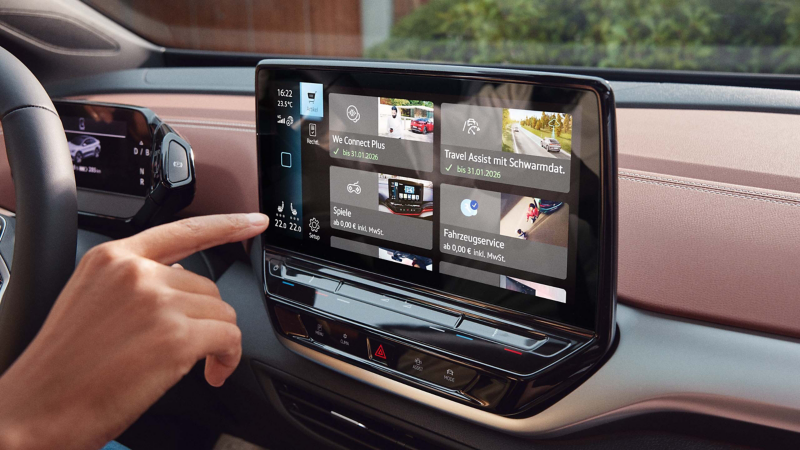
The mainstream automotive sector is equally embracing subscription models, often with a focus on value and essential functionalities.
Aston Martin: Surprisingly, Aston Martin’s Connected Car System app offers its connected services for free. This includes critical security features like vehicle locating and door status monitoring, along with vehicle health data. For a brand synonymous with high-end luxury, this free offering emphasizes their commitment to owner security and peace of mind.
Audi: Audi employs a dual-app strategy with myAudi and Audi Connect. The myAudi app handles basic functions like remote unlocking and maintenance scheduling. Audi Connect, however, offers tiered subscription plans: Nav, Prime, Plus, and Care. These provide features such as remote locking/unlocking, stolen vehicle locator, and roadside assistance. A significant aspect here is “Functions on Demand,” where features present in the car’s hardware require a separate subscription to unlock – a notable example being a $260 fee for a light function package on the e-tron. This highlights the growing trend of pay-per-feature automotive subscriptions.
Bentley: Similar to Aston Martin, Bentley offers its connected services through the My Bentley app at no additional cost. This includes in-vehicle data, security features, navigation, news, weather, and integrated music services. An in-vehicle Wi-Fi hotspot is available as an extra, paid service.
BMW: BMW’s connected services are accessed through the My BMW App/BMW ConnectedDrive. Pricing varies, but most newer models (2025-26) come equipped with features like remote start, a drive recorder, traffic camera integration, automated parking, and advanced driver assistance systems. Free trials are common, ranging from one to three months depending on the feature. Post-trial, monthly fees can range from $5-$20, with annual, three-year, and even lifetime subscription options available, presenting a diverse pricing structure for BMW connected services cost.
Ford: The Ford app is the central hub for Ford’s digital ecosystem. It provides core features like GPS location, vehicle health, and remote start/lock/unlock. For advanced features, Ford Connected Services is the umbrella. Enthusiasts can unlock performance upgrades for EVs like the Mustang Mach-E for $1,000. The highly anticipated Blue Cruise semi-autonomous driving system requires a subscription after a 90-day trial, with options for $50/month, $495/year, or a $2,495 one-time purchase, illustrating the significant investment in Ford Blue Cruise subscription. Ford also employs a rewards point system to encourage engagement within its digital ecosystem.
GM (Buick, Cadillac, Chevrolet, GMC): OnStar remains a core offering, integrated across the myChevrolet, myCadillac, myBuick, and myGMC apps. Plans range from $15/month for basic connectivity, including roadside assistance and Wi-Fi, to more comprehensive packages. Higher tiers incorporate GM’s Super Cruise hands-free driving, an internet browser, games, and even Apple Music integration, a strategic move to address the phasing out of Apple CarPlay for some users. This highlights the increasing focus on in-car entertainment subscriptions.
Honda, Acura: Honda Link and Acura Link apps offer five plans, with “Basic” and “Link” being free. Paid plans, ranging from $10/month ($110/year) to $26/month ($260/year), unlock remote lock/unlock, stolen vehicle locators, collision notifications, and a personal concierge service in the top “Concierge” plan.
Hyundai: Hyundai’s Bluelink+ app provides access to three packages: Connected Care (24/7 call center), Remote (remote vehicle control), and Guidance (navigation). These are available for $9.90/month or $99/year after a generous three-year free trial. It’s crucial to note that certain features within the Bluelink Mobile App require subscriptions to the Assurance Connected Care and Essentials packages, indicating a layered subscription model.
Mazda: MyMazda app offers connected services starting with a one-year free trial for 2025 and newer models. Post-trial, the cost is $10/month, providing access to remote control, vehicle finder, and health stats, with feature availability varying by model.
Mitsubishi: The My Mitsubishi Connect app offers a free trial, followed by an annual fee of $299. Subscription packages include “Safeguard” (advanced roadside assistance, collision notifications), “Remote Package” (enhanced remote control), and the unique “myQ Connected Garage” for integrated garage door operation. This offers a distinct approach to connected garage door openers in cars.
Nissan: Nissan Connect offers similar tiered packages to Infiniti. “Standard” is free, while “Premium” and “Premium Plus” have free trial periods of three and five years, respectively, before monthly fees kick in ($16.99 for Premium, $26.99 for Premium Plus). Feature sets are model and year dependent, with EVs like the Ariya often receiving more extensive functionality.
Polestar: Polestar Connect is currently offered free of charge in the U.S., including advanced safety features that leverage cloud technology to alert drivers to road hazards. This provides a refreshing contrast to the prevalent paid subscription models.
Stellantis (Chrysler, Dodge, Fiat, Jeep, Maserati, Ram): Stellantis is remarkably generous, offering its Uconnect services for a full decade at no cost. This includes over-the-air updates, digital keys, emergency alerts, and vehicle health reports. After the 10-year period, an annual fee of $119 applies, not including additional in-car app store purchases, Wi-Fi hotspots, or rear-seat entertainment systems. This extended free period is a significant differentiator in the automotive subscription cost landscape.
Subaru: MySubaru (formerly Starlink) offers free trial periods for its connected services, with durations varying by package, ranging from six months to five years. Post-trial, subscription fees for enhanced navigation, security, concierge, and remote control features are $199 annually.
Tesla: Tesla has been a pioneer in subscription models. Its Full Self-Driving (FSD) capability can be subscribed to monthly for $99, or purchased outright for $8,000 by February 14, 2026, after which it will be subscription-only. The Premium Connectivity subscription for data services is $9.99/month or $99/year, with standard connectivity free for eight years, making it a key player in Tesla FSD subscription costs.
Volkswagen: The myVW App provides access to four subscription plans beyond basic vehicle health alerts. These include “In-Vehicle Premium” (enhanced infotainment, navigation, AI assistant), “Safe & Secure” (emergency roadside assistance, stolen vehicle alerts), “Remote Access” (remote control features), and “Vehicle Insights.” Plans start at $9.99/month or $110/year. This detailed approach to Volkswagen connected services pricing offers transparency to consumers.
Volvo: Volvo Cars App offers connected services that are free for new models and those with Google Built-In. For vehicles with the Sensus operating system, an annual fee of $200 applies for features like vehicle health, parked car locator, and remote charging management for EVs. This dual pricing structure highlights varying Volvo subscription costs.
The High-CPC Keyword Landscape in Automotive Subscriptions
Beyond the core functionalities, several high-cost-per-click (CPC) keywords are emerging within the automotive subscription sphere. These often relate to advanced, sought-after features:
Autonomous driving subscriptions: As technologies like GM’s Super Cruise and Tesla’s FSD mature, the subscription cost for these advanced driver-assistance systems (ADAS) commands significant attention and ad spend.
In-car connectivity packages: The demand for seamless, high-speed internet access within vehicles is driving up interest and investment in premium connectivity subscriptions that offer Wi-Fi hotspots and robust data plans.
Remote vehicle control apps: Features like remote start, climate control, and vehicle location remain highly desirable, making associated subscription costs a point of interest.
EV charging subscriptions: For electric vehicle owners, integrated charging management, route planning, and payment solutions are becoming essential, leading to specialized subscription services.
Vehicle health and maintenance subscriptions: Proactive diagnostics and predictive maintenance alerts are valuable services that consumers are increasingly willing to pay for.
In-car entertainment subscriptions: With advanced infotainment systems, the ability to stream music, movies, and access other digital content directly from the vehicle is becoming a sought-after subscription feature.
Understanding and strategically incorporating these high-CPC keywords naturally within content can significantly boost visibility for businesses operating in this space, whether they are automakers, service providers, or automotive tech analysts.
Future Trends and Consumer Considerations
The trajectory of automotive subscriptions points towards increasing personalization and modularity. We can expect automakers to offer more à la carte options, allowing drivers to tailor their subscriptions to their specific needs and budgets. The integration of AI will further enhance these services, offering more intelligent navigation, personalized recommendations, and predictive maintenance.
However, the growing reliance on subscriptions also raises important consumer considerations. Questions surrounding data privacy, the long-term affordability of these services, and the potential for “feature lock-in” are becoming increasingly pertinent. As an industry expert, I urge consumers to carefully evaluate their needs and the true value proposition of each subscription before committing. It’s a delicate balance between embracing innovation and managing evolving ownership costs.
Taking the Next Step in Your Automotive Journey
Navigating the complex world of automotive app subscriptions and their associated costs can feel daunting. As you explore your next vehicle purchase or consider upgrading your current car’s digital capabilities, understanding these offerings is crucial. We encourage you to delve deeper into the specific subscription packages offered by your preferred automakers, leverage free trial periods to their fullest, and critically assess which connected services truly align with your driving habits and priorities.
For personalized advice on integrating cutting-edge automotive technology into your lifestyle or for expert consultation on the financial implications of these subscription models, consider reaching out to [Your Company/Service Name] or exploring our detailed guides on automotive technology trends and connected car services comparison. Let us help you drive into the future with confidence and clarity.