
Decoding the BMW 2 Series: Your Definitive Guide to Buying the Ultimate Compact Driving Machine
For over a decade, BMW has proudly proclaimed itself the purveyor of the “Ultimate Driving Machine.” This philosophy, deeply ingrained in the Bavarian marque’s DNA, found a potent expression in the BMW 2 Series when it debuted in 2014, effectively succeeding the well-loved 1 Series Coupe and Convertible. More than just a new nameplate, the 2 Series represented an accessible entry point into BMW’s performance-oriented world, specifically designed to captivate young, enthusiastic drivers. It distinguished itself from rivals like the Audi A3 and Mercedes-Benz CLA through its spirited rear-wheel-drive dynamics and the availability of a coveted manual transmission, a testament to its driver-centric design. For those seeking the pinnacle of performance, the M2 variant emerged, showcasing the full might of BMW M engineering with a price tag that reflected its exceptional capabilities.
The automotive landscape is perpetually evolving, and the BMW 2 Series is no exception. The second generation, arriving for the 2022 model year, carried the torch of its predecessor, retaining the rear-wheel-drive layout and amplifying its athletic prowess. This iteration, however, focused solely on the coupe body style, a strategic shift mirroring a broader industry trend toward streamlining convertible offerings.
It’s crucial to acknowledge the divergence within the 2 Series family. While the coupe embodies the traditional sporty compact ethos, BMW has expanded its lineup with additional 2 Series models that operate on a distinctly different foundation. The 2 Series Gran Coupe, introduced for the 2021 model year, is a four-door sedan built on a front-wheel-drive platform shared with the 1 Series hatchback found in other global markets. Critically, it shares minimal mechanical underpinnings with its two-door coupe sibling. Beyond these shores, the 2 Series family extends to the versatile Active Tourer and the spacious seven-seat Gran Tourer minivan, though these variants are not available in the United States.
For discerning drivers craving an engaging driving experience, premium appointments, and a purchase that respects their budget, the BMW 2 Series coupe and convertible represent compelling options. This comprehensive guide delves into the evolution of these models, highlights the best and most desirable model years to consider, and provides insights into current market values for a used BMW 2 Series.
Navigating the BMW 2 Series Market: Key Considerations for Savvy Buyers
When embarking on the journey to acquire a BMW 2 Series, particularly a pre-owned example, a thorough understanding of its history, inherent reliability, and evolving features is paramount. The market offers a diverse spectrum of options, and by arming yourself with the right knowledge, you can confidently pinpoint a vehicle that aligns perfectly with your driving aspirations and financial parameters.
Reliability and the Best BMW 2 Series Years to Buy
Consumer reliability data, a cornerstone for any informed car purchase, consistently paints a positive picture for the BMW 2 Series. According to reputable sources like Consumer Reports, the 2 Series generally boasts above-average reliability ratings. For those prioritizing exceptional dependability, the best BMW 2 Series years to buy often include models from 2020, 2024, and 2025. These specific years tend to exhibit the highest reliability rankings, suggesting fewer reported issues and a more robust ownership experience.
Furthermore, the 2021 BMW 2 Series stands out as another excellent choice. As the final model year of the first generation, it benefits from refined engineering and often includes a more comprehensive suite of standard features, all while maintaining solid reliability. This confluence of factors makes it a highly desirable option for buyers seeking a well-developed and feature-rich pre-owned 2 Series.
Identifying Potentially Problematic BMW 2 Series Model Years
While the 2 Series generally performs well, certain model years warrant a more cautious approach. Consumer Reports does not provide reliability data for the inaugural model year (2014). However, analysis from various automotive experts and owner feedback indicates that the period between 2015 and 2018 saw some of the lower reliability rankings.
Specifically, the 2014 and 2015 BMW 2 Series models have been more frequently associated with potentially expensive engine problems. The 2017 BMW 2 Series is also noted as a year where some buyers experienced glitches related to updated technology and powertrains. While these issues do not disqualify these years entirely, they suggest that thorough pre-purchase inspections and a meticulous review of maintenance history are particularly crucial for vehicles from these particular model years.
Is a Used BMW 2 Series a Sound Investment?
The question of value is central to any used car purchase, and the BMW 2 Series often presents a compelling proposition. For those looking for significant savings, the latter half of the first generation, particularly the 2020 and 2021 BMW 2 Series, offers considerable appeal. The national average purchase price for a 2020 model, for instance, can be approximately half of its original MSRP, with prices typically falling within the $20,000 to $30,000 range, depending on the specific trim level.
The second-generation 2 Series, being newer, naturally commands a higher price point. However, even in the earlier years of this generation, substantial discounts of up to 40% off the original MSRP can be found. As of early 2025, 2024 BMW 2 Series models typically see advertised prices around $6,000 below their original MSRP, presenting a more modest but still attractive saving. The best used BMW 2 Series deals often require diligent searching and an understanding of market fluctuations.
The BMW 2 Series Generations: A Deep Dive into Evolution
To truly appreciate the nuances of the BMW 2 Series, understanding its generational evolution is essential. Each iteration has brought distinct characteristics, engineering advancements, and styling refinements.
First Generation (2014–2021): The Foundation of Fun
The genesis of the BMW 2 Series was to capture the spirit of compact performance, replacing the 1 Series Coupe and Convertible. This strategic renaming aligned with BMW’s new nomenclature system, which designated even numbers for coupe and convertible models. The primary objective was to offer an accessible gateway into the world of premium sports cars, directly competing with rivals like the Audi A3, Mercedes-Benz CLA-Class, Lexus IS, and to some extent, the Acura ILX.
The 2014 BMW 2 Series Coupe launched with two compelling powertrain options: a 2.0-liter turbocharged inline-four engine producing 240 horsepower and a more potent 3.0-liter inline-six delivering 320 horsepower. These RWD-only models were paired with either a standard eight-speed automatic or a six-speed manual transmission, available in the 228i Coupe and the M235i Coupe trims. Standard features were thoughtfully appointed, including eight-way manually adjustable front seats, 17-inch alloy wheels, a 10-speaker audio system with a 6.5-inch display, a single USB port, and dual-zone climate control.
The convertible variant joined the fray in 2015, offering the same powertrain choices. This year also marked the introduction of BMW’s xDrive all-wheel-drive system as an option for both coupe and convertible models. The 2016 model year saw enhancements in content and packaging, and notably, the M235i convertible became available with xDrive. This was also the pivotal year the M2 Coupe officially debuted in the U.S. market.
A significant mid-cycle refresh arrived for the 2017 BMW 2 Series. This update brought more potent engines and new model designations. Both coupe and convertible body styles were now available with both powertrain options and the choice of RWD or AWD. The model lineup expanded to include the 230i and the M240i. The 2.0-liter inline-four’s output increased to 248 horsepower, while the 3.0-liter inline-six was boosted to 335 horsepower. This refresh also introduced the availability of a Track Handling Package, an M Sport Package, a Driver Assistance Package, and a Cold Weather Package, along with the debut of Apple CarPlay integration.
From 2018 to 2020, the 2 Series remained largely consistent, with minor additions of standard safety equipment in 2019 and expanded paint and upholstery options in 2020. The most significant change for the final year of this generation was the standardization of Apple CarPlay across all models.
The twilight of the first generation also witnessed the arrival of a distinct model bearing the “2 Series” name: the 2020 BMW 2 Series Gran Coupe. This four-door variant offered enhanced practicality but shared little mechanically with its coupe counterpart, being built on an entirely different front-wheel-drive platform. It was initially introduced in 228i and M235i forms, powered by 2.0-liter turbo four-cylinder engines delivering 228 hp and 301 hp, respectively. This FWD-based model appeals to a different segment of buyers seeking BMW luxury in a more accessible sedan package.
Second Generation (2022–Present): Sharpened Dynamics and Modern Tech
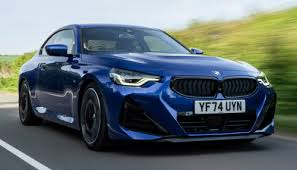
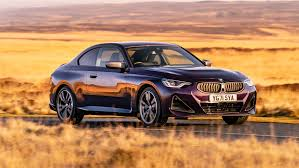
The second generation of the BMW 2 Series Coupe (the two-door model) arrived for the 2022 model year, presenting a more muscular aesthetic with pronounced fenders and a distinctive, squared-off grille. This generation marked a significant shift, as it bid farewell to the convertible body style and, for the most part, the manual transmission option, focusing intently on enhancing its performance credentials.
While the 230i and M240i models carried over, their engine options saw substantial power increases. The base 2.0-liter turbocharged inline-four now produced 255 horsepower, while the 3.0-liter turbo inline-six churned out an impressive 382 horsepower. Notably, at its launch, the 230i was exclusively RWD, while the M240i came standard with BMW’s xDrive all-wheel-drive system. Both were exclusively mated to an eight-speed automatic transmission.
Standard equipment on the 230i Coupe included 18-inch alloy wheels, LED headlights with automatic high beams, leatherette seating, power-adjustable sport seats, tri-zone climate control, an 8.8-inch infotainment screen with wireless Apple CarPlay and Android Auto, dual USB ports, and Amazon Alexa compatibility. Safety features included frontal collision warning and lane departure warning. The M240i xDrive Coupe added 19-inch wheels, M Sport brakes, keyless entry, push-button start, and leather upholstery. Optional upgrades were extensive, encompassing BMW’s Live Cockpit Pro, heated seats, a head-up display, heated steering wheel, gesture control, a 14-speaker Harman Kardon sound system, adaptive cruise control, and even self-parking functionality.
The highly anticipated BMW M2 returned to the lineup for the 2023 model year, boasting a formidable 453 hp 3.0-liter twin-turbo inline-six engine. In a nod to driving purists, it was exclusively RWD and offered a choice between a six-speed manual or an eight-speed automatic transmission. The 2023 BMW 2 Series also saw the integration of the BMW curved display, merging a 12.3-inch instrument cluster with a 10.25-inch infotainment screen into a singular, sleek unit. The trim lineup diversified, with xDrive becoming available on the 230i and RWD on the M240i.
While the 2024 BMW 2 Series largely represented a carryover year, the 2025 BMW 2 Series Coupe received noteworthy refinements, including updated interior and exterior styling elements, the enhanced BMW iDrive 8.5 operating system with QuickSelect, new paint options, and revised interior trim choices.
Throughout this period, the separate BMW 2 Series Gran Coupe (the four-door variant) remained in its first generation, undergoing only minor updates until significant design and technological enhancements were introduced for the 2025 model year. This distinct model continues to cater to those seeking a more practical BMW sedan with a sporty edge.
When considering used BMW 2 Series models from 2022 to the present, the second-generation coupe variants offer a robust selection. Prices typically range from approximately $24,000 to $60,000. For buyers prioritizing lower mileage (under 50,000 miles) and a clean vehicle history, excellent options can be found for less than $35,000, though some may require travel to secure the ideal vehicle.
Key Features and Buying Considerations Across Generations
When evaluating a BMW 2 Series for sale, several key features and considerations remain relevant across both generations:
Engine Performance: The 2 Series has always been celebrated for its potent powertrains. The turbo-four engines offer spirited acceleration for daily driving, while the inline-six variants deliver exhilarating performance, especially in the M240i and M2 models. When looking at used BMW 2 Series performance values, ensure you’re comfortable with the power delivery and fuel efficiency of your chosen engine.
Transmission Options: While the second generation largely favors automatics, the first generation’s availability of a manual transmission remains a significant draw for driving enthusiasts. If a manual is a must-have, focus your search on first-generation models, particularly from the earlier years.
Drivetrain (RWD vs. AWD): Rear-wheel drive is the hallmark of the 2 Series’ sporty character, offering a more engaging and dynamic driving experience. All-wheel drive (xDrive) provides enhanced traction and stability, particularly in adverse weather conditions, making it a practical choice for many buyers.
Interior Quality and Technology: BMW is renowned for its high-quality interior materials and driver-focused ergonomics. Across both generations, you’ll find premium finishes, comfortable seating, and increasingly sophisticated infotainment systems. The evolution from physical buttons and screens to the integrated curved display in the second generation represents a significant technological leap.
Cargo Space: While not cavernous, the 2 Series coupe offers a respectable amount of cargo space for its class, suitable for weekend getaways or everyday errands. The Gran Coupe, with its four-door configuration, naturally provides greater utility.
Ride Comfort: It’s important to note that the 2 Series prioritizes a sporty driving feel, which can translate to a firmer ride compared to more comfort-oriented luxury sedans. If a plush ride is your top priority, a test drive is essential to gauge your comfort level.
Maintenance Costs: As a premium German vehicle, BMWs generally have higher maintenance and repair costs than their mainstream counterparts. Budgeting for routine maintenance, potential repairs, and specialized parts is a prudent step when considering a BMW 2 Series ownership experience.
Frequently Asked Questions About the BMW 2 Series
Q: Which BMW 2 Series years offer the best value?
A: Generally, the 2020 and 2021 BMW 2 Series models from the first generation offer excellent value, providing a blend of performance, features, and affordability. For newer models, the earlier years of the second generation (2022-2023) can represent good value as depreciation sets in.
Q: Are BMW 2 Series known for being reliable?
A: Yes, the BMW 2 Series generally enjoys above-average reliability ratings from sources like Consumer Reports. Specific best BMW 2 Series years to buy for reliability include 2020, 2024, and 2025.
Q: What are the common problems with the BMW 2 Series?
A: While reliability is strong, some earlier models (2015-2017) have been noted for potential engine issues or electronic glitches. Thorough pre-purchase inspections are always recommended for any used vehicle, especially high-performance models.
Q: Is a used BMW 2 Series expensive to maintain?
A: BMW maintenance costs can be higher than average due to the premium nature of the brand. Regular servicing and timely attention to potential issues are crucial to maintaining the vehicle’s performance and longevity. Investing in an extended warranty or service contract can offer peace of mind.
Q: What is the difference between the 2 Series Coupe and Gran Coupe?
A: The 2 Series Coupe is a two-door, rear-wheel-drive focused sport compact, while the 2 Series Gran Coupe is a four-door sedan built on a front-wheel-drive platform, offering greater practicality and a different driving dynamic. They share minimal mechanical components.
Embarking on Your BMW 2 Series Journey
The BMW 2 Series, whether in its agile coupe form or its practical Gran Coupe iteration, represents a compelling choice for those seeking a premium compact vehicle that doesn’t compromise on driving enjoyment. By understanding the nuances of its generational evolution, key reliability trends, and the current market landscape, you are well-equipped to make an informed decision.
Your journey toward owning the ultimate compact driving machine begins with diligent research and a clear understanding of your priorities. We encourage you to explore listings from trusted dealerships and private sellers, conduct thorough pre-purchase inspections, and most importantly, take a test drive to truly experience the distinct character of the BMW 2 Series. The road to your next driving adventure awaits.