
Decoding the Ultimate Driving Machine: Your Expert Guide to Buying a BMW 2 Series
For a decade, BMW has consistently delivered on its promise of the “Ultimate Driving Machine,” and no model embodies this ethos quite like the BMW 2 Series. Since its 2014 debut, replacing the well-regarded 1 Series Coupe and Convertible, the 2 Series has carved out a niche for itself as the entry point into BMW’s performance-oriented lineup. It’s a vehicle designed for those who crave an engaging driving experience, a connection to the road, and the thrill of a finely tuned machine, rather than just a luxurious conveyance. This guide, drawing on ten years of real-world automotive expertise, delves deep into the nuances of buying a BMW 2 Series, from its evolution and performance variants to crucial considerations like cost, reliability, and the optimal model years to target for your next acquisition. We’ll explore the distinct character of both generations, the intriguing differences between the coupe and the Gran Coupe, and how to secure the best value on the pre-owned market, ensuring your BMW 2 Series purchase is a success.
The allure of the 2 Series lies in its rear-wheel-drive dynamics, a purist’s choice in an increasingly front-wheel-drive and all-wheel-drive dominated automotive landscape. The availability of a manual transmission in earlier models further cemented its status as a driver’s car, setting it apart from direct competitors like the Audi A3 and the Mercedes-Benz CLA, which often prioritized comfort and technology over raw driving engagement. At the pinnacle of the first generation stood the M2, a formidable machine that showcased BMW M’s legendary engineering prowess, offering exhilarating performance at a premium price point. This deep dive will illuminate how to find the best used BMW 2 Series for sale, ensuring you pinpoint a vehicle that aligns with your performance aspirations and budget.
The landscape of the 2 Series evolved significantly with the arrival of its second generation for the 2022 model year. While retaining the celebrated rear-wheel-drive architecture and an even more aggressive, sporting demeanor, this generation exclusively offered a coupe body style. BMW, mirroring industry trends, began to streamline its convertible offerings, making the fixed-roof 2 Series the sole bearer of the coupe torch.
However, the “2 Series” designation has also expanded to encompass a new family of vehicles that, while bearing the badge, offer a fundamentally different driving experience. The front-wheel-drive-based 2 Series Gran Coupe, introduced for the 2021 model year, shares its platform with the 1 Series hatchback and is a distinct proposition from its two-door sibling. While other global markets benefit from variations like the 2 Series Active Tourer and the seven-seat Gran Tourer minivan, our focus remains on the models gracing American roads. This distinction is critical for any discerning buyer seeking a true BMW 2 Series coupe experience versus the more practical, yet less dynamically focused, Gran Coupe.
For those yearning for a spirited drive, complemented by premium interior appointments and a price point that makes ownership attainable, the BMW 2 Series coupe and convertible models are compelling choices deserving of extensive consideration. This guide will navigate you through the generational shifts, identify the most desirable and those to approach with caution, and provide a realistic outlook on expected acquisition costs for a BMW 2 Series convertible or coupe. We aim to equip you with the knowledge to make an informed decision, whether you’re hunting for a specific BMW 2 Series model year or a general example of this exceptional compact sports car.
Navigating the BMW 2 Series: Key Considerations for Buyers
When venturing into the pre-owned market for a BMW 2 Series, understanding its historical performance, reliability trends, and the evolution of its features is paramount. Let’s break down the critical aspects that will shape your purchasing decision, ensuring you find a reliable BMW 2 Series that meets your expectations.
The Crucial Question: Which BMW 2 Series Years Shine Brightest?
Reliability is a cornerstone of any informed automotive purchase, and the BMW 2 Series, by and large, has earned a commendable reputation. According to aggregated data from reputable sources like Consumer Reports, the general reliability ratings for the 2 Series have consistently hovered above average. For those seeking the zenith of dependability, the 2020 model year stands out, often cited for its robust performance and minimal reported issues. Similarly, the forthcoming 2024 and 2025 model years are projected to continue this trend of high reliability, reflecting BMW’s ongoing commitment to engineering excellence.
Beyond these standout years, the 2021 model year warrants special attention. As the final iteration of the first-generation 2 Series coupe and convertible, it benefited from accumulated refinements and often came equipped with a more comprehensive suite of standard features, all while maintaining solid reliability. This makes a 2021 BMW 2 Series a particularly attractive proposition for those who appreciate the classic design and driving dynamics of the initial generation.
Identifying Potential Pitfalls: The BMW 2 Series Years to Approach with Caution
While the 2 Series generally performs well, certain model years have exhibited a higher propensity for issues. Consumer Reports data suggests that the earlier years of the first generation, specifically from 2015 to 2018, have seen some of the lower reliability rankings. Specific concerns have been voiced about the 2014 and 2015 model years, which some reports indicate are more susceptible to costly engine problems.
The 2017 model year, while marked by an update in technology and powertrains, experienced a period where these advancements could sometimes manifest as glitches. While these issues are not universal, a buyer considering a BMW 2 Series 2015 or BMW 2 Series 2017 should be particularly diligent in their pre-purchase inspection and consider models with a documented service history. Understanding these nuances helps in finding a well-maintained BMW 2 Series.
Is a Pre-Owned BMW 2 Series a Smart Investment?
The pre-owned BMW 2 Series market offers compelling value, especially when targeting the latter half of the first generation. For instance, a 2020 model year car can typically be found for approximately half of its original Manufacturer’s Suggested Retail Price (MSRP), with prices generally ranging from $20,000 to $30,000, contingent on trim level and condition. The 2021 models mirror this attractive depreciation curve.
The second-generation 2 Series, being newer, commands a higher price point. However, early examples within this generation can still present significant savings, with discounts of up to 40% off the original MSRP not uncommon. Even the 2024 models, while closer to their original sticker price, are often advertised with discounts around $6,000 beneath MSRP, representing a substantial saving for a practically new vehicle. This makes a bargain BMW 2 Series a realistic pursuit for savvy shoppers.
The BMW 2 Series Experience: Pros and Cons
To provide a balanced perspective, here’s a succinct overview of the typical advantages and disadvantages associated with owning a BMW 2 Series:
Pros:
Exhilarating Driving Dynamics: Renowned for its agile handling and responsive steering, making every drive an engaging experience.
Premium Interior Appointments: High-quality materials and a driver-focused cockpit contribute to a luxurious feel.
Surprisingly Practical Cargo Space: The coupe and Gran Coupe models offer ample room for luggage and everyday items.
Available Manual Transmission (First Gen): A key draw for driving purists.
Performance Variants: The M2 and M240i models deliver truly exceptional performance.
Cons:
Rear Seat Congestion: The compact nature of the 2 Series means rear seating is best suited for shorter journeys or smaller occupants.
Styling Subjectivity: While often lauded, the design language may not appeal to everyone.
Firm Ride Quality: In pursuit of sportiness, the suspension can feel firm on less-than-perfect road surfaces, particularly on models equipped with larger wheels or performance tires.
Cost of Maintenance: As with any premium German vehicle, routine maintenance and potential repairs can be more expensive than for mainstream brands.
Generations Unveiled: A Deep Dive into BMW 2 Series Evolution
Understanding the distinct characteristics of each BMW 2 Series generation is crucial for identifying the model that best suits your needs and preferences.
Second Generation: 2022 – Present
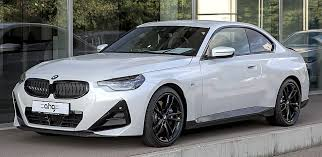
The rebirth of the BMW 2 Series Coupe for its second generation brought forth a vehicle that was not only larger and heavier but, to the disappointment of some enthusiasts, shed its convertible option and the availability of a manual transmission in its initial rollout. Visually, this generation adopted a more muscular stance, characterized by pronounced fender flares, a bold, squared-off grille, and geometric headlights and taillights.
Under the hood, the performance received a significant uplift. The base 2.0-liter turbocharged inline-four engine in the 230i now produced a robust 255 horsepower, while the legendary 3.0-liter turbo inline-six in the M240i unleashed a formidable 382 horsepower. It’s important to note that at launch, the 230i was exclusively rear-wheel-drive, while the M240i came standard with BMW’s xDrive all-wheel-drive system. Both models were exclusively mated to an eight-speed automatic transmission.
Standard equipment on the base 230i Coupe was generous, including 18-inch alloy wheels, LED headlights with automatic high beams, synthetic leather upholstery, power-adjustable sport seats, tri-zone climate control, an 8.8-inch infotainment display with wireless Apple CarPlay and Android Auto, dual USB ports, Amazon Alexa integration, and a 10-speaker sound system. Safety was also a priority, with standard forward collision warning and lane departure warning systems.
The M240i xDrive Coupe elevated the luxury and performance quotient with standard 19-inch alloy wheels, M Sport brakes, keyless entry, push-button start, hands-free tailgate operation, and genuine leather seating. Optional enhancements included BMW’s Live Cockpit Professional, heated seats, a head-up display, a heated steering wheel, gesture control, a 14-speaker Harman Kardon surround-sound system, adaptive cruise control, smartphone integration for vehicle access, a 360-degree camera, and automated parking capabilities.
A year into the second generation, BMW reignited the excitement for performance enthusiasts with the return of the M2. This track-bred machine boasted a potent 453 horsepower 3.0-liter twin-turbo inline-six engine. In a nod to its enthusiast roots, it was offered exclusively with rear-wheel drive and provided the choice between a six-speed manual or an eight-speed automatic transmission. The 2023 model year saw the integration of BMW’s innovative curved display, seamlessly merging a 12.3-inch digital instrument cluster with a 10.25-inch infotainment touchscreen. The trim lineup also expanded, offering xDrive all-wheel drive for the 230i and rear-wheel drive for the M240i.
While the 2024 model year remained largely a carryover, the 2025 BMW 2 Series Coupe received a refresh, introducing updated interior and exterior aesthetics, the latest iDrive 8.5 operating system with QuickSelect functionality, new paint color options, and revised interior trim choices.
Concurrently, the distinct 2 Series Gran Coupe continued through its first generation with only minor updates until receiving significant design and technological enhancements for the 2025 model year.
When exploring used vehicles from the second generation (2022-present), the two-door coupe variants are plentiful, with prices spanning from approximately $24,000 to $60,000. For those specifically seeking a coupe with under 50,000 miles and a clean vehicle history report, numerous attractive options can be found nationally for under $35,000, though some may require travel to secure the ideal BMW 2 Series coupe price.
First Generation: 2014 – 2021
The genesis of the BMW 2 Series marked a pivotal moment, serving as the successor to the popular 1 Series Coupe and Convertible. This name change was part of BMW’s strategic shift in nomenclature, where even numbers were assigned to its coupe and convertible models, while odd numbers denoted hatchbacks, sedans, and SUVs. Positioned as an entry-level premium sports car, the 2 Series was meticulously crafted for drivers who valued agile handling and compact dimensions. Its primary rivals included the Audi A3, Mercedes-Benz CLA-Class, Lexus IS, and, to a lesser extent, the Acura ILX.
The four-seat coupe debuted in 2014, offering two potent powertrain choices: a 240-hp 2.0-liter turbocharged inline-four and a more potent 320-hp 3.0-liter inline-six. This initial iteration was exclusively rear-wheel-drive and came equipped with either a standard eight-speed automatic or a desirable six-speed manual transmission. This resulted in two primary configurations: the 228i Coupe and the M235i Coupe.
Standard features were comprehensive, including eight-way manually adjustable front seats, 17-inch alloy wheels, a 10-speaker audio system with a 6.5-inch display, a single USB port, dual-zone automatic climate control, and rain-sensing wipers. Optional upgrades included sport front seats, larger 18-inch wheels, an M Sport steering wheel, adaptive suspension, variable-ratio steering, enhanced braking systems, a rearview camera, and parking sensors.
The convertible variant joined the lineup in 2015, offering the same engine choices. BMW also introduced its renowned xDrive all-wheel-drive system as an option for this model year. While both the coupe and convertible could be equipped with xDrive on the base powertrain, only the coupe was available with xDrive when paired with the more powerful engine. The 2016 model year brought subtle enhancements to content and packaging, and crucially, the M235i convertible became available with xDrive. This was also the year the highly anticipated M2 Coupe made its official debut in the United States market, a vehicle that quickly became legendary among enthusiasts for its raw performance.
A significant mid-cycle refresh arrived for the BMW 2 Series in 2017, introducing more potent engines and new model designations. Both the coupe and convertible body styles were now available with both powertrain options and either rear-wheel drive or xDrive. The new model names reflected these upgrades: the 230i and the M240i. The 2.0-liter inline-four saw its output increase to 248 horsepower, while the 3.0-liter inline-six jumped to a potent 335 horsepower. Factory-installed options became more sophisticated, including a Track Handling Package, an M Sport Package, a Driver Assistance Package, and a Cold Weather Package. Notably, Apple CarPlay made its inaugural appearance in the 2 Series lineup during this refresh.
From 2018 through 2020, the 2 Series saw minimal structural changes. Minor updates included the addition of new standard safety equipment in 2019 and expanded paint and upholstery choices in 2020. The final year of this generation, 2021, saw Apple CarPlay become standard across all trims. However, the Track Package and certain paint colors were discontinued.
A transformative development occurred at the conclusion of this first generation with the introduction of a completely distinct vehicle that adopted the “2 Series” moniker: the BMW 2 Series Gran Coupe. Arriving in 2020, this four-door sedan offered enhanced practicality and shared little more than its name with the 2 Series Coupe. It was built upon an entirely different platform, featuring standard front-wheel drive and optional xDrive. The Gran Coupe was initially offered in 228i and M235i trims, powered by 2.0-liter turbocharged four-cylinder engines producing 228 horsepower and 301 horsepower, respectively.
The used market offers a healthy selection of first-generation BMW 2 Series two-door models. Prices can range from as low as $6,000 for models with higher mileage and a history of reported accidents, up to approximately $50,000 for low-mileage, exceptionally well-preserved convertibles. For those seeking a vehicle with fewer than 100,000 miles and a clean title, numerous excellent options can be found for under $20,000, making a budget BMW 2 Series a very attainable goal.
The High-Performance Apex: Exploring the BMW M2 and M240i
For the discerning driver who craves the absolute pinnacle of performance within the 2 Series family, the M2 and M240i models represent the ultimate expression of BMW’s engineering prowess. These variants are not merely upgraded versions of their siblings; they are intrinsically designed for unparalleled driving dynamics and track-inspired capability.
The M240i, particularly in its second-generation guise, serves as a potent gateway to M performance. Equipped with the potent 3.0-liter turbocharged inline-six, it delivers a formidable output that pins you back in your seat. While the second-gen M240i prioritizes all-wheel drive for enhanced traction, the first-gen M240i offered both RWD and AWD configurations. The M Sport tuning, larger wheels, upgraded brakes, and sport-tuned suspension all contribute to a more aggressive and engaging driving experience. If you’re looking for a performance BMW 2 Series, the M240i should be at the top of your list.
However, for those who seek the unadulterated thrill of a BMW M car, the M2 is the undisputed champion. The first-generation M2 (F87) was a revelation, offering a raw, analog driving experience that harked back to BMW’s legendary performance heritage. Its potent turbocharged inline-six, precision steering, and balanced chassis made it a formidable track weapon and an absolute joy on winding roads. The subsequent second-generation M2 (G87) continued this legacy with even more power, advanced technology, and refined dynamics, while crucially retaining the option of a manual transmission for the true enthusiast. The M2 is a significant investment, but for those who value ultimate driving performance, the BMW M2 price is justified by the unparalleled experience it delivers. When searching for a performance coupe for sale, the M2 is a benchmark against which others are measured.
Conclusion: Your Next Ultimate Driving Machine Awaits
The BMW 2 Series, in its various iterations, offers a compelling blend of performance, luxury, and driving engagement that remains a benchmark in the compact sports car segment. Whether you’re drawn to the raw athleticism of an M2, the refined sportiness of an M240i, or the accessible fun of a 228i or 230i, there’s a 2 Series model that aligns with your aspirations. By understanding the generational differences, the nuances of reliability, and the value proposition of the pre-owned market, you are well-equipped to make an informed decision.
As you embark on your search for the perfect BMW 2 Series, remember to prioritize vehicles with a comprehensive service history and consider a pre-purchase inspection by a qualified BMW specialist. This due diligence will ensure you find a car that not only meets your expectations but also provides years of exhilarating driving pleasure.
Ready to experience the “Ultimate Driving Machine” for yourself? Explore our curated selection of BMW 2 Series vehicles today and schedule your test drive to discover the thrill of owning a BMW that’s built for the pure joy of driving.