
The Smart Shopper’s Guide to the Hyundai Tucson: Unpacking Value, Reliability, and the Wisest Investment Years
For over two decades, the Hyundai Tucson has carved out a significant niche in the fiercely competitive compact SUV market. Since its debut in 2004, this Korean stalwart has consistently aimed to deliver a compelling blend of affordability, practicality, and an impressive suite of features, often outmaneuvering rivals by offering more bang for your buck. As an industry expert with ten years navigating the automotive landscape, I’ve witnessed the Tucson’s evolution firsthand. It’s a journey from a more basic, Elantra-platformed offering to a sophisticated, tech-laden vehicle that now stands toe-to-toe with established players, proving that smart engineering and customer focus can yield remarkable results. This comprehensive guide will delve into the core aspects of buying a Hyundai Tucson, focusing on its cost-effectiveness, long-term reliability, and crucially, which model years represent the most astute acquisitions for discerning buyers in 2025 and beyond.
The Hyundai Tucson’s enduring appeal lies in its unwavering commitment to value. Hyundai has masterfully leveraged its robust warranty, historically a class-leader, to provide buyers with substantial peace of mind. While early iterations sometimes lagged behind competitors in interior polish, subsequent generations have not only closed that gap but often surpassed expectations, offering refined cabins and advanced technologies that were once reserved for premium vehicles. Understanding the nuances of each generation, from their initial offerings to their most recent advancements, is paramount for making an informed decision. This guide aims to illuminate that path, providing an in-depth look at the Hyundai Tucson’s journey, highlighting the best years to buy and the ones to approach with caution.
Frequently Asked Questions: Navigating Your Tucson Purchase
Before we dive deep, let’s address some common inquiries that prospective Hyundai Tucson buyers often have. These are the questions that often surface during consultations and inform my recommendations.
Which Hyundai Tucson Years Deliver the Best Value and Performance?
Undoubtedly, the fourth-generation Hyundai Tucson (2022-Present) emerges as the pinnacle of the model’s history. This generation represents a dramatic leap forward, embodying Hyundai’s remarkable ascent in automotive engineering and design. It offers a potent combination of cutting-edge technology, advanced safety suites, striking aesthetics, and efficient powertrains, making it a truly compelling package. For those seeking the latest and greatest in the compact SUV segment, the current generation sets a formidable benchmark.
Which Hyundai Tucson Years Should I Consider Avoiding?
When scrutinizing the Tucson’s lineage, the first generation (2005-2009) stands out as a period where the model was still finding its footing. As Hyundai’s inaugural venture into the compact crossover SUV space, this iteration, while foundational, presented several areas ripe for improvement. Its base engine was notably underpowered, lacking the necessary verve for confident highway merging or spirited driving. Furthermore, the interior was characterized by an abundance of hard, inexpensive plastics, detracting from the overall perceived quality. Crucially for modern buyers, particularly families prioritizing safety, the absence of contemporary safety features is a significant drawback.
Is a Hyundai Tucson Still a Smart Purchase in Today’s Market?
Absolutely. A new Hyundai Tucson, and indeed many recent pre-owned models, remains an excellent value proposition. Throughout its production run, the Tucson has consistently championed the cause of value leadership within the compact SUV segment. The core promise remains: you receive a disproportionately high level of features, comfort, and technology for your investment, often with significantly fewer compromises than its competitors. In recent years, Hyundai has refined the Tucson to such a degree that it not only competes but often leads its class, offering a well-rounded and highly desirable ownership experience.
Hyundai Tucson: A Snapshot of Strengths and Weaknesses
To provide a concise overview, here’s a breakdown of the Hyundai Tucson’s recurring advantages and disadvantages:
Pros:
Abundant Features for the Price: Hyundai’s consistent strategy of packing its vehicles with desirable amenities at competitive price points is a major draw.
Exceptional Warranty Coverage: The industry-leading warranty provides unparalleled long-term assurance and can significantly reduce ownership costs.
Optional All-Wheel Drive: The availability of AWD enhances capability and confidence in varied weather conditions.
Strong Resale Value (Recent Models): As the brand and model have matured, later-generation Tucsons are demonstrating impressive value retention.
Cons:
Underpowered Base Engines (Historically): While improving, some earlier base engines lacked the desired acceleration.
Early Generation Refinement Gaps: The first few generations, while functional, didn’t always match the interior comfort and quietness of key rivals.
Basic Interior Appointments (Older Models): The earliest Tucsons featured simpler cabin designs with less premium materials.
A Deep Dive into Each Hyundai Tucson Generation: Decoding the Evolution
Understanding the chronological development of the Hyundai Tucson is crucial for identifying the most appealing model years. Each generation brought distinct improvements and characteristics.
Fourth Generation (2022-Present): The Modern Benchmark
The current, fourth-generation Hyundai Tucson Hybrid and its gasoline counterparts, introduced for the 2022 model year, represent a radical departure from their predecessors, showcasing a bold and futuristic design language. The prominent cascading grille seamlessly integrates advanced LED accent lighting with the main headlamps, which are cleverly positioned lower in the fascia. Sharp, angular body creases define its profile, a signature element in Hyundai’s contemporary design strategy. The rear features distinctive downward-sweeping taillights connected by a full-width illuminated bar, creating a memorable visual signature.
This generation has also undergone a significant dimensional increase. Growing by nearly six inches in overall length, with a wheelbase extended by approximately half of that, the Tucson now offers a more spacious cabin. Rear-passenger legroom has increased by a notable three inches, and cargo capacity behind the rear seats has expanded by a substantial 25%. As is common within the Hyundai Motor Group, the Tucson shares its platform and many components with the contemporary Kia Sportage, a testament to efficient development.
Under the hood, the standard Tucson is powered by a 2.5-liter four-cylinder engine, generating 187 horsepower and 178 pound-feet of torque. This power is managed by an eight-speed automatic transmission, driving the front wheels as standard, with all-wheel drive (AWD) available as an option. For those seeking enhanced efficiency or performance, the Hyundai Tucson Hybrid offers a combined output of 227 horsepower, while the Plug-in Hybrid (PHEV) variant boasts an impressive 261 horsepower.
While the standard gasoline engine provides adequate performance for daily commuting, it’s not the quickest in its class, requiring around 10 seconds to reach 60 mph. The suspension is tuned for a comfortable, compliant ride, prioritizing smoothness over outright sportiness.
The fourth-generation Tucson is offered in a range of trims, from the well-equipped SE and SEL to the sportier N Line, the rugged-styled XRT, and the opulent Limited. Even the base SE trim comes generously appointed with LED headlights, 17-inch alloy wheels, an 8-inch touchscreen infotainment system with wireless Apple CarPlay and Android Auto, and a comprehensive suite of advanced safety features, including forward collision avoidance with pedestrian detection, lane-keeping assist, and driver attention warnings.
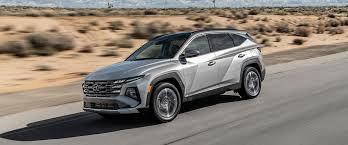
The SEL trim builds upon this with roof rails, proximity key entry, a power-adjustable driver’s seat, heated front seats, adaptive cruise control, and blind-spot monitoring with rear cross-traffic alert. The available Convenience Package elevates the experience further with 19-inch wheels, a hands-free power liftgate, a panoramic sunroof, a digital instrument cluster, dual-zone climate control, wireless charging, and ambient interior lighting. The Premium Package adds luxurious touches like leather seating surfaces, ventilated front seats, and a Bose premium audio system.
The N Line injects a sporty aesthetic with unique styling cues and sport seats, while the XRT focuses on cosmetic enhancements for an adventurous look without altering mechanical capabilities. The Limited trim represents the zenith of the lineup, featuring a panoramic sunroof, premium LED lighting, paddle shifters, a power-adjustable front passenger seat, a heated steering wheel, heated rear seats, a larger 10.2-inch infotainment system with navigation, a blind-spot view monitor, lane-centering assist, and a 360-degree surround-view camera system. Hyundai’s Highway Driving Assist, a semi-autonomous driving feature, is also standard on the Limited.
For the 2023 model year, minor adjustments were made, including the discontinuation of the standalone Premium Package, with its features integrated into other trims. The 2025 model year introduced a significant mid-cycle refresh, enhancing the exterior with subtle styling tweaks to the grille and bumpers. The interior received a more substantial overhaul, featuring a new dashboard design with a cohesive single rectangular panel housing both a 12.3-inch digital instrument cluster and a side-by-side touchscreen. This advanced display is standard on SEL trims with the Convenience Package or higher. All models also benefited from a revised climate control layout. The 2025 Hyundai Tucson trim structure was adjusted for 2026 to SE, SEL (formerly Blue), XRT, SEL Premium (formerly SEL Convenience), and Limited.
Fuel economy estimates for the fourth-generation Tucson are robust, with FWD models achieving up to 29 mpg combined (26 city/33 highway) and AWD models slightly less at 26 mpg combined (24 city/29 highway). Safety ratings have been consistently high, with the 2024 Hyundai Tucson achieving a five-star overall safety rating from the NHTSA and top “Good” marks in IIHS crashworthiness tests, earning it a Top Safety Pick+ designation.
MSRPs for a new Hyundai Tucson for sale typically range from the high $20,000s to over $41,000 for fully equipped hybrid models. The warranty remains a compelling factor, with a 5-year/60,000-mile bumper-to-bumper and a 10-year/100,000-mile powertrain warranty. Recalls have been relatively infrequent and generally address specific component issues, with recent years seeing attention to the airbag systems and transmission park functionality. Early indications suggest strong residual values, a testament to the model’s increasing desirability and build quality.
Third Generation (2016-2021): Refinement and Turbo Power
The third generation of the Hyundai Tucson, debuting for the 2016 model year, marked a significant leap in design and refinement over its predecessor. The exterior adopted a more sophisticated and modern aesthetic, while the dimensions increased slightly, contributing to enhanced cargo space, though passenger room remained largely consistent.
This generation initially offered two distinct powertrain options. The base model featured a 2.0-liter four-cylinder engine producing 164 horsepower and 151 pound-feet of torque, mated to a six-speed automatic transmission. Higher trims stepped up to a more engaging 1.6-liter turbocharged four-cylinder, delivering 175 horsepower and a healthier 195 pound-feet of torque, paired with a seven-speed dual-clutch automatic transmission. Front-wheel drive was standard, with AWD an available option. Performance with the turbo engine was competitive, achieving 0-60 mph in around eight seconds, though the dual-clutch transmission could exhibit occasional low-speed hesitation.
The trim hierarchy included SE, Eco, Sport, and Limited. The SE was the entry point with the naturally aspirated engine, while the Eco offered the turbocharged engine at a more accessible price. The Sport trim added desirable features like 19-inch wheels and a hands-free power liftgate. The Limited trim was the most luxurious, boasting leather upholstery, an 8-inch touchscreen, navigation, and premium audio. An optional Ultimate Package on the Limited further enhanced comfort and safety with features like forward collision mitigation with automatic emergency braking and adaptive xenon headlights.
Subsequent years saw incremental improvements. For 2017, Apple CarPlay and Android Auto were introduced for the Limited trim. The 2018 model year brought a revised trim structure, introducing the SEL and SEL Plus trims, and a more powerful 2.4-liter engine option for the Sport model. A significant refresh occurred for the 2019 model year, introducing Hyundai’s cascading grille, an updated infotainment screen placement, and a crucial enhancement: standard advanced safety features across all trims, including forward collision mitigation and lane-keeping assist. This refresh also saw the discontinuation of the 1.6-liter turbo engine.
Fuel economy for this generation was respectable, with FWD models averaging around 25-28 mpg combined, depending on the engine and transmission. Safety ratings were strong, with the 2019 Hyundai Tucson earning Top Safety Pick+ accolades from the IIHS. Recalls were noted, particularly concerning the antilock brake controller, which required attention throughout its lifecycle. Despite some recall concerns, the third-generation Tucson generally holds its value well, especially in higher trims.
Second Generation (2010-2015): A Design Renaissance
The second-generation Hyundai Tucson, launched for the 2010 model year, marked a pivotal moment in Hyundai’s design evolution. Gone was the anonymous styling of previous models, replaced by a distinctive and attractive exterior featuring Hyundai’s new corporate grille and sculpted headlights. The interior also saw a significant upgrade in material quality and design coherence, feeling more bespoke and less like a parts-bin assembly.
This generation grew in size, offering improved rear-seat legroom and overall interior volume. Initially, the sole engine option was a 2.4-liter four-cylinder producing 176 horsepower, paired with a six-speed automatic transmission. Front-wheel drive was standard, with AWD available. The Tucson distinguished itself with sharper handling dynamics compared to many of its contemporaries.
Trims included the GLS and Limited. The GLS offered a solid set of features, while the Limited added premium amenities like leather seating, heated front seats, and dual-zone climate control. Optional packages enhanced the GLS with features like a leather-wrapped steering wheel and Bluetooth.
The lineup expanded in 2011 with a base GL trim featuring a more economical 2.0-liter engine. The 2013 model year brought refinements to ride comfort and fuel efficiency. By 2014, the GL trim and manual transmission were dropped, and a new SE trim arrived with an upgraded 2.4-liter engine featuring direct injection for increased output to 182 horsepower.
Fuel economy for this generation was decent for its time, with FWD models typically achieving around 23-26 mpg combined. Safety ratings were good, though early models sometimes received lower scores in specific IIHS tests before improvements were made. Recalls were issued for issues such as the antilock brake controller and airbag sensors, requiring careful inspection of older models. Despite some recall history, the second-generation Tucson has demonstrated surprisingly resilient value retention in recent years.
First Generation (2005-2009): The Foundation
The original Hyundai Tucson, introduced for the 2005 model year, laid the groundwork for the model’s future success. It was initially offered with a choice of a 2.0-liter four-cylinder engine (140 hp) or a more potent 2.7-liter V6 (173 hp). Power was sent to either the front wheels or, with AWD, to all four.
Trim levels included GL, GLS, and LX. Standard features were basic by today’s standards, focusing on essentials like power accessories, cruise control, and an audio system. Safety features included anti-lock brakes and airbags. The LX offered more premium touches like leather seats and fog lights.
Over its production run, minor updates included the elimination of the GL trim and the introduction of the SE, along with standardization of features like satellite radio. The 2009 model year saw some driveline and feature enhancements.
Fuel economy was modest for its era, with the V6 engine returning around 18-20 mpg combined. Crash test results were mixed, with the IIHS giving it “Acceptable” ratings in frontal and side impacts but “Poor” in rollover tests. Recalls were issued for issues like brake lights and airbags, and given the age of these vehicles, a thorough pre-purchase inspection is essential. The first-generation Tucson can be found at very low price points, making it an extremely budget-friendly option, though buyers must be aware of its limitations in performance, refinement, and safety compared to later models.
Making the Smart Choice: Which Hyundai Tucson Year is Right for You?
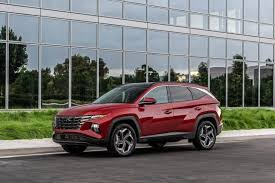
Based on my decade of industry experience, the fourth-generation Hyundai Tucson (2022-present) stands out as the most compelling choice for most buyers seeking the best overall package of technology, safety, comfort, and efficiency. The advancements in design, powertrain options (especially the hybrids), and interior amenities make it a truly competitive vehicle that punches above its weight. The 2025 Hyundai Tucson refresh, with its enhanced interior technology, represents an even more polished offering.
If budget constraints are a primary concern, the third-generation Hyundai Tucson (2016-2021), particularly models from 2019 onwards with standard safety features and the more refined turbocharged engine options, offers a strong balance of value and modern amenities. Look for models with higher trim levels and well-maintained service records.
The second-generation Hyundai Tucson (2010-2015) is a viable option for budget-conscious shoppers who prioritize strong value retention and a noticeable improvement in design and interior quality over the first generation. However, be diligent in checking for past recall work and potential mechanical issues.
The first-generation Hyundai Tucson (2005-2009) is best suited for those seeking the absolute lowest entry price and have minimal expectations for performance, modern features, or advanced safety. It’s a functional vehicle but requires careful inspection due to its age and recall history.
Navigating the Used Market: Key Considerations for a Hyundai Tucson
When venturing into the used Hyundai Tucson market, whether you’re looking in your local area like Hyundai Tucson Chicago or a more general search, always prioritize a pre-purchase inspection (PPI) by an independent mechanic. Pay close attention to maintenance records, as consistent servicing is key to long-term reliability, especially for models with the dual-clutch transmissions. Check for any open recalls and ensure they have been addressed. For the earlier generations, thoroughly test all electronic features and inspect for any signs of rust or corrosion.
The Hyundai Tucson continues to be a smart choice for buyers who value features, warranty, and a competitive price. By understanding the evolution of this versatile compact SUV, you’re well-equipped to find a model that perfectly aligns with your needs and budget.
Take the Next Step in Your Hyundai Tucson Journey
Are you ready to experience the value and refinement of a Hyundai Tucson for yourself? Explore the latest models and pre-owned selections at your local Hyundai dealership. Our expert advisors are ready to guide you through the different trim levels, financing options, and the exceptional warranty that comes standard with every Tucson. Visit us today for a test drive and discover why the Hyundai Tucson remains a top contender in the compact SUV segment.