
The Definitive Guide to Buying a Hyundai Tucson: Decoding Value, Reliability, and the Best Model Years
For over two decades, the Hyundai Tucson has carved out a significant niche in the competitive compact SUV landscape. Since its debut in 2005, initially sharing a platform with the Elantra sedan, the Tucson has evolved from a smaller, more nimble alternative to its larger Santa Fe sibling into a sophisticated, feature-rich family hauler. Throughout its journey, the core promise of the Hyundai Tucson has remained consistent: delivering exceptional value, robust reliability, and an ownership experience bolstered by Hyundai’s industry-leading warranty. As an industry expert with a decade of hands-on experience navigating the automotive market, I’ve witnessed firsthand how the Tucson has transformed, often exceeding expectations and setting benchmarks for its segment. This comprehensive guide will delve into each generation, offering insights into their cost, reliability, and ultimately, which Hyundai Tucson years represent the most astute pre-owned purchase for today’s discerning buyer.
Understanding the Hyundai Tucson’s Evolution: A Generational Breakdown
The Hyundai Tucson has undergone significant transformations since its inception, each generation bringing distinct improvements in design, technology, and performance. Understanding these shifts is paramount for anyone considering a used model.
Fourth Generation (2022-Present): The Apex of Modern Tucson Engineering
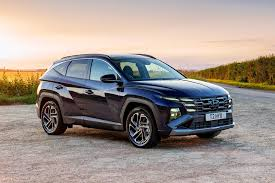
The current, fourth-generation Hyundai Tucson, launched for the 2022 model year, is arguably the most compelling iteration to date. It represents a dramatic leap forward in design and technology, moving away from its predecessors with a bold, futuristic aesthetic. The signature “parametric jewel” grille seamlessly integrates LED daytime running lights, while the headlights are subtly tucked away. Sharp, angular body lines and a distinctive two-tiered taillight design complete the striking visual package.
Beyond its sculpted exterior, the fourth-generation Tucson has grown considerably. It’s nearly six inches longer than its predecessor, with a wheelbase extended by about half that amount. This expansion translates directly into a more spacious cabin, offering an additional three inches of rear-seat legroom and a substantial 25% increase in cargo capacity. As is common with Hyundai vehicles, it shares a platform with its Kia counterpart, the Sportage, meaning shared engineering and often comparable features.
Under the hood, the standard Tucson is powered by a 2.5-liter four-cylinder engine producing 187 horsepower and 178 pound-feet of torque, paired with an eight-speed automatic transmission. Front-wheel drive is standard, with all-wheel drive available. For those seeking greater efficiency or performance, the Tucson Hybrid (227 horsepower) and Plug-in Hybrid (PHEV) versions are also offered as distinct models. While the base engine is competent, acceleration to 60 mph hovers around 10 seconds, placing it on the slower side of its class. The suspension prioritizes comfort, delivering a smooth ride that prioritizes cruising over spirited driving.
Hyundai has loaded even the base SE trim with a generous suite of standard features, including LED headlights, 17-inch alloy wheels, an 8-inch touchscreen with wireless Apple CarPlay and Android Auto, and a comprehensive safety suite. This includes forward collision-avoidance assist with pedestrian detection, lane-keeping assist, and driver attention warning. Higher trims, like the SEL Convenience, add amenities such as a hands-free liftgate, panoramic sunroof, digital instrument cluster, wireless charging, and a premium Bose audio system. The N Line offers sportier styling, while the XRT adopts a more rugged appearance without any actual off-road enhancements. The top-tier Limited trim adds nearly every conceivable luxury, including ventilated front seats, a heated steering wheel, a larger 10.25-inch touchscreen with navigation, a surround-view camera system, and Hyundai’s Highway Driving Assist.
Updates for subsequent model years have refined the offering. The 2023 model year saw some package restructuring, while the 2025 refresh introduced a subtly revised exterior and a significant interior overhaul. The new dashboard features a sleek, integrated dual-screen setup with a 12.3-inch digital cluster and a central touchscreen, though this is contingent on selecting specific trims and packages. Analog gauges remain on lower trims. A new climate control interface also debuted.
Fuel economy estimates for the front-wheel-drive fourth-generation Tucson hover around 28 mpg combined, with AWD models slightly lower. The National Highway Traffic Safety Administration (NHTSA) has awarded the Tucson consistently high safety ratings, with most configurations achieving five stars overall. The Insurance Institute for Highway Safety (IIHS) has also recognized its safety performance, designating it a Top Safety Pick+.
As of early 2026, MSRPs for a new Hyundai Tucson range from approximately $29,200 to over $41,800 for hybrid variants. The standout feature remains Hyundai’s warranty: a 5-year/60,000-mile bumper-to-bumper and a 10-year/100,000-mile powertrain warranty. Recalls have been relatively minor and addressed promptly, with some recurring issues related to the hitch wiring harness and, more recently, concerns regarding the oil pump and transmission parking pawl. Despite these, the fourth-generation Tucson is expected to hold its value well due to its strong feature set and appealing design.
Third Generation (2016-2021): Refinement and the Turbocharged Era
The third generation marked a significant step up in refinement and modern features for the Hyundai Tucson. Introduced for the 2016 model year, it grew in size, offering improved cargo space while maintaining passenger comfort. The exterior design adopted a more sophisticated, European-influenced look, with Hyundai’s signature cascading grille becoming more prominent.
Initially, this generation offered two distinct powertrains. The base model featured a 2.0-liter four-cylinder engine producing 164 horsepower, paired with a six-speed automatic. Higher trims received a more potent 1.6-liter turbocharged four-cylinder engine delivering 175 horsepower and 195 pound-feet of torque, mated to a seven-speed dual-clutch automatic transmission. This turbo-four provided respectable acceleration, allowing the Tucson to reach 60 mph in around 8 seconds, competitive for its class. However, the dual-clutch transmission could occasionally exhibit less-than-smooth shifts at low speeds.
Trim levels like the SE, Eco, Sport, and Limited provided a range of features. The Sport and Limited trims, in particular, began to introduce desirable amenities such as a hands-free power liftgate, leather seating, and advanced safety features like blind-spot monitoring and rear cross-traffic alert. By 2019, Hyundai refreshed the Tucson with updated styling and made several key safety features standard across all trims, including frontal collision mitigation, lane-keeping assist, and driver attention warning. This refresh also saw the discontinuation of the turbocharged engine in favor of a naturally aspirated 2.4-liter four-cylinder producing 181 horsepower.
Fuel economy for the third-generation Tucson was respectable, with FWD models often achieving upwards of 25-28 mpg combined, depending on the powertrain. Safety ratings were generally strong, with the Tucson earning top marks from NHTSA and IIHS for most of its run, although it occasionally dipped from Top Safety Pick+ to Top Safety Pick status depending on specific crash test evaluations.
Recalls for this generation were not excessive, though some persistent issues, like a potential fire risk from the antilock brake controller, were noted throughout its production. Other concerns included occasional engine stalling and trailer wiring issues. Despite these, the third-generation Tucson is generally considered a reliable option, particularly in its later years after initial kinks were worked out. Its value retention has been solid, especially for well-maintained, higher-trim models.
Second Generation (2010-2015): The Turning Point in Hyundai Design and Quality
The second generation of the Hyundai Tucson represents a pivotal moment in the brand’s history, coinciding with Hyundai’s ambitious transformation from a budget-focused manufacturer to a serious contender in the global automotive market. The exterior design was a revelation, moving from bland to bold with a distinctive trapezoidal grille and sculpted headlights. The interior also saw a dramatic upgrade, featuring more upscale materials, thoughtful design elements, and increased passenger and cargo space compared to its predecessor.
Initially, the second-generation Tucson was powered by a 2.4-liter four-cylinder engine producing 176 horsepower, paired with a six-speed manual or automatic transmission. Front-wheel drive was standard, with all-wheel drive optional. This powertrain offered adequate performance for daily driving, and the Tucson distinguished itself with sharper handling than many of its rivals.
Hyundai expanded the trim offerings over the years. The GLS and Limited trims provided a good balance of features and affordability, with the Limited offering niceties like leather seats, heated front seats, and dual-zone climate control. For 2011, a new base GL trim was introduced with a smaller 2.0-liter engine. Throughout its run, Hyundai made incremental improvements to suspension tuning for better ride comfort and enhanced fuel efficiency through engineering tweaks and low-rolling-resistance tires. By 2014, a new SE trim debuted, featuring an upgraded 2.4-liter engine with direct injection, boosting output to 182 horsepower.
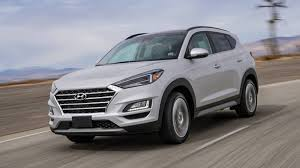
Fuel economy for the second-generation Tucson was decent for its era, with FWD models typically averaging around 23-26 mpg combined. Safety evaluations from NHTSA and IIHS were generally positive, though early models sometimes scored lower in specific frontal impact tests.
Recalls were not uncommon for this generation, with some recurring issues related to the antilock brake controller, brake lights, and airbag sensors. A transmission cooler hose problem also surfaced. Despite these, many second-generation Tucsons have proven to be relatively durable. Their value retention has been surprisingly strong, with some well-maintained examples even appreciating from their lowest resale points. This generation is often cited as a testament to Hyundai’s rapid improvement in quality and design.
First Generation (2005-2009): The Genesis of the Tucson
The original Hyundai Tucson arrived for the 2005 model year as Hyundai’s initial foray into the compact crossover segment. It was based on the Elantra platform, offering a more car-like driving experience than traditional SUVs. The base model was powered by a modest 2.0-liter four-cylinder engine producing 140 horsepower, available with either a five-speed manual or a four-speed automatic. A more potent 2.7-liter V6 engine, offering 173 horsepower, was available on higher trims and exclusively paired with the automatic transmission. Front-wheel drive was standard, with all-wheel drive an option, particularly with the V6.
The first-generation Tucson was available in GL, GLS, and LX trim levels. Even the base GL offered a decent array of standard features for its time, including 16-inch alloy wheels, roof rails, power accessories, and cruise control. Safety equipment included anti-lock brakes, traction control, stability control, and airbags. Higher trims added features like leather upholstery, heated front seats, and a sunroof.
While it provided an affordable entry into the SUV market, the first-generation Tucson suffered from a somewhat unrefined interior, characterized by hard plastics and a basic design. The base engine was considered underpowered, and the four-speed automatic transmission felt dated. The V6 offered a bit more pep but at the expense of fuel economy.
Fuel economy was not a strong suit, with the V6 returning around 18-20 mpg combined, and the four-cylinder only marginally better. Safety ratings from the IIHS were mixed, scoring “Acceptable” in frontal and side impacts but “Poor” in rollover tests. NHTSA crash test data is less readily available for these early models.
Recalls were issued for various components, including brake lights, airbags, and parking brake issues. Given its age and the typical wear and tear associated with vehicles of this vintage, it’s crucial to approach any first-generation Tucson with a thorough inspection. While these models can be found at very low price points, often under $3,000, they represent the least refined and technologically advanced option, best suited for buyers prioritizing budget above all else.
Identifying the Best Hyundai Tucson Years to Buy
When navigating the used market for a Hyundai Tucson, focusing on specific generations and model years can significantly enhance your ownership experience.
The Undisputed Champion: Fourth Generation (2022-Present)
For buyers seeking the latest technology, advanced safety features, and a modern driving experience, the fourth-generation Hyundai Tucson is the clear winner. Its contemporary design, spacious interior, and the availability of hybrid powertrains make it a compelling choice. While newer models come with a higher price tag, the value proposition remains strong, especially considering the comprehensive warranty and expected reliability. The 2025 refresh brings the most advanced interior tech, making it the benchmark for current models. For those seeking a near-new experience with cutting-edge features, consider the 2022-2025 Hyundai Tucson.
The Smart Value Pick: Third Generation (2016-2021)
The third generation represents the sweet spot for many buyers seeking a well-rounded compact SUV without the premium price of the latest model. These Tucsons offer a significant upgrade in refinement, safety, and technology over earlier generations. Models from 2018 onwards are particularly attractive, as they benefit from the mid-cycle refresh that standardized key safety features and introduced the more potent 2.4-liter engine. The earlier models (2016-2017) with the turbocharged 1.6-liter are still a good option, but be mindful of the dual-clutch transmission’s potential quirks. The 2018-2021 Hyundai Tucson offers an excellent blend of features, performance, and reliability.
The Budget-Conscious Alternative: Second Generation (2010-2015)
If your budget is tighter, the second-generation Hyundai Tucson (2010-2015) can be a surprisingly good buy. This generation marked a significant leap in design and quality for Hyundai. Focus on models from 2012 onwards, as suspension tuning and early mechanical issues were often addressed by this point. The 2.4-liter engine offers better performance than the earlier 2.0-liter. While lacking the advanced tech of newer models, these Tucsons are generally reliable, comfortable, and offer a good value proposition for their age. The 2012-2015 Hyundai Tucson is a solid choice for those prioritizing affordability and a well-designed, comfortable interior.
To Approach with Caution: First Generation (2005-2009)
While the first-generation Hyundai Tucson can be found for the lowest prices, it is generally the least recommended. Its age, dated technology, less refined interior, and potential for mechanical issues make it a riskier purchase. If you are considering a first-generation model, it is essential to have it thoroughly inspected by a trusted mechanic and be prepared for potential maintenance costs. Only consider a 2007-2009 Hyundai Tucson if your budget is extremely limited and you prioritize basic transportation over advanced features or refinement.
Key Considerations for Buying a Used Hyundai Tucson
When you’re in the market for a pre-owned Hyundai Tucson, especially from the second or third generation, several factors are crucial for making a wise investment:
Maintenance Records: Always request and scrutinize the vehicle’s maintenance history. A Tucson that has been diligently serviced at recommended intervals is significantly more likely to be reliable. Look for records of oil changes, fluid flushes, and any major repairs.
Vehicle History Report (CarFax/AutoCheck): A vehicle history report can reveal a lot about a Tucson’s past, including accidents, title issues, odometer discrepancies, and previous ownership. While not a substitute for a mechanical inspection, it’s an essential first step.
Mechanical Inspection: Before finalizing any purchase, especially for older models, arrange for an independent mechanic to perform a pre-purchase inspection (PPI). This is a small investment that can save you from costly surprises down the road. They can identify potential issues with the engine, transmission, suspension, brakes, and electronics that you might miss.
Trim Level and Features: Decide which features are most important to you. Higher trim levels (like Limited, SEL Premium, or XRT in later generations) offer more amenities but will also command higher prices and may have more complex systems that could potentially require repair.
Hybrid vs. Gasoline: If you’re considering a hybrid model, ensure you understand its specific maintenance requirements and potential battery longevity. While hybrids offer excellent fuel economy, the upfront cost is higher, and potential battery replacement can be a significant expense in the very long term.
Drivetrain: Decide whether you need all-wheel drive (AWD) or if front-wheel drive (FWD) suffices for your driving needs. AWD offers better traction in slippery conditions but typically comes with a slight reduction in fuel economy and a higher initial purchase price.
High-CPC Keyword Integration: Enhancing Your Tucson Search
When researching the Hyundai Tucson, integrating high-cost-per-click (CPC) keywords can refine your search and potentially lead you to better deals or more informed purchasing decisions. For instance, terms like “Hyundai Tucson resale value,” “compact SUV reliability ratings,” or “best value compact SUV 2025” can offer valuable comparative data. If you’re considering financing, looking into “Hyundai Tucson auto loan rates” or “used SUV financing options” will be pertinent. For those in specific locales, adding city names such as “Hyundai Tucson for sale Chicago” or “used Hyundai Tucson Houston” will narrow your search effectively. When looking for specific features, keywords like “Hyundai Tucson panoramic sunroof” or “Hyundai Tucson advanced safety features” will pinpoint vehicles equipped with your desired options.
Conclusion: Your Next Hyundai Tucson Awaits
The Hyundai Tucson has evolved into a remarkably competent and desirable compact SUV, consistently delivering strong value and a reassuring ownership experience. From its humble beginnings, it has transformed into a segment leader, particularly in its most recent generations. By understanding the nuances of each iteration and focusing on well-maintained examples, you can find a Hyundai Tucson that perfectly aligns with your needs and budget.
Whether you prioritize cutting-edge technology, robust safety, impressive fuel efficiency, or simply a dependable daily driver, there’s a Hyundai Tucson for you.
Ready to find your ideal Hyundai Tucson? Explore current listings, schedule test drives, and conduct thorough pre-purchase inspections to ensure you drive away with a vehicle that promises years of satisfaction.