
The Smart Shopper’s Guide: Navigating the Hyundai Tucson Landscape for Unbeatable Value and Reliability
As an automotive industry veteran with a decade immersed in the world of compact SUVs, I’ve witnessed firsthand the evolution of vehicles designed to cater to the modern driver’s needs. Among the throng of contenders, the Hyundai Tucson has consistently carved out a significant niche, proving itself a compelling choice for those seeking a blend of affordability, practical utility, and increasingly sophisticated features. This guide delves deep into the Hyundai Tucson’s journey, from its inception to its current iteration, equipping you with the insights needed to make an informed decision, whether you’re eyeing a brand-new model or a pre-owned gem. We’ll explore its changing cost, its reputation for reliability, and crucially, which model years represent the most astute acquisitions.
The compact SUV segment is fiercely competitive, populated by stalwart brands and innovative newcomers alike. Yet, the Hyundai Tucson has managed to distinguish itself not just by offering a feature-rich package at a competitive price point, but also by backing it with Hyundai’s renowned, industry-leading warranty. While early iterations might have fallen short in terms of interior polish compared to some rivals, subsequent generations have not only closed that gap but, in many instances, surpassed expectations, delivering a truly well-rounded ownership experience. For those in the market for a used Hyundai Tucson, understanding these generational shifts is paramount to securing the best possible deal.
Hyundai Tucson: Key Considerations for Today’s Buyer
When considering any vehicle, especially within the bustling compact SUV market, a few core questions always rise to the surface. For the Hyundai Tucson, these revolve around its overall value proposition, its long-term dependability, and identifying the specific model years that best embody these qualities.
Frequently Asked Questions About the Hyundai Tucson
Which Hyundai Tucson Model Years Stand Out as the Best Buys?
Without hesitation, the current, fourth-generation Hyundai Tucson (2022-Present) stands as the pinnacle of the model’s history. It’s a living testament to Hyundai’s remarkable progress, consistently delivering cutting-edge technology, advanced safety systems, and impressive fuel efficiency within an aesthetically pleasing and highly functional package. If your budget allows for a newer vehicle, the latest Hyundai Tucson offers an unparalleled ownership experience, representing a significant leap forward in every conceivable metric.
Are There Any Hyundai Tucson Years to Approach with Caution?
We generally advise a more cautious approach to the original Hyundai Tucson (2005-2009). As Hyundai’s inaugural foray into the compact crossover segment, this generation, while foundational, presented numerous opportunities for improvement. Its base engine, while functional, was often criticized for being underpowered, and the interior materials tended to feel utilitarian and less refined than its contemporaries. Furthermore, the absence of contemporary safety technologies might give pause to safety-conscious families.
Does a Hyundai Tucson Represent a Good Investment?
Absolutely. A modern Hyundai Tucson, across its recent generations, consistently offers exceptional value. Historically, it has positioned itself as a segment leader in terms of sheer bang for your buck. You receive a substantial array of features and capabilities for the price, and crucially, the drawbacks that plagued earlier models have been largely mitigated. In today’s competitive landscape, the Hyundai Tucson value proposition remains incredibly strong, making it a wise choice against its compact SUV rivals. For those exploring Hyundai Tucson deals, the newer generations present particularly compelling opportunities.
Hyundai Tucson: A Balanced Perspective
To provide a clear picture, let’s distill the strengths and weaknesses often associated with the Hyundai Tucson:
Pros:
Exceptional Feature Set for the Price: Hyundai consistently packs its vehicles with an impressive array of amenities, even in lower trims.
Industry-Leading Warranty: The long-term powertrain warranty offers unparalleled peace of mind.
Available All-Wheel Drive: Enhances capability and confidence in varied weather conditions.
Modern Styling and Design: Particularly in recent generations, the Tucson boasts a distinctive and attractive appearance.
Cons:
Historically Underpowered Base Engines: While improving, some earlier base engines could feel sluggish.
Early Generation Refinement Lacking: Older models may not offer the same level of interior comfort and quietness as competitors.
Basic Interior in Older Models: The earliest Tucsons often featured more hard plastics and less sophisticated cabin designs.
Decoding the Hyundai Tucson Generations: A Deep Dive
Understanding the evolution of the Hyundai Tucson is key to identifying the best model for your needs. Each generation brought significant advancements, shaping the vehicle into the compelling option it is today.
Fourth Generation (2022-Present): The Cutting Edge of Tucson Design and Technology
The current, fourth-generation Hyundai Tucson, launched for the 2022 model year, represents a radical departure from its predecessor, both aesthetically and technologically. Its striking exterior design is characterized by a bold, parametric-themed grille that seamlessly integrates signature LED daytime running lights, with the main headlights discreetly housed below. The bodywork features sharp, angular creases, a hallmark of Hyundai’s modern design language, while the rear is distinguished by distinctive, downward-pointing taillights connected by a full-width LED bar.
Beyond the visual flair, this generation has seen a substantial increase in size. Measuring nearly six inches longer than the outgoing model, with a significantly stretched wheelbase, the Tucson now offers a more accommodating cabin. Rear-passenger legroom has been enhanced by three inches, and cargo capacity has seen a remarkable 25% increase. As is common with Hyundai products, it shares its platform with the contemporary Kia Sportage, a collaborative effort that often benefits both models.
Powertrain options for the standard Tucson include a robust 2.5-liter four-cylinder engine producing 187 horsepower and 178 pound-feet of torque, mated to an eight-speed automatic transmission. Front-wheel drive is standard, with all-wheel drive available. For those seeking enhanced efficiency, the Hyundai Tucson Hybrid and the plug-in hybrid (PHEV) variants offer compelling alternatives, boasting 227 horsepower and 261 horsepower respectively, though these are often categorized as distinct models.
While the standard gasoline engine provides adequate power for daily commuting, acceleration to 60 mph hovers around the 10-second mark, placing it on the slower end of its class. The suspension is tuned for comfort, delivering a remarkably smooth ride, though it prioritizes comfort over dynamic driving engagement.
The fourth-generation Tucson has been offered in a comprehensive range of trims, catering to diverse preferences and budgets:
SE: The entry point, featuring LED headlights, 17-inch alloy wheels, an 8-inch touchscreen with wireless Apple CarPlay and Android Auto, and a suite of standard safety features including forward collision avoidance, lane keeping assist, and driver attention warning.
SEL: Builds upon the SE with roof rails, keyless entry and ignition, a power-adjustable driver’s seat, heated front seats, and an enhanced safety suite with blind-spot monitoring and rear cross-traffic alert. The optional Convenience package further elevates the SEL with 19-inch wheels, a hands-free liftgate, a panoramic sunroof, a digital instrument cluster, dual-zone climate control, wireless charging, and ambient lighting.
N Line: Offers a sportier aesthetic with unique styling cues and sport seats, plus the Bose premium audio upgrade.
XRT: A visually distinct trim focused on an outdoorsy look, featuring unique bumpers, dark exterior accents, side steps, and a tow hitch receiver, though without enhanced off-road capability.
Limited: The flagship trim, boasting a panoramic sunroof, premium LED lighting, paddle shifters, a power-adjustable front passenger seat, heated steering wheel and rear seats, a larger 10.2-inch infotainment system with navigation, a blind-spot view monitor, lane centering assist, and a surround-view camera system. It also includes Hyundai’s Highway Driving Assist for semi-autonomous driving.
For the 2023 model year, Hyundai streamlined offerings, integrating features from the Premium package into other trims and making the panoramic sunroof available on the N Line. The 2024 model year saw the N Line adopt the more potent hybrid powertrain and the standard Tucson lineup shift focus.
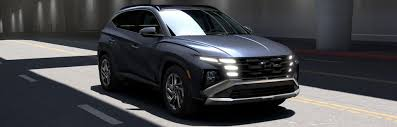
A significant update arrived for the 2025 model year, introducing a refreshed exterior with subtle grille and bumper revisions. The interior received a more substantial overhaul, featuring a new dashboard design with a dual-screen display combining a 12.3-inch digital instrument cluster and a touchscreen housed within a single panel (available on SEL trims with the Convenience package and above). All models also benefited from a new climate control interface. The 2026 model year lineup continues with minor adjustments to trim nomenclature, including the new SEL Premium (formerly SEL Convenience).
Fuel economy for the front-wheel-drive fourth-generation Tucson is estimated at up to 29 mpg combined (26 city/33 highway), with AWD models achieving around 26 mpg combined (24 city/29 highway). These figures are highly competitive within the segment.
Safety ratings have been consistently strong. The NHTSA awarded the 2022 Tucson five stars overall for FWD models, with AWD versions achieving four stars initially, later upgrading to five stars. The IIHS recognized the 2022 model as a Top Safety Pick+, its highest honor, for its excellent performance in all crashworthiness tests.
As of early 2026, the Manufacturer’s Suggested Retail Price (MSRP) for a new Hyundai Tucson ranges from approximately $29,200 for the base model to over $41,825 for the top-tier hybrid variants, excluding destination fees and taxes. Hyundai’s warranty remains a standout feature: a five-year/60,000-mile bumper-to-bumper warranty and an exceptional 10-year/100,000-mile powertrain warranty.
Recalls have been relatively infrequent, with minor issues noted for hitch wiring, roof moldings, and headlights in the initial year. Later model years saw some concerns with the oil pump and persistent hitch wiring issues, alongside occasional reports of airbag system faults, engine bolt concerns, and transmission shifting anomalies for the 2025 model year. These have generally been addressed through manufacturer campaigns. The Tucson’s resilience to significant mechanical issues has contributed to strong residual values, with depreciation often lagging behind many competitors. This makes a used Hyundai Tucson 2022 or newer an attractive proposition.
Third Generation (2016-2021): Refinement and Turbocharged Performance
The third-generation Hyundai Tucson, introduced for the 2016 model year, marked a significant evolutionary step, presenting a far more sophisticated and attractive design than its predecessor. It grew slightly in dimensions, gaining length, width, and wheelbase, which translated into increased cargo space, though passenger dimensions remained largely consistent.
Initially, this generation offered two distinct powertrain choices. The base model featured a 2.0-liter four-cylinder engine producing 164 horsepower and 151 pound-feet of torque, paired with a six-speed automatic transmission. Higher trims, however, benefited from a more spirited 1.6-liter turbocharged four-cylinder engine that delivered 175 horsepower and 195 pound-feet of torque, paired with a responsive seven-speed dual-clutch automatic transmission. Front-wheel drive was standard, with all-wheel drive available.
The turbocharged engine provided commendable performance, allowing the Tucson to accelerate to 60 mph in approximately eight seconds, placing it squarely in the middle of its competitive set. While the dual-clutch transmission was generally smooth, occasional low-speed hesitation was noted. The base engine, while not drastically underpowered, felt noticeably less potent at highway speeds.
The trim structure evolved over the years, but typical offerings included:
SE (Base): Equipped with the 2.0-liter engine, 17-inch alloy wheels, heated mirrors, cloth seats, a 5-inch infotainment screen, satellite radio, and Bluetooth.
Eco/Value: Often served as the entry point for the turbocharged engine, adding features like fog lights, roof rails, and a power driver’s seat.
Sport: Upgraded to 19-inch wheels, a hands-free power liftgate, a leather-wrapped steering wheel, and enhanced safety features like blind-spot monitoring.
Limited: The top-tier trim featured richer interior materials, leather seating, a power front passenger seat, dual-zone climate control, an 8-inch touchscreen with navigation, and premium audio. An optional Ultimate package added advanced safety systems like automatic emergency braking and adaptive headlights.
Key updates throughout this generation included the addition of Apple CarPlay and Android Auto for the Limited trim in 2017. The 2018 model year saw a realignment of trims, introducing the SEL and SEL Plus, while the Sport gained an updated 2.4-liter engine (181 hp). A significant mid-cycle refresh for 2019 brought updated styling, a more integrated infotainment screen, and importantly, a suite of standard safety features across all models, including forward collision mitigation, lane-keeping assist, and driver attention alerts. The turbocharged engine was discontinued after 2019.
Fuel economy for this generation was respectable, with front-wheel-drive models generally achieving around 25-28 mpg combined, depending on the engine and trim. AWD versions typically saw a reduction of 1-2 mpg.
Safety ratings were generally strong. The NHTSA awarded five stars for overall crashworthiness, while the IIHS recognized it as a Top Safety Pick+, although this status fluctuated slightly over the years.
Recalls were less frequent than in earlier generations but included some notable concerns, such as a potential fire risk related to the antilock brake controller and issues with stalling engines and trailer wiring. Despite these concerns, the third-generation Tucson has held its value well, particularly for higher trim levels, making a used Hyundai Tucson 2016 through 2021 a solid used car purchase.
Second Generation (2010-2015): A Leap in Design and Refinement
The second-generation Hyundai Tucson, arriving for the 2010 model year, signaled a dramatic shift in Hyundai’s design philosophy. It moved away from its more utilitarian predecessors, embracing a sleek, modern aesthetic with a distinctive cascading grille and sculpted headlights. The interior also underwent a significant transformation, featuring a more driver-centric design, improved material quality with more soft-touch surfaces, and a greater sense of cohesive design.
While slightly longer and wider than the outgoing model, it lost a bit of height, yet paradoxically, rear headroom saw a minor increase, and legroom improved by 1.5 inches.
Initially, the powertrain consisted of a 2.4-liter four-cylinder engine producing 176 horsepower and 168 pound-feet of torque, coupled with a six-speed automatic transmission. A five-speed manual was available on the base model, though it was discontinued as the generation progressed. Front-wheel drive was standard, with all-wheel drive an option. The Tucson distinguished itself with surprisingly sharp handling for its class, offering a more engaging driving experience than many rivals.
Trim levels typically included:
GLS/GL: The base models offered features like 17-inch steel wheels with covers, remote keyless entry, cloth upholstery, and a decent audio system with USB and auxiliary inputs. Optional packages added features like roof rails, cruise control, and Bluetooth.
Limited: The premium trim came equipped with 18-inch alloy wheels, leather seating, heated front seats, dual-zone climate control, and often a panoramic sunroof and navigation system.
The lineup saw adjustments, with a base GL trim introduced for 2011 featuring a smaller 2.0-liter engine. Suspension tuning was refined in 2012 for a more comfortable ride, and fuel economy improvements were implemented. By 2014, the 2.0-liter engine became more widely available, and a new SE trim offered the more powerful 2.4-liter engine with direct injection for improved output.
Fuel economy for this generation hovered in the mid-20s for combined city/highway driving, with AWD models being slightly less efficient.
Safety ratings were generally good, with the NHTSA awarding four and five stars in various categories. The IIHS recognized it as a Top Safety Pick for several years.
Recalls during this period were more numerous than in later generations, touching on issues such as antilock brake controllers, brake lights, airbag sensors, transmission cooler hoses, and steering wheel airbags. Despite these recalls, the second-generation Tucson has demonstrated notable resilience and has performed well in the used market, with some examples even appreciating slightly in recent years from their lowest resale point, making a Hyundai Tucson 2013 or later a compelling used option.
First Generation (2005-2009): The Genesis of the Tucson
The original Hyundai Tucson, launched for the 2005 model year, laid the groundwork for the nameplate’s future success. It was a compact crossover built on the Elantra sedan platform, offering a more maneuverable and affordable alternative to the larger Santa Fe.
Under the hood, the base model featured a 2.0-liter four-cylinder engine producing 140 horsepower, paired with either a five-speed manual or a four-speed automatic transmission. A more powerful 2.7-liter V6 engine, delivering 173 horsepower, was available on higher trims and exclusively mated to the four-speed automatic. Front-wheel drive was standard, with all-wheel drive an option.
Trim levels typically included:
GL: The entry-level trim offered basic amenities like 16-inch alloy wheels, roof rails, power accessories, and cruise control.
GLS: A mid-range option that was often the most accessible V6 model, adding minor comfort features.
LX/Limited: The top trim provided more upscale features such as fog lights, a CD changer, leather seats, and heated front seats.
Styling was conventional for its era, and the interior, while functional, was characterized by predominantly hard plastics and a less refined feel compared to its contemporaries. The focus was clearly on delivering value and basic transportation.
Fuel economy was modest, with the V6 engine returning around 20 mpg combined. Over its production run, there were minor updates to features and driveline configurations, including the addition of standard satellite radio and an auxiliary input jack by 2008.
Safety ratings from the IIHS were acceptable but not stellar, with the NHTSA not providing ratings for all configurations. Recalls were issued for various components, including brake lights, airbags, and stability control systems.
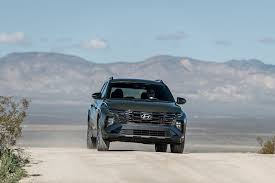
Given its age and the prevalence of less sophisticated technology and materials, the first-generation Hyundai Tucson is generally the least recommended model for purchase today, especially if seeking modern features and performance. However, for budget-conscious buyers prioritizing sheer affordability and basic utility, a well-maintained example might suffice, but thorough inspection is highly advised.
Your Next Step: Finding the Perfect Hyundai Tucson
Having navigated the generations and understood the nuances of the Hyundai Tucson’s journey, the path to finding your ideal vehicle becomes clearer. Whether you’re drawn to the sophisticated technology of the latest models, the balanced approach of the third generation, or the improved refinement of the second generation, there’s a Hyundai Tucson for sale that likely aligns with your priorities and budget.
The allure of the Hyundai Tucson lies in its consistent delivery of value, its robust warranty, and its increasing sophistication with each iteration. By understanding its evolution, you’re empowered to seek out the model year and trim that best suits your lifestyle and long-term ownership goals.
Ready to experience the Hyundai Tucson firsthand? We invite you to explore our curated listings of new and used Hyundai Tucson models, schedule a test drive, and connect with our automotive experts to discuss the best options available in your area. Your perfect compact SUV awaits.