
Navigating the Hyundai Tucson Landscape: A Decade of Expertise in Value, Reliability, and Smart Purchasing
For over a decade, I’ve navigated the intricate world of automotive acquisitions, advising clients on everything from daily drivers to high-performance machines. Among the most consistently compelling options in the compact SUV segment, the Hyundai Tucson stands out. It’s a vehicle that has steadily evolved, transforming from a value-oriented proposition into a sophisticated and desirable package, all while maintaining its core appeal: delivering exceptional features and performance for the investment. This comprehensive guide, drawing on ten years of hands-on experience and market analysis, will illuminate the journey of the Hyundai Tucson, highlighting the best years to buy, its evolving reliability, and the true cost of ownership.
When the first Hyundai Tucson models rolled off the production line in 2005, the automotive landscape was different. Hyundai, though gaining traction, wasn’t yet the powerhouse it is today. The initial Tucson, built on the Elantra sedan platform, aimed to offer a more agile and budget-friendly alternative to larger SUVs like the Santa Fe. While it may have lacked the polish of its more established rivals, it immediately signaled Hyundai’s commitment to value, bundling a surprising amount of equipment for the price. This foundational principle, coupled with Hyundai’s industry-leading warranty, has been a cornerstone of the Tucson’s enduring appeal.
My clients often ask about the “sweet spot” in the used car market, and for the Hyundai Tucson, understanding its generational shifts is key to making an informed decision. The evolution of this compact crossover isn’t just about styling; it’s about significant advancements in technology, safety, powertrain efficiency, and overall refinement. As a seasoned automotive expert, I’ve witnessed firsthand how Hyundai has consistently amplified the Tucson’s strengths while systematically addressing its weaknesses.
Understanding the Core Appeal: What Makes a Hyundai Tucson a Smart Buy?
The Hyundai Tucson consistently lands on the radar of budget-conscious buyers and those seeking maximum utility for their dollar. This isn’t by accident. Hyundai’s strategy has always been to over-deliver on features, offering amenities that often command a premium in competitor vehicles. This generosity extends to their robust warranty program, a significant peace of mind factor, especially for those venturing into the pre-owned market.
However, like any vehicle that has undergone multiple redesigns, not all Hyundai Tucson models are created equal. My goal here is to equip you with the knowledge to discern the truly exceptional model years from those that might present a less compelling case. We’ll delve into the nuances of each generation, providing insights that go beyond surface-level specifications.
Navigating the Generations: A Deep Dive into the Hyundai Tucson’s Evolution
The Hyundai Tucson has been through four distinct generations, each representing a significant leap forward. Understanding these transitions is crucial for identifying the best Hyundai Tucson for your specific needs and budget.
The Fourth Generation (2022-Present): The Pinnacle of Modern Tucson Value
The current, fourth-generation Hyundai Tucson, introduced for the 2022 model year, represents the zenith of this model’s evolution. This generation is, without question, the most advanced, refined, and feature-rich Tucson ever produced. Its design language is a stark departure from its predecessors, featuring a bold, parametric jewel grille that seamlessly integrates LED accent lighting with the headlights. The sharp, creased bodywork is a hallmark of Hyundai’s modern design philosophy, and the distinctive taillights add a touch of aggressive sophistication.
Beyond aesthetics, the dimensional growth of this generation is significant. A nearly six-inch increase in overall length, with a substantial portion dedicated to the wheelbase, translates directly into a more spacious cabin. Rear-passenger legroom sees a noticeable improvement, and critically for practicality, cargo capacity receives a substantial boost – a nearly 25% increase behind the rear seats. This makes the latest Hyundai Tucson an incredibly practical choice for families and individuals alike.
Under the hood, the standard powertrain is a 2.5-liter four-cylinder engine producing a respectable 187 horsepower and 178 pound-feet of torque. This is mated to an eight-speed automatic transmission, with front-wheel drive as standard and all-wheel drive available. While this powertrain offers adequate performance for daily driving, my experience suggests it can feel somewhat leisurely during spirited acceleration. For those prioritizing efficiency and a more dynamic driving experience, the available Hyundai Tucson Hybrid and plug-in hybrid (PHEV) variants offer compelling alternatives, boasting 227 and 261 horsepower respectively. These electrified models are classified separately but are integral to the overall Hyundai Tucson offering.
From a technology and safety perspective, the fourth generation sets a new benchmark. Even the base SE trim comes generously equipped with LED headlights, 17-inch alloy wheels, an 8-inch infotainment touchscreen, wireless Apple CarPlay and Android Auto, and a suite of advanced safety features. These include forward collision-avoidance assist with pedestrian detection, lane-keeping assist, and driver attention warnings. As you move up the trim ladder – SEL, N Line, XRT, and Limited – the features expand exponentially. The SEL Convenience package introduces niceties like a hands-free power liftgate, a digital instrument cluster, dual-zone climate control, and wireless charging. Higher trims unlock premium features such as leather seating, ventilated front seats, Bose premium audio, a panoramic sunroof, and Hyundai’s semi-autonomous Highway Driving Assist.
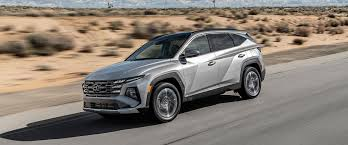
Crucially for prospective buyers, Hyundai has been proactive in refining this generation. For 2025, a subtle styling refresh brought updated grilles and bumpers, but the most significant change arrived in the interior: a sleek, integrated dashboard featuring a side-by-side 12.3-inch digital instrument cluster and touchscreen. This modern cabin design significantly elevates the perceived quality and tech-savviness of the Hyundai Tucson.
Key Takeaway for the Fourth Generation: If your budget allows, the 2022 and newer Hyundai Tucson models are the most technologically advanced, safest, and refined options available. The introduction of the hybrid variants significantly broadens its appeal for those seeking fuel efficiency. While the base engine can feel a bit underpowered, the overall package, especially in higher trims, is exceptionally strong.
The Third Generation (2016-2021): A Major Refinement
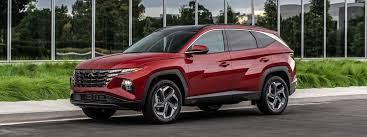
The third generation of the Hyundai Tucson marked a significant step up in design and execution. Launched for the 2016 model year, it presented a far more sophisticated and contemporary exterior. This generation also saw a welcome increase in dimensions, translating into improved cargo space, though passenger room remained largely consistent.
Powertrain options diversified. Initially, a 2.0-liter four-cylinder producing 164 horsepower served as the base engine, paired with a six-speed automatic. However, most trims benefited from a more potent 1.6-liter turbocharged four-cylinder engine delivering 175 horsepower and a more robust 195 pound-feet of torque, coupled with a seven-speed dual-clutch automatic transmission. While this turbo engine offered sprightly acceleration, the dual-clutch transmission could occasionally exhibit hesitation at low speeds – a common characteristic of early DCTs.
The trim structure began to mirror the sophistication of the design. Early trims like the SE and Eco offered a good balance of features for the price, while the Sport and Limited models introduced more premium appointments, including leather seating, an 8-inch touchscreen, and navigation. The optional Ultimate package on the Limited trim was particularly notable, adding advanced safety features like forward collision warning with automatic emergency braking and adaptive xenon headlights.
Hyundai’s commitment to integrating modern tech was evident with the addition of Apple CarPlay and Android Auto starting in 2017 for higher trims, and these became more widely available in subsequent years. The 2019 model year brought a crucial mid-cycle refresh, including updated styling, a more integrated infotainment screen, and, importantly, a significant upgrade in standard safety features across all trims. This included frontal collision mitigation and lane-keep assist, making these Hyundai Tucson models particularly appealing from a safety perspective.
Best Years to Buy for the Third Generation: The 2019-2021 models are highly recommended. The mid-cycle refresh brought significant safety and design improvements, and by this point, Hyundai had ironed out many of the kinks associated with earlier iterations of the turbocharged engine and dual-clutch transmission.
The Second Generation (2010-2015): The Turning Point
The second-generation Hyundai Tucson is where the model truly began its transformation from a budget contender to a serious competitor. Introduced in 2010, this generation showcased Hyundai’s striking new design language, characterized by the signature trapezoidal grille and sculpted headlights. The interior also received a major overhaul, boasting higher-quality materials, thoughtful design elements, and a more premium feel.
This generation saw an increase in size, offering more passenger headroom and legroom. The sole engine offered at launch was a 2.4-liter four-cylinder producing 176 horsepower, paired with either a six-speed manual or a six-speed automatic transmission. While adequate for its class, the Tucson distinguished itself with sharper handling than many rivals, offering a more engaging driving experience.
Trim levels evolved, with the GLS and Limited models offering a range of features. Even the base GLS provided a solid foundation, with options like Bluetooth connectivity and a USB port. The Limited trim added leather seating, heated front seats, and dual-zone automatic climate control, further enhancing its appeal.
However, this generation wasn’t without its challenges. Early models experienced some notable recalls, including issues with the antilock brake controller and airbag sensors. Fuel economy, while acceptable for its time, was not a standout feature compared to some competitors.
Best Years to Buy for the Second Generation: While earlier models might be tempting due to price, the 2012-2015 Hyundai Tucson models are the most desirable. The 2012 update brought suspension refinements for a more comfortable ride and improved fuel efficiency. By 2014, the engine output was increased to 182 horsepower with the introduction of direct fuel injection on the SE trim.
The First Generation (2005-2009): The Humble Beginnings
The original Hyundai Tucson, launched in 2005, was Hyundai’s first foray into the compact crossover segment. It was offered with two engine choices: a 2.0-liter four-cylinder and a more potent 2.7-liter V6. Power outputs were modest by today’s standards, 140 horsepower for the four-cylinder and 173 for the V6. Transmissions were either a five-speed manual or a four-speed automatic.
The interior of this first-generation Hyundai Tucson was basic, characterized by hard plastics and a lack of modern amenities. While it offered essential features like power windows, locks, and cruise control, it lacked the refinement found in later models and its competitors. Safety features were also rudimentary, with anti-lock brakes and stability control being the highlights.
Recalls were relatively common for this generation, touching on issues like brake lights, airbags, and stability control systems. These early models also struggled with fuel efficiency, especially the V6 engine.
Best Years to Buy for the First Generation: Honestly, my professional recommendation is to avoid the first-generation Hyundai Tucson unless your budget is extremely limited and you are mechanically inclined. While they can be found for very low prices, the lack of modern safety features, refinement, and the propensity for older vehicle issues make them a less than ideal purchase for most buyers. If you must consider one, aim for the latest examples (2007-2009) as they incorporated some driveline upgrades and improved fuel economy slightly, but manage your expectations considerably.
Reliability and Maintenance: What to Expect with a Hyundai Tucson
Hyundai’s reputation for reliability has grown substantially over the years, and the Hyundai Tucson has largely benefited from this. The early generations, particularly the first, had their share of issues, as detailed above. However, as Hyundai matured as a manufacturer, so did the Tucson’s reliability.
The third and fourth generations have shown a marked improvement. While no vehicle is entirely immune to recalls or minor issues, these later Tucsons have generally proven to be robust and dependable. For the fourth generation (2022-present), recalls have been relatively light, often concerning specific component issues like hitch wiring harnesses or, more recently, potential problems with airbags or engine bolts. These are typically addressed through manufacturer recalls and should be checked on any pre-owned vehicle.
When considering a used Hyundai Tucson, particularly from the third generation (2016-2021), be aware of the potential for the dual-clutch transmission to exhibit occasional hiccups at lower speeds. While not a widespread failure point, it’s something to note during a test drive.
The cost of ownership for a Hyundai Tucson is generally competitive. Routine maintenance—oil changes, tire rotations, and filter replacements—aligns with industry averages. Parts are readily available, and many independent mechanics are well-versed in servicing Hyundai vehicles. The excellent warranty on new models provides significant long-term cost protection. Even for used models, Hyundai’s historical commitment to extended powertrain warranties offers a layer of security.
The Cost of Ownership: Value Beyond the Sticker Price
The primary draw of the Hyundai Tucson has always been its value proposition. Even today, a new Hyundai Tucson offers a wealth of features for its price point, often undercutting competitors with similar equipment levels. MSRPs for new models in early 2026 range from approximately $29,200 for a base model to over $41,800 for a top-tier hybrid.
When exploring the pre-owned market, the Hyundai Tucson presents even greater value. The depreciation curve for Tucsons has been relatively favorable, meaning you can often find well-maintained examples from the third generation for a fraction of their original cost. This makes them an excellent choice for budget-conscious buyers or those looking for a reliable second vehicle.
The resale value of a Hyundai Tucson is generally strong, particularly for well-maintained examples from the third and fourth generations. This reflects the vehicle’s consistent quality, desirable features, and the enduring appeal of its value proposition.
High-CPC Keywords and Local Search Intent: Targeting Your Next Tucson
When searching for your next Hyundai Tucson, incorporating specific keywords can refine your search and potentially lead you to better deals or more relevant inventory.
For example, instead of just “Hyundai Tucson,” consider searches like:
“Hyundai Tucson SEL Convenience AWD for sale”
“Used Hyundai Tucson Hybrid near me”
“Affordable Hyundai Tucson SUV deals”
“Best year Hyundai Tucson for families”
“Hyundai Tucson lease deals [your city]” (if considering new)
Incorporating your specific location, such as “Hyundai Tucson Nashville, TN” or “Hyundai Tucson Reno, NV,” will prioritize local listings, which is crucial for physical vehicle inspections and test drives.
Keywords like “Hyundai Tucson reliability ratings,” “Hyundai Tucson maintenance costs,” and “Hyundai Tucson warranty comparison” are essential for due diligence, helping you understand the long-term financial implications of owning a particular model year.
For those interested in specific powertrains, terms like “Hyundai Tucson Hybrid MPG” or “Hyundai Tucson PHEV range” will be invaluable.
Frequently Asked Questions (FAQ) – Expert Insights
Which Hyundai Tucson years are the best?
Based on my experience and market analysis, the 2022-present fourth-generation Hyundai Tucson models are the best overall. They offer the latest technology, safety features, and the most refined driving experience. For a slightly older but still excellent option, the 2019-2021 third-generation Hyundai Tucson represents a fantastic value, especially the models with the updated safety features.
Which Hyundai Tucson years are the worst?
I strongly advise avoiding the first-generation Hyundai Tucson (2005-2009). They lack modern safety features, refinement, and often present more mechanical challenges due to their age. While they are the most affordable, the compromises in safety and comfort are significant.
Is the Hyundai Tucson a good deal?
Absolutely. Throughout its history, the Hyundai Tucson has consistently been a value leader in the compact SUV segment. Modern Tucsons offer an exceptional amount of features, technology, and safety for the money. The used market presents even greater opportunities to acquire a high-quality SUV at an attractive price.
Hyundai Tucson Pros and Cons:
Pros: Abundant features for the price, exceptional warranty on new models, available all-wheel drive, spacious interiors in later generations, improved reliability in recent years.
Cons: Base engines in some generations can feel underpowered, early models lacked interior refinement, the first generation is significantly dated.
Making Your Informed Decision
The Hyundai Tucson has evolved from a budget crossover to a highly competitive and sophisticated compact SUV. My decade of experience in this industry has shown me that careful consideration of generational differences, specific model year updates, and your personal priorities will lead to the most satisfying ownership experience.
Whether you’re drawn to the cutting-edge technology of the latest models or seeking exceptional value in a well-maintained pre-owned third-generation example, the Hyundai Tucson offers a compelling proposition. With its blend of practicality, advanced features, and increasing reliability, it remains a smart and sensible choice for a wide range of buyers.
Don’t just take my word for it. The best way to truly understand the Hyundai Tucson is to experience it firsthand. I encourage you to explore the models discussed, conduct thorough research on specific vehicles that catch your eye, and most importantly, schedule test drives. Visiting a local Hyundai dealer near you or browsing reputable pre-owned car marketplaces will allow you to get behind the wheel and feel the evolution of this impressive compact SUV for yourself. Your next reliable and feature-packed adventure awaits with the Hyundai Tucson.