
The Reborn Icon: Your Comprehensive Guide to the 2025 Honda Civic Hybrid
For a decade, the absence of the Honda Civic Hybrid left a noticeable void in the compact car market, particularly for those who prioritized exceptional fuel efficiency without sacrificing the practicality and driving pleasure that the Civic nameplate has long represented. Now, for 2025, this beloved hybrid sedan and hatchback returns, not as a mere continuation, but as a significant leap forward, re-engineered to blend exhilarating performance with earth-conscious economics. Having navigated the automotive landscape for over a decade, I’ve witnessed firsthand the evolution of hybrid technology and the enduring appeal of the Civic. This guide dives deep into what makes the new Honda Civic Hybrid a compelling choice, examining its advanced powertrain, cutting-edge technology, and the long-term value proposition it offers.
The automotive industry is in constant flux, with electric vehicle (EV) incentives and rising fuel costs pushing consumers toward more sustainable transportation solutions. Within this dynamic environment, the Honda Civic Hybrid for sale emerges as a particularly attractive option, offering a familiar yet revitalized package. Unlike the niche appeal of some earlier hybrid models, the 2025 Civic Hybrid is positioned to be a mainstream contender, built upon the stellar reputation of the eleventh-generation Civic. This isn’t just about saving at the pump; it’s about experiencing a sophisticated, powerful, and remarkably refined compact car that happens to be a hybrid.
Unpacking the Powertrain: Performance Meets Efficiency
At the heart of the 2025 Civic Hybrid lies a sophisticated new hybrid system that represents a significant departure from its predecessors. Gone is the Integrated Motor Assist (IMA) system of earlier generations. Instead, Honda has implemented a dual-motor hybrid setup, mirroring the advancements seen in the latest Accord Hybrid and CR-V Hybrid. This technological synergy allows for an EV-like driving experience and performance that rivals even the sportier Civic Si.
The system is anchored by a 2.0-liter four-cylinder gasoline engine, working in concert with two electric motors. The combined output is an impressive 200 horsepower and 232 pound-feet of torque. Crucially, the 2025 Civic Hybrid utilizes a direct-drive system, foregoing traditional CVTs or multi-speed transmissions. This direct coupling of the electric motors and the gasoline engine to the front axle results in exceptionally smooth, quiet, and responsive acceleration. For drivers who appreciate a refined ride, this translates into a near-silent cruising experience and an eagerness to accelerate that belies its economy-focused intentions.
The fuel economy figures are, as expected, stellar. Honda estimates an EPA rating of 50 mpg in city driving, 47 mpg on the highway, and a combined 49 mpg. For the hatchback variant, these figures are slightly adjusted to 48 mpg combined and 45 mpg highway, a testament to its slightly different aerodynamic profile. During my own rigorous testing of the 2026 Civic Hybrid Hatchback (which remains unchanged from the 2025 model year), the performance was, in a word, excellent. The immediate torque delivery from the electric motors makes merging into traffic and navigating urban environments effortless.
A particularly noteworthy innovation is the introduction of four levels of regenerative braking, controllable via paddles on the steering wheel. This feature allows drivers to fine-tune the energy recovery process, enhancing efficiency and providing a more engaging driving experience for those who enjoy maximizing their hybrid’s potential. This level of driver control over hybrid functions is a welcome addition for enthusiasts and eco-conscious drivers alike.
Design and Practicality: More Than Just a Hybrid
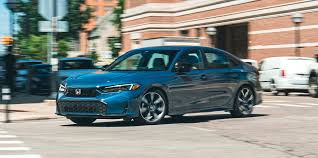
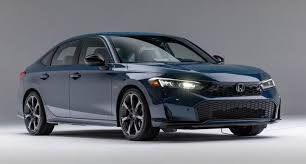
The 2025 Civic Hybrid inherits the sleek and modern design language of the eleventh-generation Civic, available in both sedan and hatchback body styles. The hybrid models are further distinguished by subtle yet elegant styling cues. These include a body-colored headlight surround, a lower front spoiler, and distinctive two-tone 18-inch alloy wheels. These elements contribute to a premium aesthetic that elevates the Civic Hybrid beyond its segment competitors.
The interior design emphasizes spaciousness, comfort, and advanced technology. Even in the base Sport trim, the Civic Hybrid comes generously equipped. Standard features include the comprehensive Honda Sensing suite of driver-assistance technologies, encompassing forward emergency braking, adaptive cruise control, lane keeping assist, and Road Departure Mitigation. Additional safety enhancements such as a blind-spot monitor, automatic high beams, and the semi-automated Traffic Jam Assist are also standard. Furthermore, the commitment to passenger safety is evident with standard rear side airbags and front knee airbags.
The standard amenities list is extensive: a 7-inch touchscreen infotainment system, an eight-speaker audio system, a partially digital instrument panel with a 7-inch display, USB-C ports, dual-zone automatic climate control, LED headlights and taillights, an acoustic laminated windshield for reduced cabin noise, and a power moonroof. These features create a refined and connected cabin experience, making every journey a pleasure.
For those who opt for the higher Sport Touring trim, the technological enhancements are even more pronounced. This includes a larger 9-inch touchscreen with integrated Google Maps, Assistant, and Play apps, a fully digital instrument panel, wireless Apple CarPlay and Android Auto integration, luxurious leather upholstery, a premium 12-speaker Bose stereo system, and a wireless smartphone charger.
The practicality aspect is particularly compelling for the hatchback variant. With 24.5 cubic feet of cargo space, it significantly outpaces the sedan’s 15 cubic feet. This makes the Civic Hybrid hatchback an incredibly versatile option for families, commuters, and anyone who needs ample room for groceries, gear, or weekend getaways.
Navigating the Used Market: What to Look For
The reintroduction of the Civic Hybrid for 2025 means that finding a used Honda Civic Hybrid for sale will primarily focus on the second generation (2006-2015) and, less commonly, the first generation (2003-2005). It’s important to understand the nuances of these earlier models, especially concerning battery longevity and potential maintenance costs.
First-Generation Honda Civic Hybrid (2003-2005): The Pioneer
The first Civic Hybrid was a groundbreaking vehicle, arriving as the third hybrid on the U.S. market after the Toyota Prius and the Honda Insight. It distinguished itself by seamlessly integrating hybrid technology into a conventional Civic chassis, retaining the practicality of a rear seat and a functional trunk. Its IMA system, a precursor to modern mild-hybrid technology, used a 13-horsepower electric motor to supplement the 1.3-liter four-cylinder engine.
While remarkably fuel-efficient for its time (achieving EPA estimates of up to 48 mpg city and 47 mpg highway), this generation was significantly more expensive than its gasoline counterpart, a point that impacted its initial sales. The compact battery pack, located between the trunk and rear seats, is a key area to scrutinize when looking at used examples. Reliability on these older models can be more variable compared to later Civics, and the cost of replacing a failing hybrid battery could approach $3,000 or more, making it crucial to have a thorough pre-purchase inspection.
Second-Generation Honda Civic Hybrid (2006-2015): Refinement and Expansion
The second generation Civic Hybrid, built upon the distinctive eighth-generation Civic platform, offered several key improvements. The IMA powertrain was enhanced, allowing for limited electric-only acceleration at low speeds and under gentle throttle input. Combined output increased to 110 horsepower and 123 pound-feet of torque, with better fuel efficiency due to improvements in the CVT, brakes, and the adoption of an electronic throttle. EPA estimates were initially rated even higher before being adjusted to reflect current testing methodologies.
This generation also saw the introduction of more standard features, including side curtain airbags, a fully digital instrument panel, and optional navigation. Subsequent model years brought further refinements, such as stability control, USB ports, and eventually, a refresh in 2012 that introduced a 1.5-liter engine and a more modern lithium-ion battery. The 2013 model year marked another significant update, addressing criticisms of earlier interior quality with improved materials, better noise insulation, and enhanced features like a backup camera and Bluetooth.
When considering a used second-generation Civic Hybrid, the hybrid battery is once again the primary concern. Models from 2006-2007 are subject to a recall for a faulty DC-DC converter that could cause the vehicle to stall. While this is a fixable issue, it’s something to confirm has been addressed. For any high-mileage second-generation model, a battery health assessment is paramount. A Honda Civic Hybrid price for a used model with over 100,000 miles can start below $3,000, while lower-mileage examples might command upwards of $14,000.
Key Considerations for Used Civic Hybrid Buyers:
Battery Health: This is the single most critical factor. A failing hybrid battery can render the car undrivable or necessitate a costly repair. Look for signs of reduced power, warning lights, or unusual behavior. If possible, have a specialist inspect the battery.
Maintenance Records: A well-documented service history is a strong indicator of a well-maintained vehicle. Pay attention to regular fluid changes and any hybrid-specific maintenance performed.
Recalls and Technical Service Bulletins (TSBs): Research any applicable recalls or TSBs for the specific model year you are considering. This can highlight potential issues that may have been resolved or should be checked.
Driving Feel: Test drive the vehicle thoroughly, paying attention to acceleration, braking, and any unusual noises or vibrations. The transition between electric and gasoline power should be relatively smooth.
Newer is Generally Better: For used Civic Hybrids, the newer the model year and the lower the mileage, the greater the likelihood of good battery health and fewer accumulated wear-and-tear issues.
The All-New 2025 Civic Hybrid: A Smart Investment
The return of the Honda Civic Hybrid for 2025 marks a significant moment in the compact car segment. It’s a vehicle that successfully bridges the gap between the practical demands of everyday driving and the growing desire for sustainable transportation. The advanced hybrid powertrain delivers performance that will impress even those who aren’t typically drawn to hybrids, while the thoughtful design, premium features, and renowned Honda reliability create a compelling package.
For those seeking a new fuel-efficient sedan or hatchback, the 2025 Civic Hybrid is an outstanding contender, offering a superior driving experience and exceptional value. The starting MSRP for the 2026 Civic Sedan Hybrid (unchanged from 2025) is $29,395 for the Sport trim and $32,395 for the Sport Touring. The Civic Hatchback Hybrid starts at $30,595 for the Sport and $33,595 for the Sport Touring. These prices position the Civic Hybrid competitively within its segment, especially considering the extensive standard equipment and advanced technology.
When considering the long-term ownership experience, the 2025 Civic Hybrid stands to be an exceptionally smart investment. The combination of excellent fuel economy, Honda’s reputation for reliable hybrid cars, and the availability of advanced safety features make it a car that will likely hold its value well and provide years of economical and enjoyable transportation.
Whether you’re a seasoned hybrid enthusiast or a first-time buyer exploring greener options, the 2025 Honda Civic Hybrid deserves your serious consideration. Its blend of innovation, performance, and efficiency makes it a standout choice in today’s automotive market.
Ready to experience the future of fuel-efficient driving? Explore the 2025 Honda Civic Hybrid today. Schedule a test drive at your local Honda dealership or visit their website to learn more about available trims, features, and financing options. Your journey towards smarter, more sustainable motoring begins now.