
Navigating the Terrain: Your Expert Guide to Buying a Chevrolet Colorado
For over a decade in this industry, I’ve seen countless trucks roll through dealerships, each with its own story, its own strengths, and its own quirks. Among the midsize pickup segment, the Chevrolet Colorado stands out as a compelling, and often value-packed, option. It’s a truck that has evolved significantly since its inception, aiming to balance utility, comfort, and increasingly, sophisticated technology. If you’re considering a Chevrolet Colorado for sale, understanding its history, its generational shifts, and its common traits is paramount to making a smart investment. This guide, born from years of hands-on experience and market observation, will equip you with the insights needed to find the perfect used Chevrolet Colorado for your needs, whether you’re searching for a robust workhorse in Houston or a weekend adventure vehicle near Denver.
The Colorado’s journey began in 2003, stepping in to replace the venerable S-10. Chevrolet aimed to carve out a distinct niche, differentiating it from smaller compacts by adopting a more substantial midsize footprint. This was a global collaboration, with GM’s Brazilian arm and Isuzu playing key roles, leading to a platform shared across various markets and badges. This international lineage meant the Colorado wasn’t just a domestic product; it was a versatile machine designed for diverse conditions, sharing its DNA with models sold as Chevrolets, Holdens, and even Isuzus globally. The closely related GMC Canyon, essentially the same truck in different attire, further solidified its presence.
The first generation, while perhaps a bit utilitarian in its interior appointments, possessed a striking aesthetic and surprising capability for its time. It offered a range of configurations, from lowered sport truck variants to the more rugged Z71 off-road model. Early models boasted impressive payload capacities, capable of hauling up to 1,733 pounds and towing a respectable 4,000 pounds. While these figures might seem modest by today’s standards, they represented a solid foundation that would only grow. The initial refresh in 2008 brought updates that kept it competitive until the end of its run in 2012, though market demand had begun to wane.
Chevrolet’s return to the midsize segment with the second generation, launching for the 2015 model year, was a strategic response to an evolving market. This iteration, though initially debuting internationally, was meticulously adapted for American tastes and manufactured stateside. It represented a significant leap forward in powertrain options, introducing a potent V6 and a remarkably fuel-efficient, torque-rich turbodiesel. This diesel engine, in particular, was a game-changer, offering up to 7,700 pounds of towing capacity – a figure that rivaled, and in some cases surpassed, that of many full-size trucks of the era. This generation became the workhorse for many, solidifying the Chevrolet Colorado reliability concerns for some, particularly in its earlier iterations.
The third and most recent generation, arriving for the 2023 model year, marks a complete overhaul. Chevrolet has embraced a sophisticated turbocharged four-cylinder engine strategy, retiring the V6 and diesel options. This generation also emphasizes advanced safety features and a significantly upgraded interior, addressing past criticisms. The current Colorado competes at the apex of its class, facing stiff competition from updated rivals like the Toyota Tacoma, Nissan Frontier, and Ford Ranger. It also contends, albeit less directly, with stalwarts like the Honda Ridgeline and the highly capable Jeep Gladiator, particularly in its formidable ZR2 Bison configuration.
Despite its growth over the years, the Colorado retains a more manageable size than its larger Silverado sibling, making it a practical choice for those with garage space limitations or a preference for a more agile truck. As you delve into the Chevrolet Colorado used market, understanding these generational differences is key to pinpointing the exact model that aligns with your priorities.
Decoding the Generations: Which Chevrolet Colorado to Buy?
To truly master the art of buying a Chevrolet Colorado, a deep dive into each generation is essential. Each offers a unique proposition, with distinct advantages and potential drawbacks to consider.
Third Generation (2023-Present): The Modern Contender
Chevrolet left no stone unturned in redesigning the Colorado for 2023. This is a truck built on an entirely new platform, boasting a larger body and a thoroughly modern interior. The engine lineup has been simplified to a single, potent 2.7-liter turbocharged four-cylinder, available in various states of tune. The base models offer a respectable 237 horsepower and 259 lb-ft of torque, while higher trims like the Z71 and Trail Boss, and the range-topping ZR2, push this figure to 310 horsepower and a substantial 430 lb-ft of torque with the “TurboMax” designation. This engine, shared with the Silverado, provides ample grunt for a midsize truck. A responsive eight-speed automatic transmission is standard across the board.
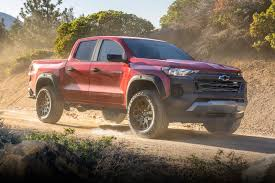
The cabin has undergone a dramatic transformation, now featuring a large 11.3-inch touchscreen and an 8-inch digital instrument display as standard. Higher trims offer an optional 11.3-inch digital gauge cluster. The infotainment system is intuitive, featuring Google built-in for seamless navigation and connectivity. Active safety features, once a luxury, are now more prevalent, with adaptive cruise control and other advanced systems available.
However, this generation is not without its compromises. It is exclusively offered as a crew cab with a short bed, eliminating the extended cab and regular cab options from previous generations. The highly praised diesel engine is also gone. Trims range from the utilitarian WT (Work Truck) and LT to the off-road focused Trail Boss, Z71, and the highly capable ZR2 and ZR2 Bison. The ZR2 Bison, reintroduced in 2024, adds specialized off-road hardware, but the standard ZR2 often presents a better value proposition. For 2025, Chevrolet has introduced exclusive Midnight Editions and enhanced towing visibility with blind-zone steering assist, solidifying the TurboMax as the sole powertrain.
When considering a new Chevrolet Colorado price, expect to start in the mid-$30,000s, with destination charges adding to the total. Used examples from the earliest model years of this generation are already appearing, often priced around the $34,000 mark, potentially offering more features than a base new model.
Second Generation (2014-2022): The Value Proposition with Caveats
The second-generation Colorado is, for many buyers, the sweet spot in the used market. Chevrolet hesitated initially to bring this generation to the U.S., but ultimately launched it for the 2015 model year. It arrived in a midsize truck market ripe for innovation, with the Toyota Tacoma and Nissan Frontier showing their age. This generation offered extended and crew cab configurations, with long and short bed options available depending on the cab style.
Interior technology was functional, with an 8-inch touchscreen on higher trims offering Apple CarPlay and Android Auto integration, a significant advantage at the time. The powertrain story is where this generation truly shines, but also where some reliability concerns emerge. A 2.5-liter four-cylinder and a robust 3.6-liter V6 were available. However, the standout option was the 2.8-liter Duramax turbodiesel, introduced in 2016. This engine delivered exceptional torque, enabling that impressive 7,700-pound towing capacity, and remarkable fuel economy, often exceeding 30 mpg on the highway – a major draw for Chevrolet Colorado diesel enthusiasts.
The trim hierarchy included WT, LT, Z71 (focused on off-road capability), and the top-tier ZR2, which featured an advanced Multimatic DSSV suspension for superior off-road performance. The ZR2 Bison package, introduced in 2019, further enhanced its overland credentials with robust aftermarket components.
While the powertrain options were excellent, the eight-speed automatic transmission in models from 2014-2019 (and even some later ones) became a significant talking point for reliability issues, manifesting as shuddering, clunking, and even complete failure. This transmission problem led to lawsuits and remains a primary concern for potential buyers of these earlier second-generation trucks. HVAC issues and some V6 engine concerns were also reported in earlier years. Later models, particularly those from 2020 onward, saw improvements, but some owners still noted rough shifting.
Despite these transmission woes, the V6, five-cylinder (though not in this gen), and diesel models, particularly in Z71 and ZR2 trims, offer considerable value. When searching for a Chevrolet Colorado lease return or a pre-owned model, aim for those from 2019 or later to potentially mitigate transmission risks. Pricing for well-maintained examples can range from $15,000 to $20,000 for earlier models, with ZR2s commanding higher prices, potentially reaching into the low $40,000s for pristine 2022 examples.
First Generation (2004-2012): The Compact Pioneer with Vintage Appeal
The first-generation Chevrolet Colorado was a bold statement, replacing the long-serving S-10 and immediately establishing itself as a more substantial midsize offering. This generation was a global effort, designed in conjunction with GM’s Brazilian operations and Isuzu, leading to its availability under various brands worldwide. In the U.S., it shared its platform with the GMC Canyon and the briefly sold Isuzu i-Series.
It offered a broader spectrum of cab configurations than its successors, including regular, extended, and crew cabs, paired with either a six-foot or a slightly shorter bed. Unique features, like an optional side door on some beds, harked back to older GM pickup designs. Rear-wheel drive and four-wheel drive options were plentiful, as were suspension choices: the street-oriented ZQ8, the standard Z85, and the lifted, off-road focused Z71.
Powertrain options included a 2.8-liter four-cylinder and a distinctive 3.5-liter inline five-cylinder engine. The five-cylinder became a signature of this generation, though it was also the source of some early reliability concerns, including valve seal issues, cylinder head warping, and overheating. Chevrolet addressed these in a 2007 facelift, introducing a 2.9-liter four-cylinder and a 3.7-liter five-cylinder.
Trim levels progressed from the spartan Base to the more equipped LS, and later the LT and LTZ. Updates in 2009 brought Bluetooth connectivity and improved audio systems. Early models, particularly those pre-2007, are known for valve seat wear, leading to check engine lights and misfires – a costly repair often requiring cylinder head refurbishment. HVAC blower motor failures and emissions system issues were also common. Rust, a perennial concern for older vehicles, is also something to inspect thoroughly on first-generation Colorados.
Despite these potential pitfalls, first-generation Colorados can represent excellent value, especially for those seeking a more compact truck. Good examples with under 100,000 miles can often be found in the $9,000 to $15,000 range. Their smaller dimensions make them ideal for navigating tight urban environments and fitting into smaller garages, offering a distinctly different experience from their larger descendants.
Key Considerations for Your Chevrolet Colorado Purchase
When you’re out searching for a Chevrolet Colorado, regardless of the generation, several factors consistently emerge as crucial for a satisfying ownership experience.

Reliability: This is perhaps the most significant differentiator between generations and even model years within a generation. The early years of both the first and second generations experienced notable reliability hiccups, primarily concerning engines and transmissions. As mentioned, the eight-speed automatic transmission in second-generation models (2014-2019) is a major red flag. Conversely, later models within each generation generally show improved reliability. The third generation, being newer, has a less established long-term reliability record, but initial reports suggest it is performing well. Always consult owner reviews and vehicle history reports for specific models.
Powertrain Performance: If towing and hauling are paramount, the second-generation turbodiesel is a standout, offering immense torque and efficiency. The V6 engines in both the first and second generations provide a good balance of power and drivability. The third generation’s turbocharged four-cylinder is potent and modern, but lacks the unique character and sheer towing prowess of the diesel. Early four-cylinder engines in the first and second generations can feel underpowered, especially when loaded.
Interior and Technology: The interior experience has evolved dramatically. First-generation cabins are decidedly basic. The second generation offered improvements, with the 8-inch touchscreen and smartphone integration being highlights. The third generation represents a quantum leap in cabin sophistication and technology, featuring large displays and a more premium feel, though some hard plastics persist.
Off-Road Capability: For the serious off-roader, the Z71 trim across all generations offers enhanced capabilities. However, the ZR2, and particularly the ZR2 Bison variants, are the true kings of the trail, equipped with specialized suspensions and underbody protection that make them highly competent in challenging terrain.
Cost of Ownership: This includes not only the purchase price but also fuel economy, insurance, and potential repair costs. The turbodiesel second-generation Colorado offers excellent fuel economy, which can offset a slightly higher initial purchase price. However, the potential for costly transmission repairs on earlier second-gen models must be factored into the equation.
Resale Value: While the Toyota Tacoma often holds its value exceptionally well, the Chevrolet Colorado generally offers more truck for the money, both new and used. However, its resale value can be impacted by its reliability reputation, particularly for the problematic early transmissions in the second generation.
Making Your Smart Buy: Expert Tips
As you navigate the Chevrolet Colorado deals available, keep these expert insights in mind:
Inspect Thoroughly: Always conduct a thorough pre-purchase inspection. Pay close attention to the engine, transmission (especially in 2014-2019 second-gen models), suspension, and the frame for any signs of rust. A pre-purchase inspection by a trusted mechanic is an investment that can save you thousands.
Review Vehicle History: A CarFax or similar report is essential. Look for consistent maintenance records, accident history, and title issues.
Test Drive Extensively: Drive the truck in various conditions – city streets, highways, and even some light off-road if possible. Listen for unusual noises, feel for any transmission slippage or rough shifting, and test all the electronics.
Consider Model Year: For the second generation, aim for 2020 and newer models to potentially avoid the most significant transmission issues. For the first generation, models from 2007 onward are generally preferred due to improved engines.
Prioritize Trim and Powertrain: Unless you’re on an extremely tight budget, avoid the base four-cylinder engines if you anticipate needing robust performance. V6, diesel (second-gen), and the TurboMax (third-gen) offer a much more satisfying driving experience. Similarly, Z71 and ZR2 trims offer significant advantages for those who venture off the pavement.
The Final Verdict: Your Chevrolet Colorado Awaits
The Chevrolet Colorado has evolved into a sophisticated and highly capable midsize pickup. Whether you’re looking for a practical daily driver, a weekend adventure companion, or a dependable work truck, there’s a Colorado generation and configuration that can meet your needs. By understanding the nuances of each model year, prioritizing reliability, and conducting due diligence, you can secure a Chevrolet Colorado for sale that delivers exceptional value and years of dependable service.
Don’t let the complexities of the used market deter you. With the knowledge gained from this guide, you’re well-equipped to make an informed decision. Explore the options, test drive with confidence, and discover the perfect Chevrolet Colorado that fits your lifestyle and budget. Your next great adventure or your most productive workday might just be waiting in the form of a meticulously chosen Colorado.