
Navigating the Chevrolet Colorado Landscape: A Decade of Expertise for Savvy Buyers
For those in the market for a capable, versatile, and increasingly sophisticated midsize pickup truck, the Chevrolet Colorado presents a compelling proposition. Having spent the better part of ten years immersed in the automotive industry, I’ve witnessed firsthand the evolution of this American workhorse, from its utilitarian beginnings to its current status as a refined and feature-rich contender. This comprehensive guide aims to equip you with the in-depth knowledge needed to make an informed decision, whether you’re eyeing a brand-new model or a carefully selected pre-owned gem. We’ll delve into the cost considerations, reliability benchmarks, and the standout model years that represent the pinnacle of Chevrolet Colorado value.
The journey of the Chevrolet Colorado began in 2004, aiming to fill the void left by the venerable S-10. Chevrolet, in collaboration with its international partners, envisioned a truck that was more substantial than its predecessor, striking a balance between compact maneuverability and midsize utility. This global design approach meant the Colorado platform found its way into diverse markets under various badges, a testament to its adaptable architecture. At home, its mechanical twin, the GMC Canyon, offered a slightly different aesthetic, while Isuzu also briefly offered a version as the i-Series.
From its inception, the first-generation Colorado sought to differentiate itself. It offered a more aggressive stance and a more substantial presence than competitors like the Toyota Tacoma of that era. While its interior might have leaned towards the functional rather than the opulent, and its base engine wasn’t setting any acceleration records, its visual appeal and inherent utility were undeniable. Chevrolet catered to a spectrum of buyer needs from day one, offering lowered sport truck variants and the rugged Z71 off-road package. It boasted impressive figures for its time, capable of hauling over 1,700 pounds and towing up to 4,000 pounds. Though these numbers might seem modest by today’s standards, they laid the groundwork for the Colorado’s impressive growth in capability over the subsequent generations.
A mid-cycle refresh in 2008 breathed new life into the first-generation Colorado, extending its run until 2012. While sales had begun to taper, Chevrolet harbored a renewed belief in the midsize segment and embarked on a complete redesign for the 2015 model year. This second-generation truck, which had debuted internationally in 2011, underwent significant modifications to resonate with American consumer preferences. Crucially, it returned to domestic production, solidifying its American roots. This iteration marked a significant leap forward, particularly in its powertrain offerings. Chevrolet introduced a robust V6 engine and a remarkably fuel-efficient, torque-laden turbodiesel option. This diesel engine, in particular, was a game-changer, enabling towing capacities of up to an astounding 7,700 pounds – a figure that rivaled some full-size trucks of the time.
The Chevrolet Colorado’s evolution culminated in a transformative third-generation redesign for the 2023 model year. This new iteration boldly shed the diesel and V6 powertrains in favor of a trio of sophisticated turbocharged four-cylinder gasoline engines. Beyond the mechanical upgrades, this generation introduced a significant uplift in active safety features and a dramatically improved interior, addressing key criticisms leveled against its predecessor. Today, the current Colorado stands at the forefront of its class, directly challenging redesigned titans like the Toyota Tacoma, Nissan Frontier, and Ford Ranger. It also engages in a less direct, yet still competitive, rivalry with other midsize offerings such as the Honda Ridgeline and Jeep Gladiator, with the specialized Colorado ZR2 Bison proving a formidable force in off-road environments.
Despite its continuous growth in size and capability, the Colorado maintains a more manageable footprint than its larger Silverado sibling, making it a more practical choice for those with tighter garage spaces or who simply prefer a more agile vehicle. This guide aims to dissect each generation, providing you with the essential insights to navigate the used and new Chevrolet Colorado market effectively. We will cover the core aspects of each model, offering advice on what to seek, what to sidestep, and how to approach pricing.
Unpacking the Chevrolet Colorado: Key Considerations for Buyers
When considering a used Chevrolet Colorado, understanding its generational nuances is paramount. The midsize pickup segment, while not as dominant as full-size trucks, holds a dedicated following for its blend of utility and everyday drivability. The cost of a Chevrolet Colorado can vary significantly based on year, trim, condition, and mileage, making a well-researched approach essential. Reliability is another critical factor, and we’ll explore the trends that have emerged across its lifespan.
Frequently Asked Questions: Demystifying the Colorado
Which Chevrolet Colorado Years Shine Brightest?
The early years of both the first and second generations presented their share of teething problems. However, once Chevrolet ironed out the kinks, these trucks transformed into dependable companions. For the first generation, the 2007 to 2012 Chevrolet Colorado models are widely regarded as robust and reliable workhorses, representing the best of that era. Moving to the second generation, the 2017 to 2022 Chevrolet Colorado offerings provide a significantly improved reliability record and often present a more attractive value proposition on the used market compared to their earlier counterparts. The jury is still out on the long-term reliability of the third-generation models, but initial impressions suggest a strong performance, coupled with the allure of modern technology and a more upscale cabin experience.
What are the Chevrolet Colorado Years to Approach with Caution?
The initial production years of each of the first two generations are where most of the reported issues tend to surface. This encompasses the 2004-2006 Chevrolet Colorado and the 2014-2019 Chevrolet Colorado models. While the issues in the earlier first-gen trucks might be less severe and potentially resolved by now, concerns regarding valve seals and cylinder heads, particularly with the inline five-cylinder engine, were noted. In the second generation, the eight-speed automatic transmission became a focal point of owner complaints, alongside some engine and HVAC system woes. While later second-gen models saw improvements, some owners still report less-than-perfect shifting behavior.
Is a Used Chevrolet Colorado a Worthwhile Investment?
In many cases, yes. A used Chevrolet Colorado can offer a compelling alternative to other midsize trucks. It typically provides superior towing and payload capacities compared to the perennially popular Toyota Tacoma, often at a more accessible price point. Furthermore, it generally boasts a larger and more spacious cabin than many Nissan Frontier models from similar years. However, the reliability concerns, particularly with certain transmissions in the second generation, warrant careful consideration. For those seeking a pure work truck, some base model Ford Rangers from the second-gen Colorado’s era might offer a more refined experience. Nevertheless, the V6-equipped Colorados, the five-cylinder variants, the Z71 trims, and the diesel-powered trucks often represent the sweet spot in terms of performance and value in the used market.
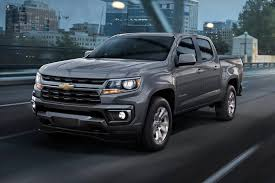
Chevrolet Colorado: A Generational Overview
Third Generation: 2023 to Present – The Modern Contender
Chevrolet executed a complete metamorphosis of the Colorado for 2023, introducing a fundamentally different truck. A larger, re-engineered body now sits atop a new frame, housing entirely new powertrains and a cabin that is both aesthetically pleasing and technologically advanced. While Chevrolet has lavishly endowed this generation with cutting-edge features, it has also made some strategic omissions.
This iteration is exclusively offered as a crew cab with a short, 61.2-inch bed. The extended cab body style, a staple of previous generations, has been discontinued, mirroring the fate of the regular cab after the 2012 model year. This means that bed length options are now limited. The well-regarded V6 and efficient turbodiesel powertrains have been retired, a move that might disappoint those who valued the diesel’s exceptional towing prowess and fuel economy, though it was a slower seller.
The new heart of the Colorado is a turbocharged 2.7-liter “L3B” four-cylinder engine, available in three distinct power outputs. Base models deliver 237 horsepower and 259 lb-ft of torque. The Z71 and Trail Boss trims receive a more potent version, boasting 310 horsepower and 390 lb-ft of torque. The range-topping ZR2 matches the horsepower but cranks up the torque to an impressive 430 lb-ft. This robust engine, shared with the larger Silverado, is more than capable of motivating the midsize Colorado, which itself has grown to near full-size proportions. All engines are paired with a responsive and well-regarded eight-speed automatic transmission. Rear-wheel drive is standard, with four-wheel drive available as an option. For the 2024 model year, Chevrolet integrated the high-output engine across the Z71 and Trail Boss trims, rebranding it as the “TurboMax” engine.
The cabin has undergone a significant overhaul. While rear-seat space hasn’t dramatically increased, the overall ambiance and perceived quality have been substantially elevated, despite the continued use of some hard plastics. A prominent 11.3-inch touchscreen infotainment system is standard, complemented by an 8-inch digital instrument cluster. An optional 11.3-inch digital gauge cluster further enhances the modern feel. The graphics are sharp, and Chevrolet’s infotainment system is intuitive, featuring integrated Google services. Off-road-focused models boast specialized displays that are as functional as they are visually appealing. The inclusion of more standard and optional active safety features, such as adaptive cruise control, significantly bolsters the truck’s appeal.
The third-generation Colorado is offered in five distinct trim levels, along with a specialized package. The WT (Work Truck) and LT grades maintain their established roles as utilitarian and entry-level consumer options, respectively. Above these sits the new Trail Boss, an appealing choice for budget-conscious off-road enthusiasts, directly competing with rivals like the Toyota Tacoma TRD Off-Road and Nissan Frontier Pro-4X. The Z71 trim provides a well-equipped package with a moderate emphasis on off-road capability.
Crowning the lineup are the ZR2 and ZR2 Bison. Both are exceptionally capable off-road machines that can hold their own against performance-oriented trucks like the Ford Ranger Raptor and Toyota Tacoma TRD Pro. The ZR2 Bison, reintroduced for 2024, adds a host of specialized off-road hardware and a distinctive appearance, though the ZR2 itself often represents a better value due to the considerable cost of the Bison package.
For the 2025 model year, the Colorado remains largely unchanged from its recent redesign, with the addition of blacked-out Midnight Editions for select trims and the introduction of blind-zone steering assist with an extended view for towing. The TurboMax engine is now the sole powertrain option across the lineup.
New Chevrolet Colorado pricing for the 2025 model year begins at approximately $32,400, excluding destination charges. Used examples of the earliest third-generation models are already appearing on the market, averaging around $34,000, and these can sometimes offer a higher level of features than a base-model new truck.
Second Generation: 2014 to 2022 – The Resurgence and Refinement
Chevrolet’s initial hesitation to commit to a second-generation Colorado for the U.S. market eventually gave way to a strategic decision. Debuting in early 2014 for the 2015 model year, this generation arrived at a time when the midsize truck segment was ripe for revitalization. The Toyota Tacoma and Nissan Frontier were aging, having dominated the segment after the Ford Ranger’s hiatus.
Unlike its global counterparts, the U.S. market received the second-generation Colorado in only two cab configurations: the extended cab, characterized by its reverse-opening rear doors, and the crew cab, offering full rear doors and enhanced legroom. The regular cab option was not offered in the U.S. during this generation’s production run.
Interior technology was functional rather than cutting-edge. Base models featured a modest 4.2-inch screen, while higher trims received an 8-inch touchscreen with Chevrolet’s infotainment system, which was user-friendly for its time. Apple CarPlay and Android Auto were standard on the larger display from the outset. Later in the generation, lower trims benefited from a 7-inch screen and an available in-vehicle Wi-Fi hotspot (requiring a data plan).
Two cargo box lengths were available: the extended cab exclusively paired with a long box (74 inches), while the crew cab offered both the long box and a shorter 61.7-inch bed. While the space between the wheel wells (approximately 44 inches) meant a standard 4×8 sheet of plywood wouldn’t lay flat, Chevrolet ingeniously incorporated pockets within the bed sides to accommodate 2×6 lumber, allowing such sheets to be supported over the wheel wells, further aided by a two-level tailgate design.
The powertrain landscape evolved significantly. Rear-wheel drive was standard, with four-wheel drive optional. The base engine for the WT and LT trims was a 2.5-liter four-cylinder (205 hp, 195 lb-ft torque). A more potent 3.6-liter V6 (305 hp, 269 lb-ft torque) was also available in these trims. The Z71 and ZR2 models were exclusively four-wheel-drive and typically came equipped with the 3.6-liter V6 as their standard engine.
A pivotal addition for 2016 was the optional 2.8-liter Duramax turbodiesel engine (181 hp, 369 lb-ft torque). This diesel was a revelation, delivering a class-leading 7,700-pound towing capacity (the V6 could manage 7,000 pounds) and achieving an impressive 31 mpg on the highway, a remarkable feat for a midsize pickup. Transmission pairings varied: a six-speed automatic accompanied the four-cylinder, an eight-speed handled the V6, and a unique six-speed was mated to the diesel.
Trim levels saw some restructuring. Prior to 2020, a distinct “Base” trim existed, but the WT (Work Truck) became the de facto entry-level offering, featuring amenities like a four-way power driver seat, a 7-inch touchscreen, essential airbags, stability and traction control, and Chevrolet’s signature CornerStep rear bumper. The LT trim added more premium touches, including body-color accents, 17-inch alloy wheels, an 8-inch touchscreen, and remote keyless entry.
The sport-oriented Chevrolet Colorado Z71 came standard with an off-road suspension package, an automatic locking rear differential, skid plates, all-terrain tires, automatic climate control, and driver power lumbar support.
At the pinnacle of the second-generation lineup was the Chevrolet Colorado ZR2. This model boasted a distinct off-road appearance, enhanced suspension with Multimatic DSSV dampers, increased ground clearance and track width, a spray-on bedliner, unique front styling, and larger all-terrain tires. In 2019, Chevrolet introduced the ZR2 Bison package, co-developed with American Expedition Vehicles (AEV), which infused the truck with even more hardcore off-road hardware.
Advanced safety features were generally reserved for higher trims, with the exception of the mandatory rearview camera. Higher trims like the LT and Z71 offered optional lane-departure warning and forward-collision warning. While these systems enhanced safety, they did not match the comprehensive suite of active safety technologies available in some rival vehicles of the same era.
Fuel economy figures were respectable for a truck of its class, though the ZR2, particularly with the V6 and four-wheel drive, delivered a less impressive EPA-estimated 17 mpg combined. The diesel engine significantly improved this, achieving up to 23 mpg combined.
Regarding reliability, the second-generation Colorado is most noted for its transmission issues. Models manufactured between 2014 and 2019, and even some later ones, experienced recurring problems with the eight-speed automatic transmission, including shuddering, harsh shifting, engagement failures, and outright failures. A class-action lawsuit was filed concerning these issues. Early models also reported HVAC system problems, and some V6 engines experienced issues. While later models generally saw improvements, owners still occasionally reported rough shifting.
Despite these concerns, the Chevrolet Colorado reliability profile, especially in its later years, is generally considered solid. We recommend steering clear of the base four-cylinder engines and WT trims if your priority is performance and capability. For a dedicated work truck, the Ford Ranger might be a more suitable alternative. The Colorado truly shines in its mid-range and higher trims, offering a compelling blend of performance and utility. Earlier models (pre-2018) in good condition can be found for approximately $15,000 to $20,000, with top-tier ZR2 models commanding a premium. Later trucks (post-2018) generally start around $20,000, and the ZR2 and ZR2 Bison can reach into the low $40,000s for 2022 models.
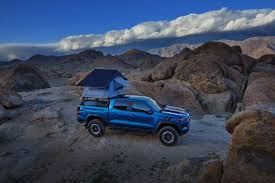
First Generation: 2004 to 2012 – The Foundation of the Colorado
The first-generation Chevrolet Colorado emerged as the successor to the long-running S-10, a truck that had been a staple of the compact pickup market since 1982. Chevrolet’s design philosophy for the Colorado, developed in tandem with GM de Brazil and Isuzu, aimed for a more substantial and versatile platform that could be adapted for global markets under various GM and Isuzu brands. In the U.S., it shared its underpinnings with the GMC Canyon and the Isuzu i-Series.
This generation offered a broader range of body styles than its successor, including regular, extended, and crew cab configurations. The regular and extended cabs featured a 6-foot bed, while the crew cab was equipped with a slightly shorter 5-foot bed. A unique, albeit rarely ordered, side door was integrated into some bed designs, a feature not seen on GM pickups since the 1960s. Both rear-wheel drive and four-wheel-drive options were available.
Chevrolet offered three distinct suspension setups: the low-slung ZQ8, tailored for a street-truck aesthetic; the standard Z85 suspension; and the lifted Z71, engineered for off-road prowess. These suspensions contributed to distinct visual identities, with the ZQ8 models featuring color-coded bumpers and stylish wheels, while Z71s sported fender flares and larger tires, signaling their rugged intent.
Initially, the first-generation Colorado was available with either a 2.8-liter inline four-cylinder or a 3.5-liter inline five-cylinder engine. This made the Colorado and its siblings unique in the U.S. market, offering a five-cylinder option. In response to early criticisms and reliability concerns, Chevrolet updated the engine lineup for 2007. The 3.5-liter five-cylinder was replaced by a new 2.9-liter four-cylinder and a revised 3.7-liter five-cylinder. These updates aimed to address issues such as valve seal problems, cylinder head failures, and overheating that plagued earlier models.
Trim levels were initially divided into Base and LS. The Base trim was spartan, featuring a basic AM/FM stereo, manual locks, and a fixed steering column, though air conditioning and power steering were standard. The LS offered a more refined experience with an improved audio system, power windows and locks, a tilt steering wheel, and additional comfort and convenience features. Later in the generation, an LT trim was introduced, bridging the gap between the Base and LS, and a premium LTZ trim was also available.
The 2009 model year brought Bluetooth hands-free phone connectivity and an upgraded six-disc CD changer for most trims above Base. Various sizes of aluminum wheels became standard on all but the Base models. SiriusXM satellite radio and OnStar (both subscription-based) were also offered on most trim levels.
Chevrolet Colorado reliability concerns were most pronounced in pre-2007 models. Common issues included soft valve seats leading to poor sealing, check engine lights, and misfires, often requiring expensive cylinder head work. The five-cylinder engines were also susceptible to warped or cracked heads due to overheating. HVAC blower motor failures and recurring problems with the emissions system and wiper motors were also noted. While most of these issues were manageable, the cylinder head problems were particularly costly. Rust can also be a concern on older examples of this generation.
Despite these drawbacks, first-generation Colorados remain readily available and reasonably priced. Well-maintained examples with under 100,000 miles can often be found in the $9,000 to $15,000 range, offering a more budget-friendly alternative to comparable Tacomas. Their physically smaller dimensions and wider array of cab configurations make them an attractive option for those seeking a genuinely compact pickup truck experience.
The Chevrolet Colorado: A Summary of Strengths and Weaknesses
Pros:
A commendable balance of comfort and everyday utility.
A diverse selection of capable powertrains across its generations.
Impressive towing capacities, particularly in later models and diesel variants.
More manageable size compared to full-size trucks.
Off-road trims like the Z71 and ZR2 offer genuine trail capability.
Cons:
Transmission issues were a significant concern on early second-generation models.
Base engines in some earlier generations were considered underpowered.
Interior materials and design felt dated and less premium until the third generation.
Early first-generation models had notable engine and emissions system reliability concerns.
Making Your Move: Your Next Step with the Chevrolet Colorado
The Chevrolet Colorado has carved out a distinct niche in the midsize truck market, offering a compelling blend of capability, versatility, and increasingly sophisticated features. Whether your priority is robust towing for your weekend adventures, the ruggedness for off-road exploration, or simply a more practical daily driver than a full-size pickup, there’s a Colorado generation and trim that can meet your needs.
As you embark on your search, remember that thorough research, a keen eye for detail during inspections, and a clear understanding of each model year’s strengths and weaknesses are your most valuable tools. Don’t hesitate to seek out certified pre-owned options from reputable Chevrolet dealerships or engage with independent mechanics for pre-purchase inspections.
Ready to experience the Chevrolet Colorado firsthand? We invite you to explore local dealerships and schedule test drives of the models that have captured your interest. Speaking with sales professionals about current inventory, financing options, and any available incentives can provide valuable real-time information. Your journey to owning a capable and rewarding midsize truck starts today – take that confident next step!