
Navigating the Terrain: A Decade of Expertise on Buying Your Next Chevrolet Colorado
As an industry professional with ten years deeply immersed in the automotive sector, particularly within the pickup truck segment, I’ve witnessed firsthand the evolution and distinct character of vehicles like the Chevrolet Colorado. This midsize pickup, a stalwart in its class, has a rich history of adaptation and refinement. From its inception as a successor to the utilitarian S-10 to its current iteration as a feature-laden, technologically advanced contender, the Colorado offers a compelling narrative for buyers seeking capability, value, and a touch of modern flair. This comprehensive guide aims to distill that decade of insight, providing you with the clarity needed to make an informed decision when purchasing your Chevrolet Colorado, whether new or pre-owned.
The journey of the Chevrolet Colorado began in 2003, born from a collaborative effort between GM’s global design arms and Isuzu. The intention was clear: to craft a versatile platform that could serve diverse markets. This international genesis meant the same fundamental design appeared in various guises worldwide – as a Chevrolet in Southeast Asia, a Holden in Australia and New Zealand, and even an Isuzu in European and Japanese markets. Closer to home, its GMC Canyon sibling shared its DNA, with Isuzu also offering a brief North American iteration as the i-Series.
The first-generation Chevrolet Colorado carved out a niche by presenting a more substantial and aesthetically pleasing alternative to the venerable Toyota Tacoma of its era. While its interior might have leaned towards the functional rather than the luxurious, and its base engine lacked outright punch, its striking exterior and robust utility were undeniable. From its debut, it offered specialized variants, including lowered sport truck versions and the capable Z71 off-road model. It boasted a commendable payload of up to 1,733 pounds and could tow a 4,000-pound trailer – figures that, while modest by today’s standards, laid the groundwork for future enhancements. The model received a notable refresh in 2008, continuing its run until 2012, though market momentum had begun to wane.
Chevrolet’s strategic re-entry into the midsize truck market was marked by the launch of a completely redesigned Chevrolet Colorado for the 2015 model year. This iteration, also developed with international input and initially debuted in Thailand, underwent significant U.S.-market tuning. Crucially, it was manufactured stateside, reinforcing American production values. This second generation represented a substantial leap forward, particularly in powertrain offerings. The introduction of a potent V6 engine and a remarkably fuel-efficient, torque-rich turbodiesel option significantly boosted its appeal. The diesel, in particular, delivered an impressive towing capacity of up to 7,700 pounds, rivaling some full-size trucks of the time – a testament to its engineering prowess.
The most recent chapter in the Chevrolet Colorado’s story began with a complete overhaul for the 2023 model year. This third generation saw the departure of the diesel and V6 engines, replaced by sophisticated turbocharged four-cylinder gasoline powerplants. Furthermore, this generation embraced a more modern approach to safety and interior refinement, addressing areas where its predecessor had faced some criticism. The current Chevrolet Colorado stands tall among its redesigned competitors, including the Toyota Tacoma, Nissan Frontier, and Ford Ranger, while also engaging less directly with the Honda Ridgeline and Jeep Gladiator. Its off-road variants, especially the ZR2 Bison, continue to prove their mettle in demanding terrain.
While the Chevrolet Colorado has grown in stature over its generations, it retains a more manageable footprint than its larger Silverado sibling, making it a more practical choice for those with tighter garage spaces. Understanding the nuances of each generation is paramount to selecting the Chevrolet Colorado that best aligns with your needs and budget.
Decoding the Generations: A Deep Dive into the Chevrolet Colorado Lineup
Third Generation (2023-Present): The Modern Contender
Chevrolet’s complete redesign for the 2023 Chevrolet Colorado marked a significant departure, introducing a larger body on a new frame, updated powertrains, and a decidedly modern interior. This generation presents a streamlined lineup, focusing on crew cab configurations with a standard short bed (61.2 inches). The extended cab and regular cab options, present in previous generations, were discontinued. This generation also bid farewell to the V6 and the fuel-sipping turbodiesel, opting instead for a single turbocharged 2.7-liter four-cylinder engine available in three distinct power outputs.
The base engine delivers 237 horsepower and 259 pound-feet of torque. For the Z71 and Trail Boss trims, these figures rise to 310 horsepower and 390 pound-feet of torque. The top-tier ZR2 variant matches the horsepower but boosts torque to an impressive 430 pound-feet. This versatile engine, shared with the full-size Silverado, provides ample grunt for the midsize Chevrolet Colorado, even as the truck itself has expanded in size. All models are paired with a responsive eight-speed automatic transmission, with rear-wheel drive as standard and four-wheel drive optional. Notably, for the 2024 model year, the high-output engine was rebranded as the “TurboMax” and became standard on Z71 and Trail Boss trims.
The cabin received a dramatic overhaul, prioritizing a more upscale and technologically advanced feel, though rear-seat space didn’t see a substantial increase. A prominent 11.3-inch touchscreen infotainment system is standard, complemented by an 8-inch digital instrument display. An optional 11.3-inch digital gauge cluster further enhances the modern aesthetic. The infotainment system, featuring integrated Google services, is lauded for its intuitive interface and sharp graphics. Off-road-focused trims benefit from specialized displays that offer practical utility. Active safety features have been significantly expanded, with many now standard or available, including adaptive cruise control – a welcome addition for long hauls and towing.
The trim hierarchy begins with the Work Truck (WT) and LT, offering familiar functionality. The new Trail Boss emerges as a compelling budget-friendly off-roader, directly competing with rivals like the Toyota Tacoma TRD Off-Road and Nissan Frontier Pro-4X. The Z71 provides a well-equipped package with a nod towards off-road capability. At the pinnacle sit the ZR2 and the reintroduced ZR2 Bison. These are formidable off-road machines, capable of challenging even the likes of the Ford Ranger Raptor and Toyota Tacoma TRD Pro. While the ZR2 Bison offers specialized, heavy-duty off-road hardware and a distinctive appearance, the standard ZR2 often represents a better value proposition.
For the 2025 model year, the Chevrolet Colorado sees subtle enhancements, including new Midnight Edition appearance packages and the introduction of blind-zone steering assist with extended view, beneficial for towing. The TurboMax engine is now the sole powertrain option.
New Chevrolet Colorado models start in the low $30,000s, before destination charges. For those considering a pre-owned vehicle from this generation, early models typically average around $34,000, often presenting a compelling opportunity to acquire a well-optioned truck at a slightly reduced price.
Second Generation (2014-2022): The Resurgence
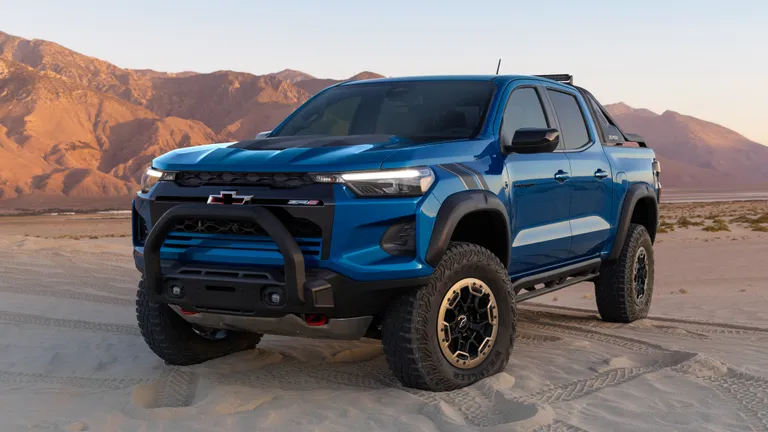
Chevrolet’s initial hesitation to replace the first-generation Colorado led to a significant gap, with the second generation finally arriving for the 2015 model year, though it debuted internationally in 2011. This period saw the midsize truck market largely dominated by aging models from Toyota and Nissan, with Ford’s Ranger having exited the market. The all-new Chevrolet Colorado arrived at an opportune moment, ready to challenge the status quo.
Unlike its international counterparts, U.S. models were exclusively offered in extended and crew cab configurations. The extended cab featured reverse-opening rear doors, while the crew cab offered full rear doors and enhanced legroom. Interior technology was functional rather than groundbreaking, with base models featuring a small 4.2-inch screen, while higher trims boasted an 8-inch Chevrolet Infotainment System with Apple CarPlay and Android Auto. Later models saw a reduction in screen size on lower trims to 7 inches but introduced an integrated Wi-Fi hotspot.
Cargo bed options included a long box (74 inches) for extended cab models and both a short box (61.7 inches) and the long box for crew cabs. The bed design accommodated standard 4×8 sheets of plywood by utilizing pockets in the side panels to support them over the wheel wells.
Powertrain options evolved significantly. Standard rear-wheel-drive models initially offered a 2.5-liter four-cylinder (205 hp, 195 lb-ft) or a more potent 3.6-liter V6 (305 hp, 269 lb-ft). Four-wheel-drive models, including the Z71 and ZR2 trims, also featured the V6 as standard. A pivotal addition arrived in 2016 with the optional 2.8-liter Duramax turbodiesel engine. Producing 181 horsepower and a substantial 369 lb-ft of torque, this powerplant delivered class-leading towing capacity (7,700 pounds, compared to the V6’s 7,000 pounds) and remarkable fuel economy, achieving up to 31 mpg on the highway – a standout figure for its class. Transmission pairings varied: a six-speed automatic with the four-cylinder, an eight-speed with the V6, and a unique six-speed with the diesel.
Trim levels progressed from a base model to the Work Truck (WT), LT, Z71, and the off-road-focused ZR2. The ZR2, in particular, featured an aggressive off-road suspension, Multimatic DSSV dampers, increased ground clearance, and distinctive styling. The ZR2 Bison package, introduced in 2019, further enhanced its off-road prowess with specialized components from American Expedition Vehicles.
Advanced safety features were not a primary focus in the early years of this generation, with most requiring an upgrade from the base trim. While rearview cameras were standard, features like lane departure warning and forward-collision warning were optional on LT and Z71 models. Compared to competitors like the Toyota Tacoma, the Chevrolet Colorado lagged in the breadth and sophistication of its available active safety systems.
Fuel economy, while generally better than full-size trucks, varied considerably. The V6-powered, four-wheel-drive ZR2 crew cab, for instance, returned an EPA-estimated 17 mpg combined, whereas the diesel variant achieved a more impressive 23 mpg combined.
Reliability can be a mixed bag with this generation. The primary concern revolved around the eight-speed automatic transmission in early models (2014-2019), which was subject to class-action lawsuits due to issues like shuddering, clunking, and outright failure. HVAC system problems and some V6 engine concerns were also reported. Later models generally saw improvements, but transmission refinement remained a point of discussion for some owners.
Despite these concerns, a used Chevrolet Colorado from this era can represent good value. The diesel and V6 models, particularly those from 2017 onwards, are generally considered the most desirable. While base four-cylinder WT trims are the least compelling and may find stronger competition from Ford Ranger base models, the mid-range and higher trims of the Chevrolet Colorado offer a compelling balance of performance and utility. Pre-2018 models in good condition can be found in the $15,000-$20,000 range, with top-tier ZR2s commanding higher prices. Post-2018 models typically start around $20,000, with 2022 ZR2s approaching $40,000.
First Generation (2004-2012): The Foundation
The initial Chevrolet Colorado emerged in 2004, succeeding the long-standing S-10. This generation was a global product, co-developed with GM’s Brazilian operations and Isuzu, and sold worldwide under various General Motors brands. In the U.S. market, it was also available as the GMC Canyon and the Isuzu i-Series.
This generation offered a wider array of cab and bed configurations than its successors. Three cab styles were available: regular, extended, and crew. Regular and extended cabs featured a six-foot bed, while the crew cab came with a slightly shorter bed. A distinctive, albeit rarely ordered, side access door was also a feature on some models. Both rear-wheel drive and four-wheel drive options were available across the board.
Suspension choices catered to different driving preferences: the ZQ8 offered a lowered stance for street performance, the standard Z85 provided a balanced ride, and the Z71 was tuned for off-road excursions. Visually, these suspensions also dictated distinct styling cues, from color-coded bumpers and unique wheels on the ZQ8 to fender flares and larger tires on the Z71.
Powertrain options initially included a 2.8-liter inline four-cylinder and a 3.5-liter inline five-cylinder engine. The five-cylinder was a unique offering in the pickup segment at the time. In 2007, a facelift brought updated engines: a 2.9-liter four-cylinder and a 3.7-liter five-cylinder, introduced partly to address earlier powertrain concerns.
Trim levels evolved from a spartan Base model to the L.S., with the L.T. and LTZ trims later added to bridge gaps and offer more premium features. By 2009, Bluetooth connectivity, a six-disc CD changer, and available SiriusXM satellite radio and OnStar became more prevalent.
Reliability in the first-generation Chevrolet Colorado requires careful consideration, particularly for pre-2007 models. Common issues included valve seat wear leading to poor sealing, check engine lights, and misfires. Cylinder head warping or cracking, especially on five-cylinder models, and overheating were also concerns. HVAC blower motor failures and emissions system problems were frequently reported. While many of these issues are reparable, cylinder head problems can be costly. Rust susceptibility is another factor to monitor. Later models, particularly post-2007, generally saw improvements in these areas.
Despite these potential drawbacks, first-generation Chevrolet Colorado trucks remain an affordable entry point into the midsize pickup market. Well-maintained examples with under 100,000 miles can typically be found in the $9,000-$15,000 range, offering a considerable value proposition compared to some competitors. For those seeking a genuinely compact pickup with a broader range of configurations, this generation is a strong contender.
Navigating the Used Market: Key Considerations for Your Chevrolet Colorado Purchase
When venturing into the used Chevrolet Colorado market, several critical factors will dictate your satisfaction and long-term ownership experience. The primary objective is to identify a vehicle that balances capability with reliability and value.
Engine and Transmission Pairing: This is arguably the most crucial aspect. For the second generation (2015-2022), the 2.8-liter Duramax turbodiesel engine is highly sought after for its exceptional towing and fuel economy. If a gasoline engine is preferred, the 3.6-liter V6 generally offers a better blend of performance and refinement than the base 2.5-liter four-cylinder. Be particularly cautious with earlier model years of the eight-speed automatic transmission; thorough inspection and service records are vital. For the first generation, the 3.7-liter five-cylinder engine, particularly in later years, is a good performer, but thorough pre-purchase inspection for the common head and valve issues is paramount.
Trim Level and Features: Decide what features are essential for your daily use. The Z71 and ZR2 trims, especially from the second and third generations, offer significant off-road enhancements and typically come with a richer feature set. If your needs are more basic, LT and even WT models can provide excellent utility at a lower price point. For those seeking advanced safety features, prioritize newer models (2020 onwards for the second generation, and the entire third generation).
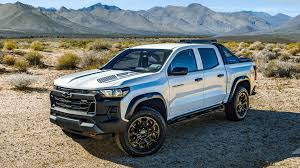
Mileage and Maintenance Records: As with any used vehicle, lower mileage and a documented history of regular maintenance are strong indicators of a well-cared-for truck. Pay close attention to records detailing transmission fluid changes, engine tune-ups, and any significant repairs. For the first generation, be especially vigilant for signs of rust and have the cylinder heads inspected.
Condition Assessment: Beyond mechanical checks, evaluate the overall condition of the truck. Inspect the interior for wear and tear, the exterior for dents, scratches, and rust, and the bed for excessive damage that might indicate heavy commercial use. Check for fluid leaks under the vehicle.
Price vs. Value: While cost is a significant factor, consider the overall value. A well-maintained, higher-mileage diesel Colorado might offer better long-term value than a lower-mileage gasoline model with known transmission issues. Researching average market prices for specific model years, trims, and mileage will help you negotiate effectively. For instance, a robustly equipped Chevrolet Colorado ZR2 for sale might command a premium, but its off-road prowess and features often justify the investment for enthusiasts. Similarly, finding a used Chevrolet Colorado LT with towing package could be an excellent option for those needing capability without the off-road focus.
Local Market Nuances: If you’re searching in specific regions, like looking for a Chevrolet Colorado for sale in Denver, CO or a Chevrolet Colorado truck for sale in Houston, TX, consider local demand and typical usage patterns. Trucks in drier, less corrosive climates might show less rust.
Is a Used Chevrolet Colorado the Right Choice for You?
The Chevrolet Colorado has consistently offered a compelling blend of utility, capability, and increasingly, modern amenities. While certain model years and specific powertrains have presented challenges, the core strengths of the Colorado – its manageable size, competitive towing and payload capacities, and a wide range of configurations and trims – remain attractive.
For the budget-conscious buyer, a well-inspected first-generation model can be an exceptional value, offering a genuinely compact and utilitarian pickup. The second generation, particularly the diesel and V6 variants from 2017 onwards, represents a significant step up in refinement and performance, providing a solid, capable midsize truck. The latest third-generation models bring cutting-edge technology and improved interior quality to the forefront, making them highly competitive in today’s market.
Ultimately, the decision hinges on your priorities: budget, intended use, desired features, and tolerance for potential maintenance. By understanding the strengths and weaknesses of each generation and model year, and by conducting thorough due diligence, you can confidently select a Chevrolet Colorado that will serve you reliably for years to come.
Are you ready to experience the capability and value of a Chevrolet Colorado firsthand? We invite you to explore our extensive inventory, schedule a test drive, and let our team of experts guide you to the perfect truck that fits your lifestyle and budget. Your next adventure awaits!