
The Ultimate Chevrolet Traverse Buyer’s Guide: Navigating Cost, Reliability, and Finding Your Perfect Model Year
For over a decade, the Chevrolet Traverse has carved out a significant niche in the American automotive landscape, serving as a go-to option for families prioritizing space, comfort, and a car-like driving experience in a larger SUV package. As an industry professional with ten years immersed in automotive trends, I’ve seen firsthand how the Traverse has evolved, adapting to changing consumer demands while consistently offering a compelling blend of utility and value. This comprehensive guide aims to equip you with the knowledge to make an informed decision, whether you’re eyeing a brand-new model or a seasoned pre-owned gem. We’ll delve into the critical aspects of cost, dissect its reliability across generations, and pinpoint the best Chevrolet Traverse years to buy.
Understanding the Traverse’s Place in the Market
The Chevrolet Traverse isn’t just another SUV; it’s a segment leader in dimensional prowess. Positioned above the Equinox and Blazer, it enters the fray with rivals like the Kia Telluride, Subaru Ascent, Volkswagen Atlas, and Honda Pilot. However, the Traverse distinguishes itself with its generous proportions, often rivaling the footprint of Chevy’s own body-on-frame Tahoe. This makes it an appealing choice for families who require substantial three-row seating and expansive cargo capacity but prefer the smoother ride and easier handling of a crossover over the ruggedness of a traditional truck-based SUV. The Traverse successfully bridges the gap, offering a minivan’s interior volume with an SUV’s popular aesthetic, without the perceived stigma associated with minivans.
The current, third-generation Traverse, which debuted in 2024, further solidifies its SUV identity with a more rugged exterior design. While it’s not built for serious off-roading, this styling cue appeals to buyers seeking a more robust appearance. For those who appreciate a more upscale experience built on the same platform, the Buick Enclave often presents an attractive alternative.
A Decade of Dominance: The Traverse’s Enduring Appeal
Since its 2009 debut, the Chevrolet Traverse has consistently resonated with buyers. It achieved substantial sales figures even during the challenging economic climate of the Great Recession, maintaining over 100,000 units sold annually. Chevrolet’s strategy has largely been one of refinement rather than revolution, with gradual shifts from V6 engines to more fuel-efficient turbocharged four-cylinders being the most significant mechanical evolution until the recent redesign.
The core appeal of the Traverse remains its abundant standard features, modern technology, and, most importantly, its cavernous interior. The third row is remarkably spacious, a standout feature for families with growing children or those who frequently transport multiple passengers. Chevrolet also consistently equips the Traverse with capable powertrains and a suspension tuned for exceptional comfort, adept at absorbing road imperfections. While not a dedicated towing vehicle, it offers a respectable 5,000-pound towing capacity when properly equipped. Furthermore, Chevrolet’s infotainment systems are lauded for their user-friendliness and intuitive interfaces.
However, the Traverse’s journey hasn’t been without its challenges. Its reliability record, particularly in earlier iterations, has lagged behind some competitors. While newer models show marked improvement, they still don’t consistently rank at the very top for long-term dependability. New, the Traverse can represent a significant investment, but this often translates into more accessible pricing for used models, making them a smart financial choice for budget-conscious families.
Deconstructing the Chevrolet Traverse Generations
To truly understand the best Chevrolet Traverse years to buy, a deeper dive into each generation is essential.
The All-New Third Generation (2024-Present): A Bold Step Forward
The latest iteration of the Chevrolet Traverse arrived in spring 2024, marking a complete redesign and the most significant departure from its predecessors. While maintaining its signature roomy three-row layout and impressive dimensions – clocking in at an imposing 206.1 inches long – this generation introduces several key changes.
Gone is the naturally aspirated V6, replaced by a potent 2.5-liter turbocharged four-cylinder engine. This new powerplant churns out a robust 328 horsepower and 326 pound-feet of torque, surpassing the output of the outgoing V6. While the engine is powerful, it’s a touch less refined than its predecessor, and fuel economy sees only a modest bump, with EPA ratings of 21 mpg city/23 mpg highway for AWD and FWD configurations, respectively. This engine is paired with a new eight-speed automatic transmission, and both front-wheel drive (FWD) and all-wheel drive (AWD) are available, with some trims exclusively offering AWD.
A significant addition for the 2024 model year is the Z71 trim, inspired by Chevrolet’s more off-road-capable vehicles. This trim boasts skid plates, a specialized AWD system, terrain modes, all-terrain tires, and an extra inch of ground clearance. These enhancements genuinely elevate its trail capability beyond any previous Traverse and many competitors in its class, making it a compelling option for those with a touch more adventurous spirit.
Inside, the cabin remains exceptionally spacious, though surprisingly, the third row experiences a minor reduction in legroom compared to the previous generation. The front occupants are greeted by a massive 17.7-inch infotainment display and an equally impressive 11-inch digital gauge cluster. The Traverse now utilizes a Google-based infotainment system, praised for its comprehensive features and intuitive operation. Nearly every function within the SUV is designed for ease of use.
While 2024 saw limited updates beyond exterior colors, the 2025 model year brings the reintroduction of the High Country trim. This premium offering includes 22-inch wheels, trailering equipment, leather-appointed seating, and an enhanced suspension.
The starting MSRP for the 2024 Traverse began at $40,800 before the $1,995 destination fee, with the adventure-oriented Z71 starting at a competitive $48,900. These new Chevrolet Traverse prices reflect the extensive redesign and enhanced features.
The Versatile Second Generation (2018-2023): A Sweet Spot for Value
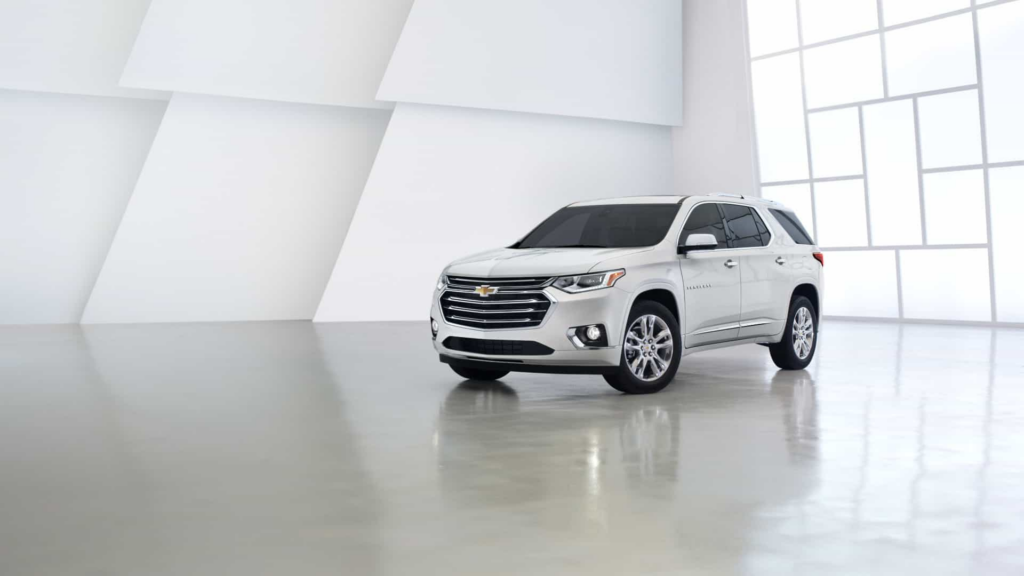
The 2018 model year heralded a significant redesign for the Traverse, bringing a more muscular and squared-off exterior design, updated technology, and, critically, a substantial improvement in reliability. Chevrolet aimed for a look that aligned more closely with their truck lineup, abandoning the rounded contours of the first generation. The wheelbase was extended by two inches, and weight was reduced by 111 pounds, contributing to a more refined driving experience.
This generation initially offered a choice of powertrains: the familiar 3.6-liter V6, now producing 310 horsepower and 266 pound-feet of torque, and a less common turbocharged four-cylinder. The four-cylinder, available only in the RS FWD trim in 2018 and 2019, delivered 257 horsepower and 295 pound-feet of torque, offering respectable performance for a vehicle of its size. However, due to slow sales, the four-cylinder was discontinued after 2019.
Chevrolet offered a wide array of trim levels throughout this generation, including L, LS, LT Cloth, LT Leather, 3LT, RS, Premier, and the luxurious High Country. Most were available with FWD or AWD, with the L trim being FWD only. The High Country trim approached GMC Denali levels of luxury, featuring a chrome grille, power-adjustable seats, a power-folding third row, a Wi-Fi hotspot, roof rails, a hands-free liftgate, and a heated steering wheel. The RS trim provided a sportier aesthetic with black 20-inch wheels and premium tech like a Bose audio system and HD surround vision camera. A rear-seat entertainment system was available until 2021.
The LT Cloth and LT Leather trims were nearly identical, differentiated primarily by upholstery. The base LS trim offered strong value with features like GM’s Teen Driver Mode and heated mirrors.
A significant update occurred for the 2021 model year, with Chevrolet making several key driver assistance features standard across all trims. These included automatic emergency braking with pedestrian detection, forward collision warning, lane keep assist with lane departure warning, and automatic high beams. Higher trims like the RS and Premier could also be optioned with adaptive cruise control.
While not as overtly luxurious as some rivals, the second-generation Traverse excels in its user-friendly technology and generous standard comfort and convenience features. The standard 7-inch (or optional 8-inch) touchscreen infotainment system supports wireless Apple CarPlay and Android Auto, Bluetooth, multiple USB ports, and a six-speaker sound system. Three-zone automatic climate control and keyless entry with push-button start were also standard.
Despite not being a full-size SUV, the Traverse boasts a usable third row and impressive cargo volume. With all seats folded, it offers 98.2 cubic feet of space, rivaling that of many minivans. Excellent outward visibility and a comprehensive suite of safety features, including adaptive cruise control, blind-spot monitoring, and rear cross-traffic alerts, further enhance its appeal.
Compared to its predecessor, the second-generation Traverse offered a significantly more reliable ownership experience. While the 2018 model year received some criticism for engine and electrical issues, subsequent years demonstrated a more consistent and average reliability rating within its class. This generation strikes a compelling balance between modern amenities, practical space, and improved dependability, making used Chevrolet Traverse LT and RS models from 2019-2021, with under 80,000 miles, a particularly strong value proposition. These typically range from $18,000 to $26,000, with Premier and High Country trims commanding higher prices, potentially reaching up to $48,000 for late-model High Country versions.
The Groundbreaking First Generation (2009-2017): A Pioneer with Caveats
The original Chevrolet Traverse debuted in late 2008 as a 2009 model, entering the market alongside its GM siblings, the GMC Acadia, Saturn Outlook, and Buick Enclave. It was powered by a 3.6-liter V6 engine paired with a six-speed automatic transmission. Lower trims featured a single exhaust outlet, resulting in slightly less horsepower and torque compared to the LTZ trim, which benefited from a dual exhaust setup. In LTZ form, the V6 produced 288 horsepower and 270 pound-feet of torque.
While its 19 mpg combined fuel economy wasn’t class-leading, its utility was undeniable. The first-generation Traverse could tow up to 5,200 pounds and offered a cavernous 116.4 cubic feet of maximum cargo volume, exceeding that of some contemporary minivans. Even with all three rows in use, there remained 24.4 cubic feet of space behind the third row, ample for groceries. The third-row legroom, at just over 33 inches, was generous for its time and remains competitive even today.
Seating configurations varied: the LS and LT1 trims came standard with eight-passenger capacity, while the seven-passenger LT2 and LTZ could opt for a second-row bench in place of captain’s chairs. The base LS was equipped with essential amenities like power accessories, air conditioning, and a six-speaker audio system. Moving up to the LT1 added heated mirrors and rear parking sensors. The LT2 enhanced the package with tri-zone automatic climate control, a 10-speaker Bose stereo, USB connectivity, and a rearview camera. The top-tier LTZ offered premium features such as leather upholstery, heated and ventilated front seats, driver memory, Bluetooth, and remote start. Many upscale features were optional, including a trailering package, navigation, dual sunroofs, and a rear-seat DVD entertainment system.
Despite its early success and appeal as a spacious family hauler, the first-generation Traverse developed a reputation for less-than-stellar long-term reliability. Issues were frequently reported concerning the electrical system, power steering, the engine, and the 6T75 six-speed automatic transmission. While some of these problems were addressed in later model years, sources like CarComplaints and Consumer Reports consistently rate this generation below average for dependability.
Consequently, used Chevrolet Traverse LS and LT1 models from this era, with fewer than 100,000 miles, can be found for approximately $8,000 to $13,000. Later models, from 2014 onwards, typically range from $13,000 to $17,000, with loaded top trims or ultra-low mileage examples potentially commanding higher prices. While these prices offer an extremely affordable entry into a large three-row SUV, buyers must proceed with caution, prioritizing thorough inspection and maintenance history.
Key Considerations for Used Traverse Purchases
When exploring used Chevrolet Traverse models, particularly those from the first and early second generations, a few critical areas demand your attention:
Transmission: The six-speed automatic in the first generation is known for potential issues. Listen for any slipping, harsh shifting, or unusual noises. Ensure a transmission fluid service history is available.
Engine: While generally robust, the 3.6L V6 can develop issues. Check for any unusual ticking sounds or performance discrepancies.
Brakes and Suspension: Common problem areas in earlier models. Inspect for uneven tire wear, and listen for clunks or squeaks when driving over bumps.
Electrical System: Many early models experienced gremlins. Test all electronic features thoroughly – infotainment, power windows, locks, climate control, and any optional electronics.
Rust: Depending on the climate where the vehicle has resided, check for rust on the undercarriage, wheel wells, and door sills.
The Best Chevrolet Traverse Years to Buy: A Data-Driven Recommendation
Based on reliability data, feature availability, and overall value, my expert recommendation for the best Chevrolet Traverse years to buy leans towards the later models of the second generation, specifically from 2019 to 2023.
2019-2023 Chevrolet Traverse: These model years benefit from the significant redesign of 2018 but have had several years for Chevrolet to address initial production hiccups. They offer a strong blend of improved reliability compared to the first generation, modern technology, excellent interior space, and the availability of crucial safety features as standard equipment from 2021 onwards. The V6 engine in these models is generally considered dependable, and the overall ownership experience is far more positive than earlier years. For those seeking the absolute best value, look for well-maintained LT or RS trims.
2024-Present Chevrolet Traverse: While brand new and equipped with the latest technology and design, the long-term reliability of this generation is yet to be fully established. However, the initial reviews and Chevrolet’s progress with reliability in recent years are promising. If your budget allows for a new purchase and you prioritize the latest innovations and styling, this is the clear choice. Be sure to explore Chevrolet Traverse lease deals or financing options that align with your budget.
Avoid Earlier First-Generation Models (2009-2013): Due to persistent reliability concerns across multiple critical systems, these years are generally best avoided unless you are a skilled DIY mechanic or have a trusted mechanic willing to inspect the vehicle thoroughly.
Beyond the Model Year: High-CPC Keywords and Local Search Intent
When searching for your ideal Chevrolet Traverse, consider these additional keywords that can impact your buying experience and potentially uncover better deals:
“Chevrolet Traverse for sale near me”: This is crucial for local buyers. Supplementing this with your specific city or region (e.g., “Chevrolet Traverse for sale Dallas TX,” “used Traverse Chicago”) will refine your search.
“Chevrolet Traverse price” / “2022 Chevrolet Traverse price”: Understanding market pricing is vital. Using specific model years helps narrow down your expectations.
“Chevrolet Traverse warranty”: If considering a used model, inquire about any remaining factory warranty or explore Chevrolet CPO Traverse options.
“Chevrolet Traverse AWD vs FWD”: This is important if you live in an area with inclement weather or frequently encounter varied terrain.
“Chevrolet Traverse vs [Competitor Name]”: Comparing the Traverse to rivals like the Honda Pilot or Toyota Highlander can solidify your decision.
“3 row SUV deals”: This broader search can sometimes uncover competitive pricing on Traverse models alongside other large SUVs.
“Family SUV value”: Focusing on value for money will lead you to models that offer the most space and features for your budget.
Final Thoughts: Securing Your Family’s Next Adventure
The Chevrolet Traverse, in its various iterations, continues to offer a compelling proposition for families seeking ample space and comfortable transport. By understanding the historical strengths and weaknesses of each generation, and by focusing your search on the most reliable model years, you can significantly increase your chances of a satisfying ownership experience. The second generation, particularly from 2019-2023, stands out as a strong contender for those balancing budget with dependability.
As you embark on your quest for the perfect Chevrolet Traverse, remember to conduct thorough test drives, meticulously review maintenance records, and consider a pre-purchase inspection by an independent mechanic. Your due diligence will ensure you drive away with a vehicle that not only meets your family’s needs but also provides peace of mind for many miles to come.
Ready to experience the spacious comfort and capable performance of the Chevrolet Traverse firsthand? Visit your local Chevrolet dealership for a test drive, or start exploring reputable online automotive marketplaces today to find the Traverse that’s the perfect fit for your family’s next great adventure.