
Your Ultimate Guide to Buying a Chrysler Pacifica: Navigating Cost, Reliability, and the Best Years to Own
For over a decade, I’ve navigated the intricate world of automotive purchasing, guiding countless families and individuals towards their ideal vehicles. Today, my focus is on a nameplate that has become synonymous with family-friendly practicality and evolving innovation: the Chrysler Pacifica. It’s a vehicle with a rich lineage, tracing its roots back to the very invention of the modern minivan by the former Chrysler Corporation in 1984 with the Dodge Caravan and Plymouth Voyager. While those specific names have transitioned, Chrysler’s commitment to the segment remains steadfast, primarily through the highly regarded Pacifica minivan.
Introduced for the 2017 model year, the Chrysler Pacifica minivan marked a significant departure from its predecessor, the Town & Country. While the Town & Country, in its later years, struggled to keep pace with rivals like the Honda Odyssey and Toyota Sienna, the all-new Pacifica arrived as a breath of fresh air. It revitalized Chrysler’s minivan offerings, presenting a modern, stylish, and technologically advanced option for families in need of spacious and versatile transportation. This comprehensive guide will delve deep into what makes the Chrysler Pacifica a compelling choice, examining its evolution, reliability across model years, cost considerations, and ultimately, which versions represent the savviest investments for savvy buyers in today’s market.
Understanding the Chrysler Pacifica’s Core Appeal: Versatility and Innovation
At its heart, the Chrysler Pacifica is designed to meet the diverse demands of modern families. Whether it’s the daily school run, a cross-country road trip, or hauling bulky items, the Pacifica is engineered to excel. This versatility is underpinned by a choice of two distinct, yet equally capable, powertrain options.
The standard, gasoline-powered Chrysler Pacifica is propelled by a robust 3.6-liter V6 engine. This powerplant churns out a healthy 287 horsepower and 262 lb-ft of torque, providing ample acceleration for merging onto highways and confident passing maneuvers. For those prioritizing fuel efficiency and a reduced environmental footprint, the Chrysler Pacifica Hybrid presents a compelling alternative. This plug-in hybrid (PHEV) system seamlessly blends a more efficient iteration of the V6 engine with two electric motors. The combined output reaches 260 horsepower, offering a refined and responsive driving experience. A significant advantage of the Pacifica PHEV is its all-electric range, capable of traveling up to 32 miles on a full charge – ideal for shorter commutes and local errands. When operating in hybrid mode, the Pacifica PHEV boasts an impressive combined EPA rating of 30 mpg, allowing for an extended total range of up to 520 miles between refueling stops.
For the most current offerings, the 2026 Chrysler Pacifica lineup begins with an MSRP starting at $45,640, inclusive of a $1,995 destination charge. For those seeking enhanced traction and all-weather capability, all-wheel drive (AWD) is available as an option for an additional $2,995. The Pacifica Hybrid commands a higher entry point, with the 2026 model starting at $54,255, also including the destination fee. Buyers can explore various trim levels, including Select, Limited, and the ultra-luxurious Pinnacle for the standard Pacifica. The Pacifica Hybrid offers its own distinct hierarchy: Select, 100th Anniversary, Premium, and the top-tier Pinnacle.
Decoding Pacifica Reliability: Which Model Years Shine and Which to Approach with Caution?
When considering any pre-owned vehicle, understanding its reliability track record is paramount. While historically, Chrysler vehicles haven’t always topped reliability charts, the Pacifica minivan has charted a different course, particularly in its later iterations.
The Best Chrysler Pacifica Years to Buy:
Our deep dive into owner feedback and industry data consistently points to a sweet spot for Pacifica reliability. For the modern minivan generation, the 2017 through 2023 Chrysler Pacifica models have earned commendation for their dependable performance. Repairpal.com, an authoritative source for vehicle repair data, has ranked the Pacifica as a leading minivan for reliability, often achieving a score of 4.5 out of a possible five stars. This suggests a vehicle that is less prone to unexpected and costly repairs.
Digging deeper, data from CarComplaints.com indicates that the 2019 model year onwards, for both the standard gasoline and the Pacifica Hybrid, represents a particularly strong choice for reliability. These years generally show a marked decrease in reported issues compared to earlier models.
For buyers seeking the pinnacle of luxury, the Pacifica Pinnacle trim, introduced for the 2024 model year, offers an opulent interior experience. Its sophisticated Sepia quilted Nappa leather interior exemplifies the upscale amenities Chrysler is capable of delivering in its flagship minivan.
It’s also worth acknowledging the earlier iteration of the Pacifica nameplate, which existed as a crossover vehicle from 2004 to 2008. If you’re drawn to this less common, but still capable, predecessor, the 2007 and 2008 model years are the most advisable. Specifically, seek out these models equipped with the optional 4.0-liter V8 engine and the smoother six-speed automatic transmission. This combination offered a more refined and powerful driving experience compared to the base 3.8-liter engine and its older four-speed automatic.
The Worst Chrysler Pacifica Years to Potentially Avoid:
As with most newly introduced automotive designs, the “first-year curse” often holds true, and the Chrysler Pacifica is no exception. According to extensive complaint data, the 2017 Chrysler Pacifica stands out as the most troublesome model year, with a significantly higher volume of reported issues than any subsequent year. The most frequently cited problems for 2017 gasoline models revolve around transmission malfunctions, followed by concerns related to the vehicle’s body and paint, interior accessories, and the engine. Thorough inspection of these areas is crucial when test-driving a 2017 Pacifica.
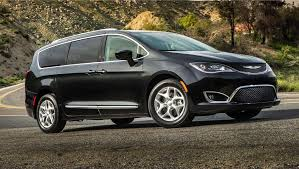
While later model years have shown substantial improvements, it’s prudent to note that the 2018 Chrysler Pacifica Hybrid received the highest number of complaints among the plug-in hybrid variants. This can be attributed to the fact that the PHEV powertrain was introduced in limited numbers for 2017, with broader availability commencing in 2018, naturally leading to more aggregated data and potential owner feedback.
For those contemplating a used Pacifica Hybrid, a crucial consideration is the potential cost of replacing the large 16-kilowatt-hour (kWh) battery pack. While the instances of complete battery failure are admittedly rare, it’s a significant expense to be aware of should it ever become necessary.
Regarding the earlier Pacifica crossovers (2004-2008), while less common on the used market, it’s generally advisable to steer clear of the 2004-2006 model years. Stick to the aforementioned 2007 and 2008 models, and prioritize those featuring the more potent 4.0-liter V6 engine.
Assessing the Value Proposition: Is a Used Chrysler Pacifica a Smart Investment?
In today’s automotive landscape, where new vehicle prices continue to climb, the used car market offers a compelling alternative for value-conscious buyers. The Chrysler Pacifica, as a segment leader with a generally strong reliability rating, presents an excellent opportunity for savings.
When compared to its closest and equally reliable rivals, such as the Honda Odyssey and Toyota Sienna, the used Chrysler Pacifica often presents a more accessible entry price. This makes it a particularly attractive option for families seeking a feature-rich, spacious, and dependable minivan without the premium associated with some competitors.
One of the key advantages of purchasing a used Pacifica is its relatively consistent design evolution. Since its introduction in 2017, the core functionality, styling, and most of the innovative features have remained largely the same. This means that a pre-owned Pacifica, even a few years old, will offer a driving and ownership experience remarkably similar to that of a brand-new model, but at a significantly reduced cost. This depreciation curve makes the Pacifica a wise investment for those who value practical utility and modern amenities.
Chrysler Pacifica: Pros and Cons at a Glance
To further aid your decision-making process, here’s a concise summary of the Pacifica’s strengths and weaknesses:
Pros:
Multiple Powertrain Options: The availability of both a potent V6 gasoline engine and an efficient plug-in hybrid system caters to a wide range of preferences and driving needs.
Stylish and Modern Design: The Pacifica boasts a more contemporary and upscale aesthetic than many of its minivan segment competitors.
Impressive Electric Range from Hybrid: The PHEV model offers a substantial all-electric driving range, reducing fuel consumption for daily driving.
Innovative Stow ‘n Go Seating (Gasoline Models): This ingenious feature allows second-row seats to fold flat into the floor, creating cavernous cargo space.
Advanced Safety Features: Higher trim levels and option packages offer a comprehensive suite of driver-assistance technologies.
Cons:
All-Wheel Drive Unavailable with Hybrid: If AWD is a necessity, you must opt for the gasoline-powered Pacifica.
Reduced Storage in Hybrid Models: The battery pack placement in the Hybrid necessitates the exclusion of the Stow ‘n Go seating, impacting cargo versatility.
Interior Material Quality: While generally upscale, some interior materials in lower trims might not feel as premium as those found in certain rivals.
Potential for Higher Maintenance Costs with Hybrid: As with any complex hybrid system, long-term maintenance costs for the PHEV variant could be higher if major components require replacement.
A Generational Deep Dive: The Evolution of the Chrysler Pacifica
The Chrysler Pacifica minivan represents a singular generation of this family hauler, first arriving for the 2017 model year. While the nameplate was previously used for a crossover SUV from 2004-2008, the modern Pacifica minivan is a distinct entity. Despite being one of the more mature designs in the current minivan class, it has consistently held its own against newer competition from Asian automakers.
First Generation (2017-Present): A Legacy of Innovation
Upon its debut in 2017, the Chrysler Pacifica offered a well-equipped starting point even in its base LX trim. Standard features included 17-inch alloy wheels, LED lighting, a rearview camera, heated mirrors, remote keyless entry, push-button start, an eight-way power driver’s seat, and tri-zone climate control. The Uconnect infotainment system, accessible via a five-inch touchscreen, came standard with Bluetooth connectivity and USB ports. Seven-passenger seating was the norm, and crucially, the innovative Stow ‘n Go second-row seats were included, offering unparalleled cargo flexibility or a flat load floor. The third-row seat also featured a 60/40 split for added convenience.
Moving up the trim ladder, the Touring model added power sliding doors, keyless entry, and rear parking sensors. The Touring-L enhanced the interior with leather upholstery, automatic tri-zone climate control, and heated front seats, along with essential safety aids like blind-spot monitoring and rear cross-traffic alert. The Touring-L Plus further refined the experience with a heated steering wheel, heated second-row seats, an upgraded 8.4-inch touchscreen, an improved audio system, a power liftgate, and a rear-seat entertainment system.
At the zenith of the initial offerings, the Limited trim was a veritable showcase of Chrysler’s minivan capabilities. It included a panoramic sunroof, ventilated leather seats with memory functions, a power-folding third row, and the remarkably useful Stow ‘n Vac integrated vacuum system for effortless interior cleaning.
For those prioritizing safety, the optional Advanced SafetyTec Group provided a comprehensive suite of cutting-edge driver-assistance features, including automatic wipers, automatic high beams, lane departure warning and intervention, forward collision warning with automatic emergency braking, adaptive cruise control, a 360-degree surround-view camera system, and automated parking assist.
The Chrysler Pacifica Hybrid variant emerged shortly after its gasoline counterpart. Due to the underfloor placement of its battery packs, the innovative Stow ‘n Go seating functionality is not available in the Hybrid models.
Subsequent model years saw further refinements. A new entry-level L trim was added in 2018, and critically, the infotainment system gained Apple CarPlay and Android Auto integration. The 2020 model year introduced the availability of all-wheel drive for gasoline-powered Pacificas, a feature that has never been offered with the plug-in hybrid.
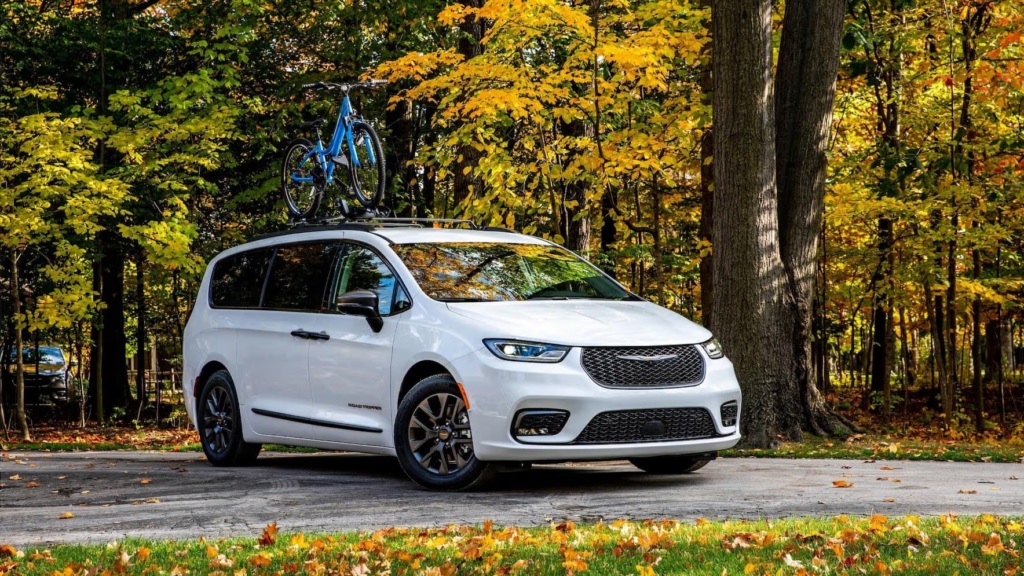
The 2021 Chrysler Pacifica underwent a significant refresh, both inside and out. A restyled front fascia and grille lent a more upscale appearance. Amazon Alexa integration and wireless Apple CarPlay/Android Auto were introduced. The Uconnect 5 system, featuring a larger 10.1-inch touchscreen, became standard. Essential safety technologies like adaptive cruise control and lane keeping assist were also made standard across the board. The innovative FamCam interior camera system was also introduced, allowing parents to monitor rear-seat occupants.
It’s important to note that Chrysler reintroduced the Voyager nameplate in 2020, initially replacing the lower Pacifica trim levels. This move coincided with the discontinuation of the Dodge Grand Caravan. The Voyager has since been revitalized as a retail vehicle for the 2025 model year, essentially serving as a more budget-oriented version of the Pacifica.
The 2021 model year also saw the introduction of the premium Pinnacle trim, featuring opulent quilted Nappa leather upholstery and unique lumbar pillows for the second-row captain’s chairs. In 2022, the Uconnect Theater package was enhanced with Amazon Fire TV for Auto. Minor updates were made for 2023. For 2024, new interior and exterior color options, including a unique Sepia interior for the Pinnacle and two new paint colors, were added. The 2025 model year saw the gasoline version receive a new base Select trim, which was previously exclusive to the PHEV. Features like auto-dimming mirrors and universal garage door openers became standard on all Select models. To commemorate its heritage, Chrysler introduced a 100th Anniversary Edition for 2026, celebrating its founding in 1925 with distinctive badging.
Navigating the Powertrain Choice: Gasoline vs. Hybrid Pacifica
The decision between a standard Chrysler Pacifica and its hybrid counterpart hinges on a careful evaluation of individual needs and priorities.
Gasoline Pacifica Advantages:
All-Wheel Drive Availability: If all-weather capability is a non-negotiable, the AWD system is exclusively available on the gasoline models.
Stow ‘n Go Seating: The flexibility of folding second-row seats into the floor for maximum cargo space is a defining feature of the gasoline Pacifica.
Towing Capacity: The gasoline V6 is rated to tow up to 3,600 pounds, making it a more suitable choice for light towing duties.
Chrysler Pacifica Hybrid Advantages:
Fuel Efficiency and Electric Range: The PHEV offers substantial fuel savings for daily driving, with up to 32 miles of electric-only range.
Quieter Operation: Electric propulsion provides a more serene and refined driving experience, especially at lower speeds.
Potential for Reduced Emissions: The ability to operate on electricity significantly reduces tailpipe emissions.
Fuel Economy Comparison:
Gasoline Pacifica FWD: EPA rated at 19 mpg city / 28 mpg highway / 22 mpg combined.
Gasoline Pacifica AWD: EPA rated at 17 mpg city / 25 mpg highway / 20 mpg combined.
Pacifica Hybrid: Offers up to 32 miles of electric range, with a combined 30 mpg when operating in hybrid mode.
Pricing and Value on the Used Market
The value proposition of the Chrysler Pacifica extends significantly into the used vehicle market. As of early 2025, you can expect to find well-maintained 2024 or 2025 Pacifica models ranging in price from approximately $30,000 to $35,000. A fully-equipped Pacifica Pinnacle from these recent model years will likely represent a substantial saving compared to purchasing a new one, while still benefiting from any remaining factory warranty or Chrysler’s certified pre-owned program benefits.
Interestingly, despite a higher MSRP when new, the price difference between used standard Pacifica models and their Hybrid counterparts on the secondary market is often less pronounced than one might expect. For instance, a used 2024 Pacifica Hybrid might average around $29,000.
Looking at slightly older, yet still highly capable, models, a 2018-2020 Chrysler Pacifica typically ranges from $13,000 to $18,500 on the used market. This is where the Pacifica truly shines in terms of value, as it often comes in several thousand dollars less than comparable Honda Odyssey or Toyota Sienna models, making it a significantly more budget-friendly choice for acquiring a premium minivan experience.
The Pre-Pacifica Crossover: A Different Kind of Utility
It’s important to differentiate the current Pacifica minivan from its namesake, the Chrysler Pacifica crossover SUV, which was produced from 2004 to 2008. While sharing the name, these vehicles served different purposes and had distinct engineering.
Launched as a 2004 model, the Pacifica crossover was initially offered in a single trim with a 3.5-liter V6 engine producing 250 horsepower and 250 lb-ft of torque, paired with a four-speed automatic transmission. Front-wheel drive was standard, with all-wheel drive optional. Over its production run, a 3.8-liter V6 was available in lower trims, and eventually, a more potent 4.0-liter V6 replaced the 3.5-liter unit, mated to a six-speed automatic.
Trim levels for the crossover included base LX, Touring, and Limited. While cloth upholstery was standard, leatherette and leather seating were available in higher trims. Seating was typically for five, with an optional third row for a total of six passengers, featuring second-row captain’s chairs.
As mentioned earlier, if you’re considering one of these earlier crossovers, the 2007 and 2008 models are the most desirable. Expect to pay less than $10,000, often significantly less, for a well-maintained example with lower mileage. However, be aware that finding low-mileage Pacifica crossovers, especially those equipped with the 4.0-liter V6 and AWD, can be a challenge.
Making Your Pacifica Purchase: A Call to Action
The Chrysler Pacifica stands as a testament to Chrysler’s enduring commitment to the minivan segment. It offers a compelling blend of innovation, practicality, and style, bolstered by an increasingly robust reliability record in its later years. Whether you prioritize fuel efficiency with the Pacifica Hybrid, the versatility of Stow ‘n Go seating in the gasoline model, or the all-weather capability of AWD, there is a Pacifica variant to suit your family’s unique needs.
As you embark on your quest for the perfect family hauler, take the insights from this guide to heart. Thoroughly research specific model years, inspect vehicles with a critical eye, and always prioritize vehicles with complete maintenance histories.
Ready to experience the Chrysler Pacifica for yourself? Visit your local Chrysler dealership or explore reputable online automotive marketplaces today to schedule a test drive and discover the exceptional value and capability this outstanding minivan has to offer your family.