
The Savvy Buyer’s Compass: Navigating the Chrysler Pacifica Marketplace in 2025
As an industry veteran with a decade immersed in the automotive landscape, I’ve witnessed firsthand the evolution of vehicle segments. The minivan, once a purely utilitarian proposition, has been transformed into a sophisticated family hauler. At the forefront of this transformation stands the Chrysler Pacifica, a nameplate that has redefined what consumers expect from a modern family vehicle. For those in the market for a capable, comfortable, and feature-rich minivan, understanding the nuances of the Chrysler Pacifica is paramount. This comprehensive guide will equip you with the knowledge to make an informed decision, whether you’re considering a brand-new model or a pre-owned gem.
The story of the modern minivan began in 1984 with the unveiling of the Dodge Caravan and Plymouth Voyager by Chrysler Corporation. While the landscape has shifted dramatically since then – with Plymouth now a relic of automotive history and Dodge, though still present under Stellantis, having retired the Caravan moniker – Chrysler has maintained its leadership position. The Chrysler Pacifica has ascended to become the automaker’s flagship minivan, a testament to its enduring appeal and adaptability in a competitive market.
Introduced for the 2017 model year, the Pacifica minivan succeeded the Chrysler Town & Country, a vehicle that, while once lauded for its luxury, had by its final production year in 2016 become a dated and outmatched contender against rivals like the Honda Odyssey and Toyota Sienna. The arrival of the 2017 Chrysler Pacifica marked a revitalization, injecting modernity, style, and advanced technology into Chrysler’s minivan lineage, effectively re-establishing its presence as a premier choice for family transportation.
Understanding the Chrysler Pacifica Powertrain Options
The Chrysler Pacifica offers buyers a compelling choice between two distinct powertrain configurations, each designed to cater to different driving needs and priorities.
The traditional gasoline-powered Chrysler Pacifica is propelled by a robust 3.6-liter Pentastar V6 engine. This powerplant delivers a confident 287 horsepower and 262 lb-ft of torque, providing ample performance for everyday driving, highway cruising, and hauling the entire family and their gear. For those prioritizing fuel efficiency and a reduced environmental footprint, the Chrysler Pacifica Hybrid presents an innovative plug-in hybrid powertrain. This system cleverly integrates a more efficient iteration of the V6 engine with two electric motors, collectively producing 260 horsepower. The PHEV variant boasts an impressive all-electric range of up to 32 miles on a full charge, and when the gasoline engine engages, it achieves a combined EPA-estimated 30 mpg, allowing for a substantial total driving range of approximately 520 miles between refueling stops.
Navigating the Model Year Landscape: Best and Worst Years for the Chrysler Pacifica
When embarking on the journey of purchasing a Chrysler Pacifica, particularly a pre-owned one, understanding the reliability and common issues associated with specific model years is crucial. While historically, some Chrysler products haven’t always topped reliability charts, the Chrysler Pacifica minivan has, for the most part, bucked this trend.
RepairPal.com, citing data from Edmunds.com, has consistently rated the Chrysler Pacifica as a top-tier minivan for reliability, with models from the 2017 to 2023 production years earning exceptional scores. Further analysis of data from CarComplaints.com suggests that Chrysler Pacifica models produced from 2019 onwards, encompassing both standard gasoline and Hybrid variants, represent the most dependable choices. These later models have benefited from iterative improvements and address many of the initial concerns that arose with the vehicle’s debut.
For those seeking the pinnacle of luxury within the Chrysler Pacifica lineup, the introduction of the Pacifica Pinnacle trim for the 2024 model year is noteworthy. This trim level offers exquisite interior appointments, such as the captivating Sepia quilted Nappa leather upholstery, providing an unparalleled level of comfort and sophistication.
Conversely, like many newly introduced vehicles, the inaugural model year of the Chrysler Pacifica minivan, the 2017 iteration, is frequently cited as the most problematic. Complaints logged on CarComplaints.com overwhelmingly point to transmission issues as the primary concern, followed by problems related to the body and paint, interior accessories, and the engine. While subsequent model years have seen a significant reduction in reported issues, careful inspection of these areas during a test drive of any used Chrysler Pacifica is highly recommended.
The Chrysler Pacifica Hybrid has also seen its share of early production concerns. The 2018 model year, being the first full year of widespread availability for the plug-in hybrid powertrain, garnered the most complaints. It’s worth noting that the large 16-kilowatt-hour battery pack, while offering impressive electric range, represents a significant component that, in the unlikely event of failure, could incur substantial replacement costs. Prospective buyers of a used Chrysler Pacifica Hybrid should factor this into their considerations.
The Chrysler Pacifica Crossover: A Predecessor Worth Noting
It’s important to distinguish the current Chrysler Pacifica minivan from its namesake, the Chrysler Pacifica crossover SUV that was produced from 2004 to 2008. This earlier Pacifica shared the nameplate but was a fundamentally different vehicle. If you happen to be considering one of these older crossovers, the 2007 and 2008 model years are generally considered the best. For optimal performance and a more modern driving experience in these crossover models, seek out those equipped with the optional 4.0-liter V8 engine and the six-speed automatic transmission, rather than the base 3.8-liter engine paired with the older four-speed automatic. Avoiding the 2004-2006 crossover models entirely is advisable, as they were more prone to issues.
Key Features and Trims: What to Look For in a Chrysler Pacifica
The Chrysler Pacifica has consistently been praised for its thoughtful design and extensive feature set across its various trim levels. Since its debut in 2017, Chrysler has refined the offerings, making desirable features more accessible.
Early Generations (2017-2020):
The initial release saw a comprehensive range of trims, starting with the LX, Touring, Touring-L, Touring-L Plus, and the top-tier Limited. Even the base LX model came generously equipped with 17-inch alloy wheels, LED lighting, a rearview camera, heated mirrors, remote keyless entry, push-button start, an eight-way power driver’s seat, and tri-zone climate control. The Uconnect infotainment system, featuring a 5-inch touchscreen and standard Bluetooth, USB, and auxiliary inputs, was a highlight. A significant advantage of the standard gasoline Chrysler Pacifica has always been the Stow ‘n Go seating system, allowing second-row seats to fold flat into the floor for maximized cargo space, a feature unfortunately not available on the Hybrid due to battery placement.
Higher trims like the Touring added power sliding doors and rear parking sensors. The Touring-L enhanced the cabin with leather seating, automatic tri-zone climate control, and heated front seats, along with crucial safety features like blind-spot monitoring and rear cross-traffic alert. The Touring-L Plus further elevated the experience with a heated steering wheel, heated second-row seats, and an upgraded 8.4-inch touchscreen infotainment system, often bundled with a power liftgate and a rear-seat entertainment system. The Limited trim represented the zenith of luxury, incorporating panoramic sunroofs, premium ventilated leather seats with memory functions, a power-folding third row, and the innovative Stow ‘n Vac integrated vacuum cleaner – a truly practical addition for maintaining a clean interior.
For buyers prioritizing advanced safety, the optional Advanced SafetyTec Group, available on Touring-L Plus and Limited models, offered a comprehensive suite of driver-assistance technologies, including automatic wipers, automatic high-beam headlights, lane departure warning and intervention, forward collision warning with automatic emergency braking, adaptive cruise control, a 360-degree surround-view camera system, and automated park assist.
Model Year Refinements (2018-Present):
A notable update occurred in 2018 with the addition of Apple CarPlay and Android Auto integration across the lineup, significantly enhancing smartphone connectivity. The 2020 model year saw the introduction of all-wheel drive (AWD) as an option for gasoline-powered Chrysler Pacifica models, a feature highly sought after in regions with inclement weather. However, it bears repeating that AWD has never been offered with the Pacifica Hybrid.
The 2021 model year brought a significant refresh, enhancing both the interior and exterior aesthetics of the Chrysler Pacifica. The front fascia received a more cohesive and upscale design, and the Uconnect system was upgraded to Uconnect 5, featuring a larger 10.1-inch touchscreen and integrated Amazon Alexa capabilities. Wireless Apple CarPlay and Android Auto became standard. Furthermore, crucial safety features like adaptive cruise control and lane-keeping assist were made standard across all trims. The introduction of the FamCam interior camera system was a practical innovation for parents to monitor rear-seat occupants.
The Pacifica Pinnacle trim, introduced for the 2021 model year and further refined in subsequent years, offers unparalleled luxury with its quilted Nappa leather upholstery and premium appointments. The 2026 Chrysler Pacifica introduced a 100th Anniversary Edition, celebrating the brand’s heritage. For 2025, the gasoline model received a new base trim, Select, bringing previously optional convenience features like auto-dimming mirrors and one-touch second-row windows to a wider audience.
The Chrysler Pacifica Hybrid vs. Gasoline: A Strategic Decision
The choice between the Chrysler Pacifica gasoline model and the Chrysler Pacifica Hybrid is a significant one, hinging on individual priorities and usage patterns.
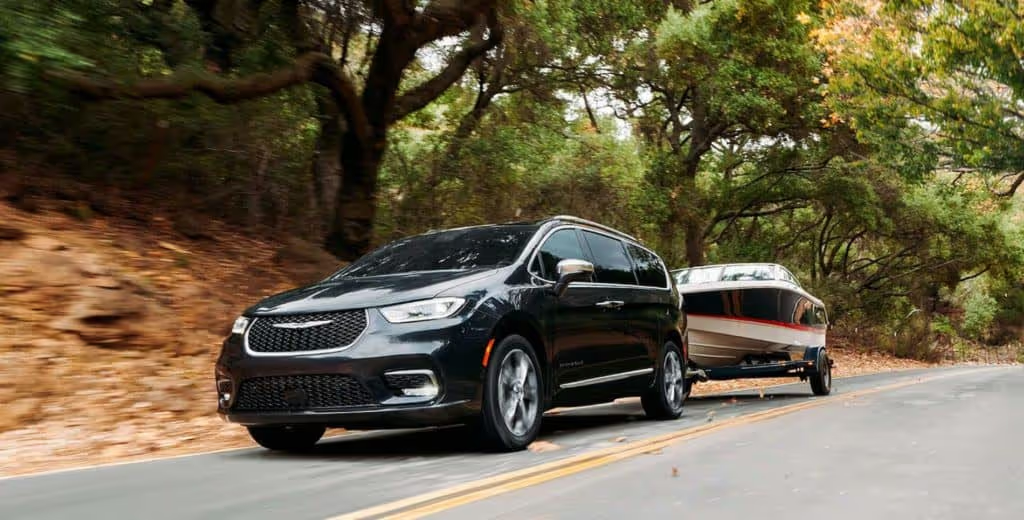
The gasoline V6 engine is the only option if all-wheel drive is a requirement or if the versatility of the Stow ‘n Go second-row seats is paramount. Furthermore, the gasoline V6 is rated for towing up to 3,600 pounds, a capability not recommended for the plug-in hybrid variant.
On the other hand, the Chrysler Pacifica Hybrid offers substantial fuel savings and environmental benefits for those who can leverage its electric range. With up to 32 miles of all-electric driving and a combined 30 mpg rating, it significantly reduces fuel stops. For commuters who can charge at home and at work, the daily running costs can be remarkably low. The fuel efficiency of the gasoline Chrysler Pacifica is respectable, with FWD models achieving an EPA-estimated 19 mpg city, 28 mpg highway, and 22 mpg combined, while AWD models offer 17 mpg city, 25 mpg highway, and 20 mpg combined.
Chrysler Pacifica Pricing: What to Expect in 2025
When considering the Chrysler Pacifica in the current market, pricing varies significantly based on whether you opt for a new or used model, and the specific trim and features.
As of early 2025, a brand-new 2026 Chrysler Pacifica has an MSRP starting around $45,640, inclusive of destination fees. Adding all-wheel drive increases this figure by approximately $2,995. The 2026 Chrysler Pacifica Hybrid carries a higher starting MSRP, beginning at $54,255, also with destination included.
For those exploring the pre-owned market, a used Chrysler Pacifica represents a compelling value proposition. The average price for a well-maintained 2024 or 2025 model typically falls between $30,000 and $35,000. A used Pacifica Pinnacle in excellent condition should still represent a considerable saving compared to its new counterpart, often retaining a portion of its factory warranty or qualifying for Chrysler’s certified pre-owned program, offering additional peace of mind.
While the Chrysler Pacifica Hybrid commands a higher price when new, the depreciation curve on the used market often narrows the price gap between the Hybrid and gasoline variants. For instance, a used 2024 Chrysler Pacifica Hybrid might average around $29,000.
Older models, such as those from 2018-2020, represent even more accessible entry points into Pacifica ownership. These pre-owned examples typically range from $13,000 to $18,500. Importantly, the Chrysler Pacifica often presents a more budget-friendly option compared to its key competitors. A comparable Honda Odyssey on the used market can be $5,000 to $7,000 more expensive, and a Toyota Sienna can command an even higher premium, potentially up to $8,000 more than a Chrysler Pacifica. This makes the Chrysler Pacifica a highly competitive choice for budget-conscious families seeking a premium minivan experience without the premium price tag.
Frequently Asked Questions About the Chrysler Pacifica
Which Chrysler Pacifica Years Are the Best to Buy?
Generally, model years from 2019 onwards are considered the most reliable for the Chrysler Pacifica minivan, both in gasoline and Hybrid configurations. The 2017 and 2018 models, especially the early hybrids, experienced more reported issues. For the older Pacifica crossover (2004-2008), the 2007 and 2008 models with the 4.0-liter V6 are the most desirable.
What Are the Worst Chrysler Pacifica Years?
The 2017 Chrysler Pacifica minivan is widely recognized as the most troublesome model year, particularly concerning transmission, body, paint, interior, and engine issues. For the Chrysler Pacifica Hybrid, the 2018 model year saw the highest volume of complaints.
Is a Used Chrysler Pacifica a Good Deal?
Yes, a used Chrysler Pacifica can be an excellent deal. They are generally reliable, especially from 2019 onwards, and tend to be priced more affordably than comparable Honda Odyssey or Toyota Sienna models. They offer a similar level of practicality and style to their newer counterparts at a significantly lower cost.
What are the Pros and Cons of the Chrysler Pacifica?
Pros:
Multiple powertrain options, including a plug-in hybrid
Stylish and modern design
Impressive all-electric range for the Hybrid model
Available all-wheel drive on gasoline models
Excellent value on the used market
Cons:
All-wheel drive is not available with the Hybrid powertrain
Hybrid models have slightly reduced cargo space due to battery placement
Some interior materials in lower trims might feel less premium compared to competitors
Early model years (2017-2018) had more reported issues
The Chrysler Pacifica stands as a compelling choice for families seeking versatility, comfort, and modern amenities. By understanding the various model years, trim levels, and powertrain options, prospective buyers can confidently navigate the market and secure a minivan that perfectly aligns with their needs and budget.
Embark on Your Pacifica Journey Today
Whether you’re drawn to the innovative efficiency of the Chrysler Pacifica Hybrid or the robust capability of the gasoline-powered model, the Pacifica offers a driving experience that is both practical and enjoyable. With a wealth of features and a reputation for family-friendly design, it’s a minivan that truly has it all.
Ready to experience the Chrysler Pacifica for yourself? Visit your local Chrysler dealership or explore online listings to find the perfect model year and trim that fits your family’s lifestyle. Schedule a test drive today and discover why the Chrysler Pacifica continues to be a leader in the minivan segment.