
The Enduring Allure of the Subaru Outback: A Comprehensive Guide for Today’s Buyer
For over a quarter-century, the Subaru Outback has carved out a distinctive niche in the automotive landscape. Initially conceived as an adventurous variant of the venerable Legacy sedan and wagon, the Outback has evolved into a segment-defining vehicle, blending the practicality of a wagon with the rugged capability of an SUV. Its journey from a special package to a standalone icon is a testament to Subaru’s commitment to innovation and its deep understanding of what drivers truly desire: a vehicle that can confidently handle the daily commute and effortlessly transition to spontaneous weekend explorations. As an industry professional with a decade immersed in the automotive world, I’ve witnessed firsthand the Subaru Outback’s persistent appeal, its technological advancements, and its position as a smart pre-owned purchase. This guide delves into the heart of what makes the Subaru Outback a compelling choice, offering insights into its evolution, cost considerations, reliability, and the optimal model years for discerning buyers navigating the current market, particularly for those seeking used Subaru Outback deals.
A Legacy of Innovation: The Subaru Outback’s Genesis and Evolution
The story of the Subaru Outback is intrinsically linked to Subaru’s pioneering spirit. Long before the term “crossover” became ubiquitous, Subaru was championing All-Wheel Drive (AWD) technology, a full two decades before the Outback’s debut in 1995. When automotive trends shifted and consumer appetites for SUVs surged in the late 1980s and early 1990s, Subaru ingeniously leveraged its AWD heritage. The Outback, initially an enhanced Legacy wagon, was born from this foresight. It wasn’t just about adding a rugged aesthetic; Subaru meticulously refined its capable AWD system, increased ground clearance, and tuned the suspension to create a vehicle that promised a “go-anywhere” ethos. This timely introduction coincided perfectly with America’s burgeoning love affair with sport-utility vehicles, positioning the Outback not as a traditional family hauler, but as an invitation to adventure.
The success was immediate. The Outback’s popularity quickly led to the introduction of the smaller Outback Sport, derived from the compact Impreza. For a period, a sedan variant, the Legacy SUS (Sport Utility Sedan), also carried the Outback badging, further solidifying the model’s adventurous persona. By 1999, Subaru had strategically made AWD standard across its entire lineup, a bold move that underscored the effectiveness of the Outback’s core appeal.
Over the years, the Outback has naturally gravitated further from its Legacy sedan roots, its wagon-like silhouette gradually morphing into a more distinct crossover form. This evolution was so pronounced that, by the late 2010s, the design direction of the Legacy sedan began to be influenced by the space and off-road-inspired demands of its wildly popular Outback sibling. As Subaru’s flagship vehicle for many years, the Outback has consistently served as a showcase for the brand’s latest technological advancements. The sophisticated EyeSight® driver-assist suite, first introduced to the Outback in 2008, predated similar offerings from many competitors, highlighting Subaru’s commitment to safety. The automaker’s renowned AWD system has also seen continuous refinement, ensuring class-leading traction and capability. The introduction of the even more rugged Outback Wilderness in 2021 further solidified its off-road credentials, a philosophy that subsequently extended to other Subaru models like the Forester and Crosstrek. This dedication to practicality, spaciousness, and light off-road prowess, coupled with generous ground clearance and advanced terrain management, continues to define the Subaru Outback.
Navigating the Nuances: Cost, Reliability, and the Best Subaru Outback Years to Buy
The decision to purchase any vehicle, especially a pre-owned one, hinges on a careful balance of cost, reliability, and the intrinsic value offered by specific model years. The Subaru Outback is no exception. While generally regarded as a durable and well-engineered vehicle, understanding its potential maintenance needs and the nuances of its various generations is crucial for making an informed decision. For those considering a used Subaru Outback, seeking out a “great deal on a used Subaru Outback” is a common objective, and with the right knowledge, it’s an achievable one.
Frequently Asked Questions About the Subaru Outback:
Which Subaru Outback Years Are the Best? While most Outbacks garner “average” reliability ratings, often due to specific maintenance requirements compared to some competitors, certain years stand out. According to reputable sources like Consumer Reports, model years such as 2014, 2016, 2017, and the 2021 and newer models consistently demonstrate strong reliability records. These years often benefit from accumulated refinements and fewer reported major issues.
What Are the Worst Subaru Outback Years? Reliability tracking can vary between sources. Crowdsourced data from sites like CarComplaints.com has identified 2013, 2015, and 2018 models as having a higher frequency of reported issues, primarily concerning electrical systems and engines. However, other outlets like J.D. Power often rate these years more favorably. Consumer Reports has expressed more concern regarding 2005-2007 models and, more recently, 2019 and 2020 Outbacks. It’s worth noting that pre-2002 models, particularly those with the 2.5-liter powertrain, are known for potential head gasket failures and coolant leaks.
Is a Used Subaru Outback a Good Deal? Absolutely. A used Subaru Outback presents an excellent value proposition for buyers prioritizing space, features, and all-weather capability. While long-term maintenance might be slightly higher than for some other midsize family vehicles, the Outback consistently delivers advanced safety equipment and engaging driving dynamics. In an era where traditional wagons have become niche and expensive, the Subaru Outback remains one of the few accessible vehicles that still embodies this versatile body style, even with its crossover-like evolution. Its practicality is its strongest selling point, offering significant value for your investment.
Subaru Outback: Pros and Cons
Pros:
Exceptional standard All-Wheel Drive system.
Comfortable and spacious interior, ideal for families and road trips.
Abundant safety features, particularly in newer models and those equipped with EyeSight®.
Impressive ground clearance and off-road capability for its class.
Cons:
Can require more involved and potentially costly maintenance than some direct competitors.
Fuel economy may lag behind some front-wheel-drive or less AWD-biased alternatives.
Continuously Variable Transmissions (CVTs), while refined, may not appeal to all drivers.
Older models can be prone to specific engine issues like head gasket wear.
A Generational Deep Dive: Understanding Your Subaru Outback Options
To truly appreciate the Subaru Outback’s journey and identify the optimal purchase, a closer look at each generation is essential. This allows potential buyers to understand the evolution of features, technology, and inherent characteristics.
Seventh Generation (2026-Present): The Future Forward
The latest iteration of the Subaru Outback, debuting for the 2026 model year, embraces a bolder, more utilitarian aesthetic with a distinctly boxier silhouette. Subaru has enhanced its rugged appeal with updated lighting signatures and durable cladding. Practicality is amplified with reinforced roof rack crossbars capable of supporting up to 220 pounds, and an interior that now accommodates larger water bottles and boasts increased headroom thanks to a taller roofline. Cargo space has also seen a notable expansion. Technologically, this generation receives a significant upgrade with a new 12.1-inch infotainment display and a 12.3-inch digital instrument cluster. Safety is paramount, with the introduction of Emergency Stop Assist with Safe Lane Selection, offering advanced driver assistance in critical situations. Furthermore, equipped Outbacks can now operate hands-free on designated highways under driver supervision. The EyeSight camera system features a wider field of view for enhanced pedestrian and cyclist detection, complemented by haptic feedback alerts. Powertrain options include a revised 2.5-liter Boxer engine producing 180 horsepower and a turbocharged 2.4-liter engine offering 260 horsepower. While the starting price has increased, the discontinuation of the base trim and the inclusion of more standard equipment at the Premium level ensure a well-appointed entry point.
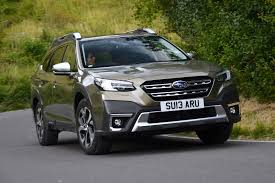
Sixth Generation (2020-2025): Modern Convenience Meets Capability
The sixth-generation Subaru Outback, launched for the 2020 model year, presented significant mechanical advancements beneath a subtly revised exterior. The previously optional six-cylinder engine was retired in favor of a potent 2.4-liter turbocharged four-cylinder (XT models), delivering impressive power and improved fuel efficiency. Standard models feature a refined 2.5-liter four-cylinder. Both engines are paired with a new CVT featuring an eight-speed manual mode, and AWD remains standard. This generation introduced a host of new trim levels, catering to diverse preferences. A standout addition was the Outback Wilderness trim in 2022, a factory-built off-road specialist boasting increased ground clearance, all-terrain tires, and a rugged aesthetic. Cosmetic updates in 2023, inspired by the Wilderness trim, further enhanced the Outback’s visual appeal. This generation also pioneered the integration of what3words mapping technology. For 2024 and 2025, Subaru continued to expand feature availability, including heated steering wheels and driver-attention monitoring. The sixth-generation Outback represents an excellent value, offering a compelling blend of modern technology, safety, and capability at a competitive price point. These models hold their value well, making them a solid investment in the used market.
Fifth Generation (2015-2019): Refinement and Safety Focus
The fifth-generation Subaru Outback, introduced for the 2015 model year, marked a subtle but significant evolution, officially embracing its crossover designation. While the styling remained evolutionary, a sportier and more aerodynamic profile emerged. The manual transmission was discontinued, and advanced safety features like automatic emergency braking and blind-spot assist became more widely available. Standard power came from a 2.5-liter four-cylinder engine, with an optional more powerful 3.6-liter six-cylinder available on higher trims. AWD and a CVT with a manual shift mode were standard. This generation introduced Subaru’s X-Mode terrain system as standard, enhancing its off-road prowess. Interior refinements included updated infotainment screens, with Apple CarPlay and Android Auto arriving in later model years. The 2019 model year is particularly noteworthy, as it made the comprehensive EyeSight suite of driver-assist technologies standard across the entire Outback lineup, including adaptive cruise control and automatic emergency braking. Despite the CVT’s sometimes droning nature, this generation offers a quieter, more refined ride than its predecessors and is a strong contender for used buyers seeking advanced safety features.
Fourth Generation (2010-2014): Crossover Cues and CVT Integration
The fourth-generation Subaru Outback represented a significant departure, shedding its sedan variant and adopting Continuously Variable Transmissions (CVTs) as the primary automatic option for four-cylinder models. Its styling grew decidedly more crossover-like, establishing a design language that would persist through subsequent generations. Despite increased height and width contributing to a more spacious interior, the overall length became slightly shorter than the previous generation. The mechanical formula remained familiar, with standard AWD and updated Boxer engines. The 2013 model year brought a substantial refresh, including revised styling, a more powerful 2.5-liter four-cylinder engine, and tailored AWD systems for different transmissions. Crucially, the Subaru EyeSight driver-assist system debuted in 2013 and was made standard on Premium trims in 2014. While some reliability trackers have noted more electrical issues with this generation, they remain relatively inexpensive to acquire in the used market, offering a capable and contemporary-looking option for budget-conscious buyers. The six-cylinder models, though rarer and less fuel-efficient, provide a more engaging driving experience.
Third Generation (2005-2009): Style and Refinement
The third-generation Subaru Outback, appearing as a 2005 model, injected a notable dose of style into the lineup with a sleeker, more aggressive design than its predecessors. A sedan version was available for a short period but was discontinued due to slow sales. This generation was praised for its refined ride quality and robust standard features, though its rear-seat legroom was the most limited among Outback generations. Engine options included a 2.5-liter four-cylinder, an optional turbocharged “XT” variant, and a 3.0-liter six-cylinder. A five-speed manual or automatic transmission was offered. Minor updates occurred throughout its production, with 2009 seeing the addition of standard stability control. For buyers seeking this generation, the L.L. Bean and Limited trims are particularly desirable, often featuring upgraded interior materials and amenities. While early years might present some reliability concerns according to certain sources, the engines are generally durable, provided proper maintenance, especially regarding timing belts and head gaskets. These models are becoming increasingly rare but can offer significant value.
Second Generation (2000-2004): The Formalization of an Icon
Officially spun off from the Legacy, the second-generation Outback solidified its identity for the 2000 model year. The “Legacy SUS” sedan was rebranded as the Outback sedan, sharing mechanical components. Styling became more contemporary, and Subaru introduced attractive two-tone color schemes. The standard engine was a 2.5-liter EJ25, and the introduction of the L.L. Bean edition in 2001 brought a new 3.0-liter flat-six engine and enhanced luxury features. AWD and increased ground clearance remained hallmarks. While styling was refreshed for 2003, the core components remained consistent. L.L. Bean models were particularly well-equipped, offering premium audio, dual moonroofs, and optional Vehicle Dynamics Control (VDC). Given their age, a thorough inspection of maintenance records is paramount. While early models received mixed reliability ratings, these Outbacks are simpler mechanically than later generations. Rust and head gasket issues are potential concerns due to age. These vehicles are typically the most affordable on the used market, offering a utilitarian and capable option for those on a tight budget.
First Generation (1995-1999): The Pioneer
The genesis of the Subaru Outback lies within the 1995 Legacy, with its definitive formula crystallizing by 1996. Initially, it was characterized by rugged styling cues like beefy bumpers and distinctive two-tone paint. The early models were powered by a 2.2-liter four-cylinder engine, later updated to a more powerful 2.5-liter unit in 1996, coinciding with increased ground clearance and improved lighting. The marketing campaign, famously featuring Paul Hogan, significantly boosted Subaru’s U.S. sales. The 1996 and later 2.5-liter models are generally more desirable due to their improved performance and capability. The “Legacy SUS” sedan variant also emerged in this era. While these early Outbacks are historically significant and can be found for very low prices, they are known for potential head gasket and timing belt issues, especially the 2.5-liter engines. Enthusiasts often perform engine swaps. Thorough inspection and maintenance records are essential for these foundational models.
Making Your Move: The Subaru Outback as Your Next Adventure Companion
The Subaru Outback has consistently proven itself to be more than just a vehicle; it’s a dependable partner for life’s journeys, whether that involves navigating challenging terrain or simply carrying out daily errands with confidence. Its enduring appeal lies in its unique blend of capability, comfort, and safety, a formula that has resonated with drivers for decades.
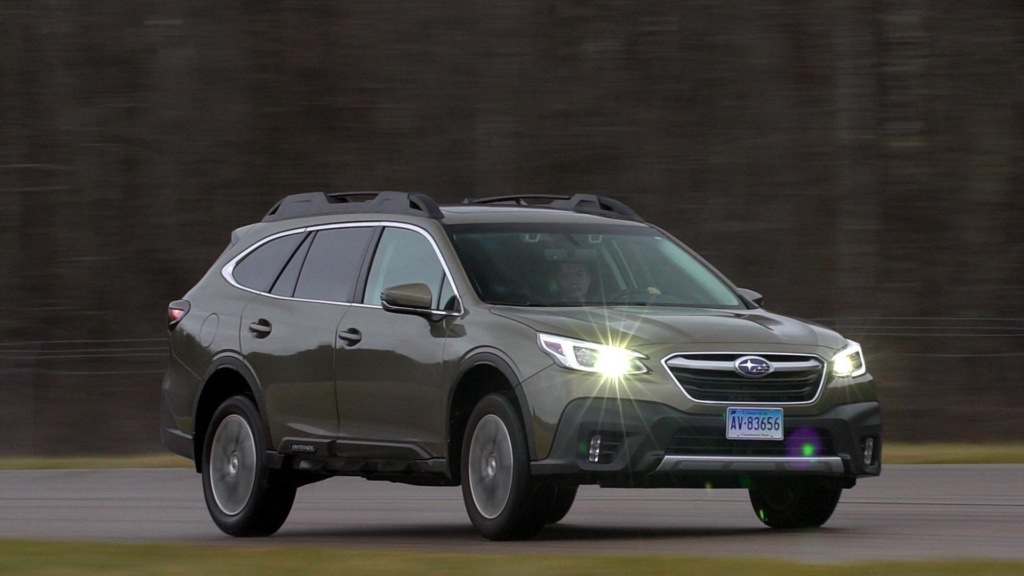
For those seeking a vehicle that offers peace of mind on the road, particularly in adverse weather conditions, and the freedom to explore beyond the pavement, the Subaru Outback remains an unparalleled choice. The advancements in technology and safety features seen in the newer generations are particularly compelling, while the older models continue to offer remarkable value for their inherent practicality.
If the Subaru Outback has captured your interest, the next logical step is to experience it firsthand. We invite you to explore our current inventory of Subaru Outback models, both new and pre-owned. Consider scheduling a test drive to feel the refined ride, assess the spacious interior, and familiarize yourself with the intuitive technology. Our knowledgeable team is ready to assist you in finding the perfect Subaru Outback that aligns with your lifestyle and budget, ensuring your transition into Outback ownership is as smooth and rewarding as the journeys ahead.