
The Definitive Guide to Buying a Used Subaru Outback: Unpacking Value, Longevity, and the Smartest Model Years
For over a quarter-century, the Subaru Outback has carved a unique niche in the automotive landscape. What began as an adventurous trim package on the mid-size Legacy in 1995 has evolved into a distinct model, redefining the very concept of an all-wheel-drive crossover. As an industry expert with a decade of experience navigating the pre-owned vehicle market, I’ve seen firsthand how the Outback’s enduring appeal stems from its blend of practicality, rugged capability, and unwavering all-weather confidence. This comprehensive guide delves deep into the Subaru Outback’s journey, examining its cost of ownership, reliability track record, and, most importantly, identifying the best used Subaru Outback model years to consider for your next adventure.
The Subaru Outback: A Legacy of Innovation and Adaptability
The story of the Subaru Outback is intrinsically linked to Subaru’s pioneering spirit, particularly its early adoption of all-wheel drive (AWD). Two decades before the Outback even existed, Subaru was already championing AWD technology. When sales trends shifted in the late 80s and early 90s, Subaru strategically leveraged its AWD heritage to revitalize its lineup. The Outback was a direct, and brilliant, result of this foresight.
Initially, the Outback was a more ruggedly styled Legacy wagon, distinguished by its increased ground clearance and subtly enhanced suspension. This formula proved remarkably prescient. Launched just as American consumers’ fascination with SUVs was reaching a crescendo, the Outback offered a compelling alternative. It shed the image of a conventional family hauler, embracing a spirit of exploration and road trip readiness, all while maintaining its wagon-like practicality.
The success of the original Outback was swift and undeniable. It quickly inspired a smaller sibling, the Outback Sport (based on the Impreza), and for a time, even a sedan variant, the Legacy SUS (Sport Utility Sedan), which often carried the Outback badge. The Outback’s popularity and AWD’s undeniable appeal as a key differentiator were so potent that by 1999, Subaru had made AWD standard across its entire U.S. model range, further solidifying the Outback’s influence.
Over the years, the Outback has gradually distanced itself from the Legacy, its wagon proportions evolving into a form much closer to what we now recognize as a crossover. By the late 2010s, the very design of the Legacy sedan began to be shaped by the substantial demands for space and off-road prowess dictated by its more popular Outback sibling.
As Subaru’s flagship vehicle for many years, the Outback has consistently served as a showcase for the automaker’s technological advancements. The sophisticated EyeSight driver-assist system, for instance, debuted on the Outback in 2008, significantly predating similar offerings from many competitors. Subaru’s AWD system has undergone continuous refinement, and the introduction of the even more rugged Outback Wilderness in 2021 underscored the model’s commitment to capability, a trend that soon extended to other Subaru models like the Forester and Crosstrek. Today’s Subaru Outback continues to be lauded for its practicality, spaciousness, and impressive light off-road capability, thanks to its generous ground clearance and adept terrain management systems.
However, no vehicle is without its quirks. The continuously variable transmissions (CVTs) that Subaru has favored for the past decade, while efficient, can be complex to service. The Subaru Boxer engines, whether flat-four or flat-six, often require more diligent maintenance than conventional powertrains, with head gasket issues being a known concern over the long term. Fuel economy, while improved, may still trail some competitors, and Subaru has yet to offer a hybrid Outback. Furthermore, any AWD vehicle frequently utilized for off-road excursions will inherently have more components susceptible to wear and tear than a standard sedan or wagon.
Despite these considerations, the Subaru Outback remains a remarkably safe, capable, and deeply loyal-inspiring vehicle. Its owners often develop a profound connection with their Outbacks, viewing them not just as transportation but as trusted companions for life’s journeys. This buyer’s guide aims to provide you with the in-depth knowledge needed to make an informed decision when seeking a pre-owned Subaru Outback, covering each generation and offering practical advice for navigating the used market.
Navigating the Used Subaru Outback Market: Key Considerations
When considering a used Subaru Outback, several factors come into play that are crucial for maximizing your investment and ensuring long-term satisfaction. Understanding the nuances of each generation, potential maintenance needs, and overall reliability is paramount.
Frequently Asked Questions for Used Subaru Outback Buyers
Which Subaru Outback Model Years Are the Best Buys?
Most Subaru Outbacks typically receive “average” reliability ratings from prominent automotive data aggregators. This often reflects the slightly higher maintenance requirements compared to some segment leaders, such as occasional head gasket or timing belt replacements, which can be costly. However, the Outback is generally a very durable vehicle. Based on analysis from sources like Consumer Reports, the model years that tend to stand out for fewer reported issues and better overall reliability include 2014, 2016, 2017, and the 2021 model year and newer. These years often benefit from refinements in powertrain and technology, offering a strong balance of capability and dependability.
What Are Some Less Ideal Subaru Outback Model Years?
Disagreements exist among various reliability tracking services regarding the “worst” model years. Crowdsourced platforms like CarComplaints.com frequently cite 2013, 2015, and 2018 as having the most reported issues, often related to electrical systems and engine problems. It’s important to note that these years span generational shifts. Conversely, J.D. Power and Consumer Reports often rate these years more favorably. Consumer Reports, however, has expressed more concerns regarding 2005-2007 models and, more recently, 2019 and 2020 Outbacks. J.D. Power generally assigns “average” or slightly above-average reliability ratings across most Outback model years. For those looking at older vehicles, pre-2002 models with the 2.5-liter powertrain are known for a higher propensity for head gasket failures and coolant leaks.
Is a Used Subaru Outback a Good Value Proposition?
Absolutely. As a pre-owned vehicle, the Subaru Outback presents an exceptional value for buyers prioritizing space, versatile features, and robust all-wheel-drive performance. While its long-term maintenance costs might be slightly higher than some midsize family vehicles or sedans, the Outback consistently offers advanced safety equipment and engaging driving dynamics. In an automotive market where traditional wagons have become a niche, often expensive, offering, the Outback remains one of the few affordably priced vehicles that retains this body style, even as it has evolved into a crossover-like machine. Its inherent practicality is a significant contributor to its enduring value.
Subaru Outback: Key Strengths and Considerations
Pros:
Exceptional All-Wheel Drive System: Standard AWD provides confidence in all conditions.
Comfortable and Spacious Interior: Ample room for passengers and cargo.
Abundant Safety Features: Particularly in later model years and higher trims.
Excellent Ground Clearance: Enhances off-road capability and all-weather utility.
Strong Owner Loyalty: Known for its dedicated enthusiast base.
Cons:
Higher Long-Term Maintenance Costs: Compared to some direct competitors.
Moderate Fuel Economy: May not match the efficiency of some front-wheel-drive alternatives.
CVT Performance Nuances: Some drivers find the CVT less engaging than traditional automatics.
Potential for Head Gasket Issues: A recurring concern on some older Boxer engines.
A Deep Dive into Subaru Outback Generations: Your Guide to Smart Buying
To make the most informed decision, understanding the evolution of the Subaru Outback across its generations is key.
Seventh Generation (2026-Present)
The latest iteration of the Subaru Outback, introduced for the 2026 model year, presents a more squared-off aesthetic while retaining familiar proportions. Subaru has emphasized ruggedness with updated lighting signatures and durable body cladding. Notably, roof rack crossbars now boast a 220-pound lateral load capacity, ideal for adventurous setups like hanging a hammock.
Inside, the cabin sees enhancements for practicality and comfort. Door bottle holders now accommodate larger 32-ounce containers, and a 2-inch increase in roofline height translates to improved headroom. Cargo space has also grown by 2 cubic feet and gained 2 inches in height. The technology suite receives a significant upgrade, featuring a new 12.1-inch infotainment display and a 12.3-inch digital instrument cluster running updated software.
Safety technology sees a leap forward with Emergency Stop Assist and Safe Lane Selection, designed to move the vehicle to the shoulder and alert emergency services if a driver becomes unresponsive. On specific highways, hands-free driving with driver supervision is now available at speeds up to 85 mph. The EyeSight camera system benefits from a wider angle lens for enhanced detection of pedestrians and cyclists, complemented by haptic feedback alerts.
The revised 2.5-liter Boxer engine now produces 180 horsepower and 178 pound-feet of torque. The turbocharged 2.4-liter engine from the previous generation carries over, delivering 260 horsepower and 277 pound-feet of torque for XT models.
The starting MSRP for the 2026 Subaru Outback is $34,995 (excluding destination charges). While this represents a notable increase, Subaru has streamlined the lineup by dropping the base trim, meaning the Premium level is now the entry point, offering more standard equipment.
Used Market Outlook: As this generation is brand new, used examples will be scarce for some time. Early adoption pricing will be at its peak.
Sixth Generation (2020-2025)
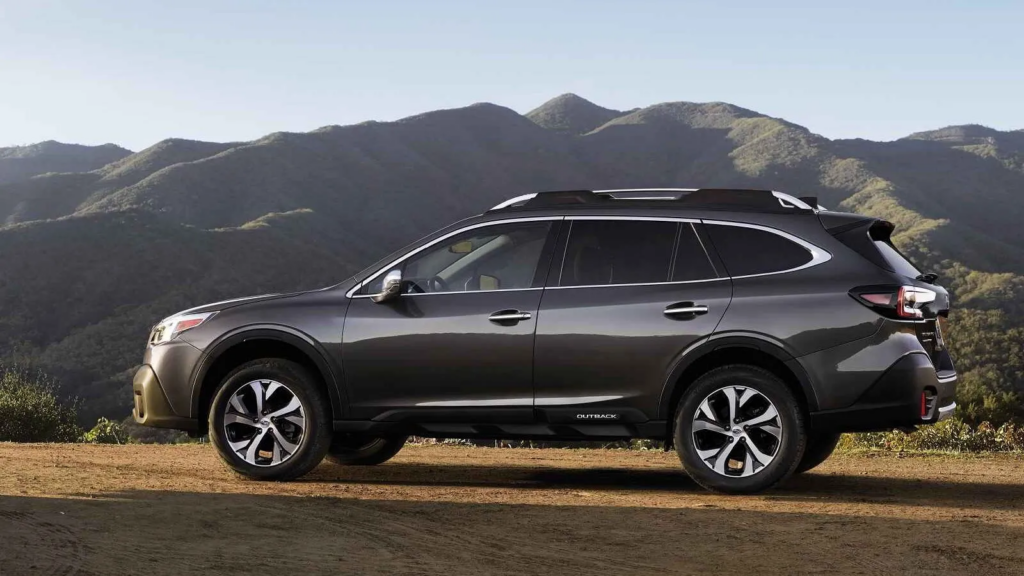
This generation marked a significant evolutionary step for the Subaru Outback, debuting for the 2020 model year. Externally, the changes were subtle, but the mechanical and technological upgrades were substantial.
The formerly optional six-cylinder engine was replaced by a potent new 2.4-liter turbocharged four-cylinder, designated “XT.” This engine delivers 260 horsepower and 277 pound-feet of torque, offering both increased power and improved fuel efficiency over the outgoing six-cylinder. Standard models are powered by a refined 2.5-liter four-cylinder engine producing 182 horsepower and 176 pound-feet of torque. Both engines are paired with a new continuously variable transmission (CVT) featuring an eight-speed manual mode, and AWD remains standard.
The initial trim levels included 2.5i, Premium, Limited, Touring, Onyx Edition XT, Limited XT, and Touring XT, with the XT variants featuring the turbo engine and enhanced equipment.
In-car technology was revolutionized with an available 11.6-inch portrait-style touchscreen supporting Apple CarPlay and Android Auto. Subaru’s comprehensive EyeSight suite of safety features, a driver distraction warning system, high-beam assist, and a front-view camera were also introduced. Base models featured a dual-eight-inch screen setup with a more fundamental interface. A Wi-Fi hotspot was a new addition to the Outback.
The 2022 model year saw the highly anticipated launch of the Outback Wilderness. This trim represents the pinnacle of factory-built off-road capability, boasting 9.5 inches of ground clearance, Yokohama Geolander all-terrain tires, and specially tuned suspension and terrain management systems. Its distinct appearance includes aggressive cladding, gold accents, specialized bumpers for improved approach and departure angles, and a robust roof rail system capable of supporting 700 pounds. While it foregoes some luxury features of higher trims, it includes the turbocharged engine as standard.
A 2023 cosmetic refresh brought a revised front fascia and black cladding inspired by the Wilderness trim. In-car cameras for the EyeSight system were upgraded, and the availability of the turbocharged engine expanded. The Outback also became the first Subaru to integrate what3words navigation technology.
The 2024 model year saw minor updates to the Outback Wilderness fascia, and a heated steering wheel became available on Onyx Edition, Onyx Edition XT, and Wilderness trims. The Onyx Edition also gained a moonroof and reverse automatic emergency braking as standard. For 2025, the Limited trim received a moonroof, heated steering wheel, driver attention monitoring, and built-in navigation.
The starting price for a 2020 model was $26,645 (excluding destination). Remarkably, Subaru has maintained the base price to just $29,995 for 2025, making it one of the most affordable vehicles in its size and capability class. Even base models offer many active safety systems that are often optional on more expensive vehicles, presenting excellent value.
Used Market Outlook: These are still relatively new vehicles, holding their value well. 2021 and newer models are particularly desirable for their refined features and safety tech. Expect to see prices ranging from approximately $21,000 for a 2020 model up to $33,800 for a 2025 model. The Outback Wilderness variants are highly sought after and command a premium.
Fifth Generation (2015-2019)
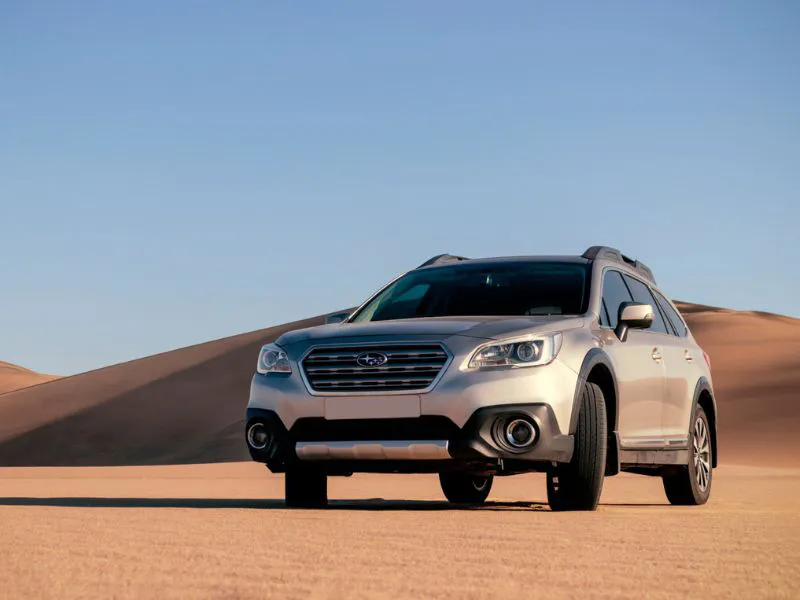
The fifth-generation Outback, introduced for 2015, continued its evolution, officially transitioning from wagon to crossover in Subaru’s nomenclature. Styling was more aerodynamic and sportier, though not a radical departure. Manual transmissions were discontinued, and more safety systems began appearing as standard on higher trims.
The standard powertrain was a 2.5-liter four-cylinder engine producing 175 horsepower and 174 pound-feet of torque – the most common engine you’ll find in used examples. A more potent 3.6-liter six-cylinder engine (3.6R Limited) offered 256 horsepower and 247 pound-feet of torque but was less popular due to lower fuel economy (22 mpg combined) and a higher price point.
AWD remained standard, paired with a CVT featuring a six-speed manual mode. Subaru’s X-Mode terrain system, hill-descent control, and hill-start assist became standard, enhancing off-road capability. A new double-wishbone rear suspension and front suspension cradle significantly improved ride comfort and noise isolation.
Interior upgrades included revised infotainment systems: a 6.2-inch screen on base models and a 7-inch unit on higher trims. In 2016, Starlink connected services and lane-keep assist were added. The 2017 model year brought updated interior styling and new standard 6.5-inch and optional 8-inch infotainment screens with improved software and graphics. The 8-inch screen also debuted Apple CarPlay and Android Auto.
The EyeSight suite of driver-assist technologies, including adaptive cruise control, automatic emergency braking, and lane-departure warning, was initially exclusive to upper trims. Blind-spot monitoring, lane-change assist, and rear cross-traffic alert were also reserved for higher trims until 2019, the final year of this generation, when the entire EyeSight suite became standard across the Outback lineup.
Common criticisms of this generation often center on the CVT’s occasional droning and less-than-spirited highway performance. However, it offers a quieter and more refined ride than previous generations.
Used Market Outlook: Higher trims, particularly 2019 models due to the standard EyeSight suite, are excellent buys. Most fifth-generation Outbacks can be found for under $25,000, though they retain value well. Expect a price range of $16,000 to $24,000, even for the more powerful 3.6R models. Finding a well-maintained example with under 80,000 miles for under $20,000 is achievable.
Fourth Generation (2010-2014)
This generation marked a significant departure, introducing a more pronounced crossover styling that set the template for subsequent models. The Outback sedan was discontinued, and conventional automatics were replaced by CVTs on four-cylinder models. The vehicle grew taller and wider, increasing interior space, though it was slightly shorter overall than its predecessor.
The core mechanicals remained similar, with standard AWD and updated Boxer four- and six-cylinder engines. For 2010, trim levels included 2.5i, 2.5i Premium, 2.5i Limited, 3.6R, 3.6R Premium, and 3.6R Limited.
The standard 2.5-liter four-cylinder engine produced 170 horsepower and 170 pound-feet of torque. The 3.6-liter flat-six offered 256 horsepower and 247 pound-feet of torque. While manual transmissions were available, the majority of four-cylinder models used the new Lineartronic CVT. Six-cylinder models retained a five-speed automatic.
In-car technology was basic but included optional navigation and a backup camera displayed on an 8-inch touchscreen. Traction and stability control were standard.
The 2013 model year brought substantial updates: a restyled front fascia, a revised 2.5-liter four-cylinder engine with 173 horsepower and 174 pound-feet of torque, and tailored AWD systems for each transmission type. Crucially, the Subaru EyeSight driver-assist system, featuring adaptive cruise control, automatic braking, and lane-departure warning, debuted on the Outback Limited. By 2014, EyeSight became standard on Outback Premium models.
Reliability ratings for this generation can be mixed, with some reports of electrical issues. However, they remain relatively inexpensive. Well-maintained fourth-generation Outbacks with under 120,000 miles can often be found for as little as $8,000. Low-mileage 3.6R models with desirable features can be found for under $17,000. The six-cylinder models are rarer and less fuel-efficient but offer a more engaging driving experience.
Used Market Outlook: 2013 and 2014 models are particularly attractive due to the availability and standardization of the EyeSight system. Prioritize well-maintained examples.
Third Generation (2005-2009)
Debuting for the 2005 model year, the third-generation Outback showcased a more stylish and aggressive exterior design compared to its predecessors. A sedan variant was available but discontinued after 2007 due to slow sales, making it quite rare today.
Reviewers praised its refined ride quality and robust standard features. However, the rear legroom (33.9 inches) was the most restrictive across all Outback generations.
Engine options included a 2.5-liter four-cylinder (168 hp, 166 lb-ft), a 2.5-liter turbocharged four-cylinder “XT” (250 hp, 250 lb-ft), and a 3.0-liter six-cylinder (250 hp, 219 lb-ft). Transmission choices were a five-speed manual or automatic.
In 2006, the naturally aspirated 2.5-liter engine saw a power bump to 175 horsepower, and a navigation system was introduced. Trim levels were revised in 2007, and by 2009, stability control became standard across all trims, with the L.L. Bean model replaced by Limited trims.
When shopping for this generation, focus on L.L. Bean and Limited models, which typically offer more premium features like wood-and-leather steering wheels, nicer interiors, navigation, and USB ports.
Consumer Reports noted below-average reliability for the early years of this generation. Engine longevity is generally better than the first two generations, but maintenance records are crucial, especially for timing belt and head gasket service. These models are less common due to age and the economic downturn during their production.
Used Market Outlook: Prices generally range from $5,000 to $10,000. Look for well-maintained examples with complete service history.
Second Generation (2000-2004)
Officially spun off from the Legacy, the second-generation Outback was a complete redesign for the 2000 model year, retaining its popularity. The corresponding Legacy SUS sedan was renamed the Outback sedan. Styling became more contemporary, with attractive two-tone color options.
The standard engine was the 2.5-liter “EJ25” Boxer engine, producing 165 horsepower and 166 pound-feet of torque. In 2001, the L.L. Bean edition debuted, offering enhanced luxury features and, crucially, the all-new 3.0-liter “EZ30” flat-six engine with 212 horsepower and 210 pound-feet of torque. This engine family would serve as the basis for Subaru’s six-cylinder powertrains for nearly two decades.
AWD was standard, and ground clearance increased to 7.3 inches. Four-cylinder models offered a four-speed automatic or a five-speed manual, while six-cylinder models were automatic-only. Styling was refreshed for 2003.
L.L. Bean models were well-appointed, featuring dual-zone climate control, CD changers, leather seats, dual moonroofs, a premium McIntosh stereo, and an optional Vehicle Dynamics Control (VDC) system. OnStar was also available. Other trims, while comfortable, offered fewer modern amenities.
For this generation, maintenance records are paramount. While simpler than later Outbacks, issues like rust and head gaskets can be concerns. Consumer Reports gave 2000 and 2001 models below-average reliability ratings.
Used Market Outlook: Due to age, rust, and potential head gasket issues, finding pristine examples can be challenging. Prices typically range from $4,500 to $8,000, with the 3.0-liter models and sedans commanding slightly higher values.
First Generation (1995-1999)
The genesis of the Subaru Outback began as an option package on the 1995 Legacy. By 1996, its distinct formula was established. Building on the Legacy’s reputation for rally prowess and all-terrain capability, the Outback was designed to project an image of ruggedness.
Initial features included prominent bumpers with integrated fog lights, unique wheels, and a signature two-tone paint scheme. Underneath, it shared components with the Legacy, initially featuring a modest 2.2-liter four-cylinder engine (135 hp, 140 lb-ft).
Subaru quickly responded to initial feedback by enhancing both power and ground clearance. By 1996, it received a more potent 2.5-liter engine (155 hp, 155 lb-ft), larger rally-style headlights, and a significant lift, providing 7.8 inches of ground clearance – substantial for its era. This combination resonated with consumers, bolstered by marketing featuring Australian actor Paul Hogan, helping to revitalize Subaru’s U.S. sales. The formula was soon applied to the smaller Impreza, creating the Outback Sport (ancestor of the Crosstrek).
The 1997 model year introduced a Limited trim with nicer interior materials. The 1998 model year saw the debut of the “Legacy SUS” (Sport Utility Sedan), a sedan variant using the same recipe, which would later be integrated into the Outback lineup.
These early Outbacks are known for potential engine issues, particularly concerning weak head gaskets and aging timing belts, especially on the 2.5-liter versions. Many enthusiasts have undertaken engine swaps. Thorough inspection and maintenance records are critical.
Used Market Outlook: You can often find these first-generation Outbacks for under $5,000. While they are becoming collector’s items, their value is still relatively accessible.
Making the Smart Purchase: Final Advice for Your Used Subaru Outback Journey
As you embark on your quest for the perfect used Subaru Outback, remember that thorough research and a meticulous inspection process are your greatest allies. Prioritize vehicles with comprehensive maintenance records, demonstrating consistent care. A pre-purchase inspection by a trusted mechanic specializing in Subaru vehicles is highly recommended, especially for models known for potential head gasket or transmission concerns.
The Subaru Outback, across its diverse generations, continues to offer an unparalleled blend of go-anywhere capability, passenger comfort, and cargo versatility. Whether you’re a seasoned adventurer or simply seeking a reliable all-weather daily driver, a well-chosen used Subaru Outback represents a sound investment in years of dependable service and memorable journeys.
Ready to explore the open road in a capable and versatile vehicle? Discover our curated selection of pre-owned Subaru Outbacks and find the perfect companion for your next adventure today.